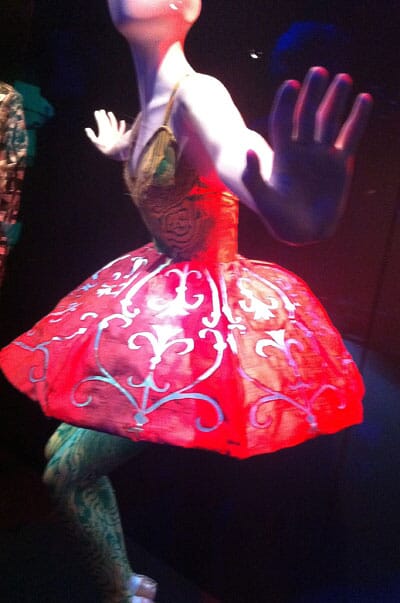
Let me say, from the off, that I was left more than a little disturbed by the V&A’s latest blockbuster.
At first I was fine – seeing early Sotsass, Tadanori Yokoo and Rem Koolhaas was a great little trip down memory lane.
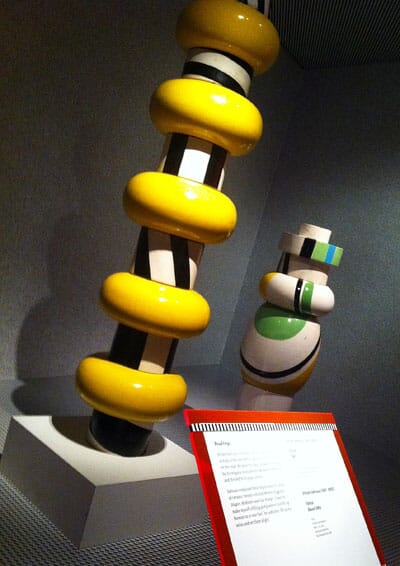
I then expected impossible teapots, bizarre chairs, stools and wardrobes aplenty and that was what I got.
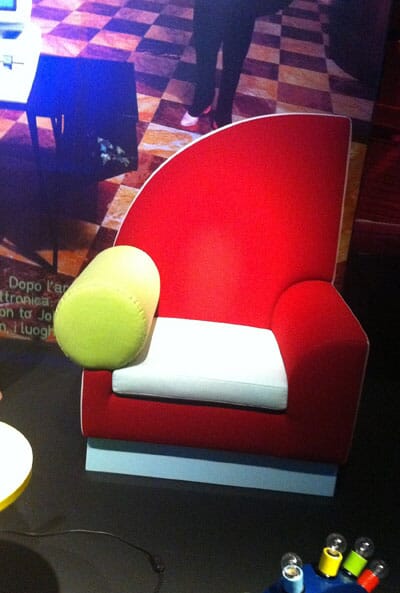
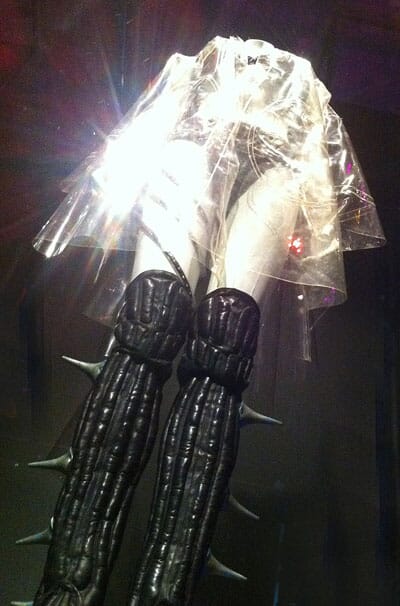
I enjoyed a raised section that began with Bladerunner then merrily clumped Grace Jones together with Leigh Bowery: all fine. I wondered a little about Laurie Anderson (who doesn’t) whilst puzzling over Barbara Krueger and Martin Amis. But that was OK.
Where the voices started to get louder in my head was where I got (in theory) to home turf – a little section dedicated to graphics and here there was no escaping it. The V&A has decreed that a few of my favourite things are officially post-modern and there and then the debate started that’s still running in my head.
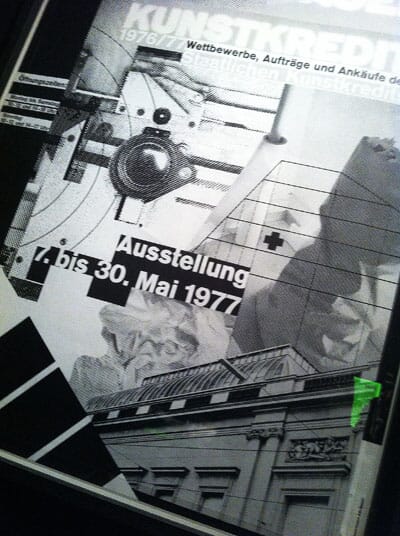
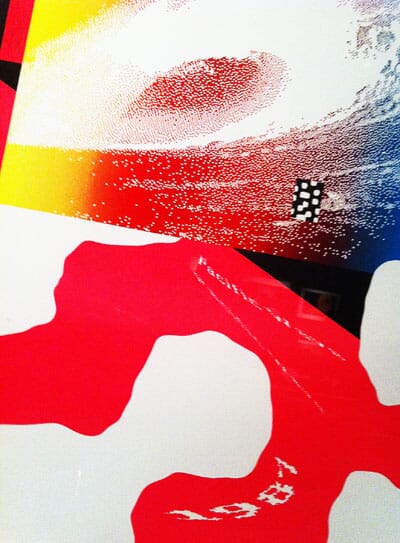
Wolfgang Weingart’s trailblazing followed by April Greiman’s pixelated perfectionism makes a lot of sense when you see the wiggles, blips and zips displayed on a gallery wall. (That’s if you read the dots from a decorative point of view rather than, at least in Greiman’s case, the early practicalities of embracing the computer).
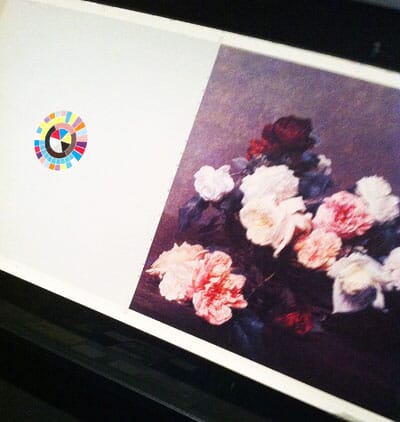
And I guess a wall of Peter Saville also makes sense since the pieces chosen showcased his ‘high appropriation’ period, where ideas and solutions were culled directly from historical sources, a definingly ‘post-modern’ approach.
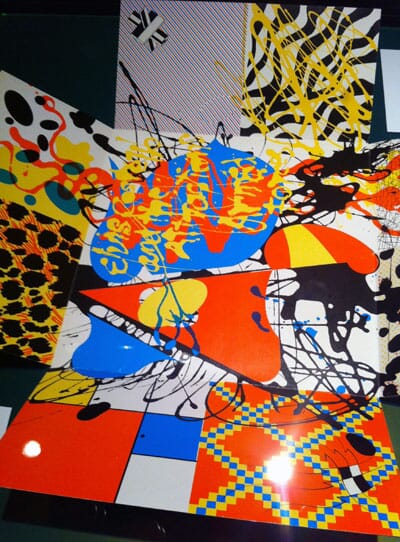
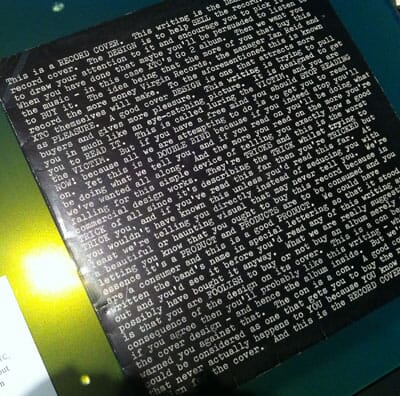
If we agree that Post-Modernism questioned all that had preceded it, then Barney Bubbles’ work and Hipgnosis’ XTC sleeve (that itself examines the role of the album sleeve) kind of fit. Kind of.
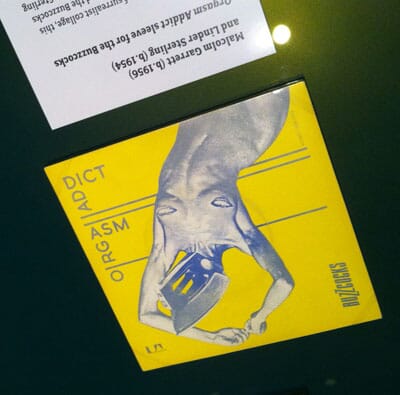
What confused me, in truth, was seeing Malcolm Garrett and Linder Sterling’s brutalist sleeve for The Buzzcocks, Orgasm Addict. To me this is a symbol of punk, of rebellion and of 1977. Even more so when viewed the right way up (which is, er, upside down ). ‘I am not a post-modernist!’ spluttered Garrett in the lobby in between discussing the nature of that 180 degree rotation and no, I didn’t think he was either.

It’s fantastically post-modern that I (and others) are even bothering to try and define it, of course. Can you define an ‘ism’ which is only two and a bit decades old with any kind of clarity? Probably not. So my eighties life (Blitz, The Face, Koyaanisqatsi, not getting into the right clubs, etc etc) curated into darkened rooms at the V&A felt more surreal than post-modern.
But after all that, and despite the mental debate, I enjoyed it. In fact it was a bit of a memory lane, early-then-discarded influences blast. I’ve already been twice. But if you can work out what this ’ism is for, do let me know.
By Michael Johnson

The V&A's Postmodernism show is on until early January. More information here. Apologies for the dodgy angled photography, one again banned by the powers that be (why?), so all pics taken whilst avoiding goons