Last night we were at a performance of Terry Gilliam’s Damnation of Faust (by Berlioz) for the second time.
Now you might be thinking, ‘why didn’t you write about it the first time’, and, er well that’s a good point. Anyway, just the simple fact that we’ve now seen this twice should be sign enough that this is really something extraordinary.

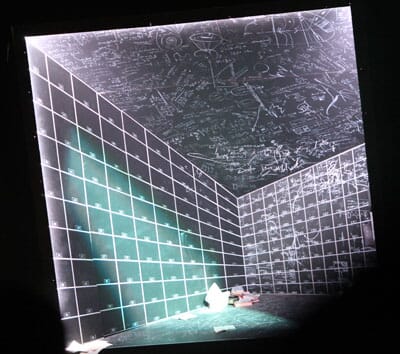
Obviously opera’s not everyone’s cup of tea, but in the hands of Ex-Python Terry Gilliam (and a very skilled supporting cast including set designer Hildegard Bechtler and video designer Finn Ross) Berlioz’s piece is dramatically retooled for between the wars Nazi Germany.
It moves along at breakneck speed, looks sumptuous, has great sets and dovetails in some innovative video as well. If you wondered how cinema could merge with opera and theatre, well this could be it.

There were a few slightly predictable pieces in the press beforehand wondering whether Gilliam’s slightly chequered project history (his film project of Don Quixote fell apart leaving just a bizarre ‘making-of’ documentary) would affect this, his first opera project, but they were wrong.
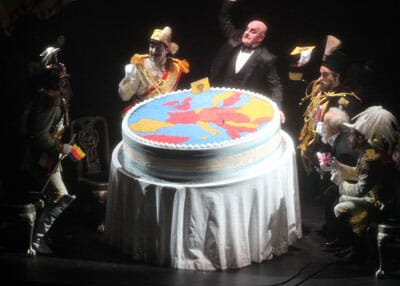

You’ll find a few grumbles around regarding the re-working, how close it isn’t to the original, etc, but this isn’t a show for opera buffs. It’s entertaining, is just an hour or so each half and flies along. You’ll find no-one catching a brief forty winks in this production - blink and you’ll miss a crucial scene.
Somehow it deals with some of the worst aspects of 20th century history in an almost jolly way, bizarrely slicing together a seduction scene whilst the Kristallnacht endures outside. Thankfully the heroine’s last train journey to a concentration camp is dealt with more sensitively.
From an art direction point of view Gilliam merrily clunks together references to The Vitruvian Man, Leni Riefenstahl’s Triumph of the Will and references Otto Dix and George Grosz. But, it works.
It’s unlike most operas you’ve ever seen and has sadly nearly finished its run (sorry). 2 shows left. Beg borrow or steal a ticket, if you can.