A craving for independence? A massage for your ego? Dealing with a massive overdraft? Or a chronic inability to agree with your boss what CD to play?
There are many reasons why a designer cuts loose from their last employer, and some of the above may be contributing factors, but usually they quit to do more of the 'kind of work I really like to do' and, by implication, less of that boring nonsense their boss is making them churn out.
Very few graphic designers find themselves happy implementing minor tweaks to a global accountancy conglomerate's corporate ID. They're drawn to small, highly creative projects that provide that drug-like cocktail of creativity and the search for the eureka moment. After the 'hit', it's a slow downhill slide into creative cold-turkey until the next chance to score arises. Usually, the more 'scores' (and the least implementation) the better.
But is it possible to run a company on a diet of just highly creative, smaller projects? When johnson banks began, we were painfully aware that our existence, fiscally speaking, was probably due to a few well-meaning but essentially dull projects for blue-chips. Some of the work was OK, but if we're honest, the big-payers bankrolled the rest of our (much more interesting) work. By the late nineties we'd let the blue-chips slip away and concentrated on large scale cultural projects which left us exposed to any of the larger clients drifting away. When they drifted, we panicked.
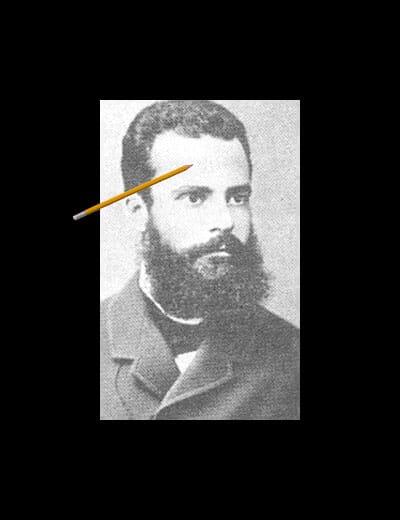
Essentially it took us a while to get the balance right. But what constitutes a good mix between the 'money' projects and the 'creative' projects is pretty difficult to ascertain. Perhaps an old economics adage, the Pareto principle, is a good rule of thumb. (The principle was named after the Italian economist Pareto who had noticed that 20% of the Italian population received 80% of the country's income).
In basic business terms, the 80:20 rule translates as '80% of your income comes from 20% of your clients', and has always seemed a pretty good rule of thumb - we'll often be beavering away on 20 interesting projects but only a handful of them will pay really well.
80:20 often applies to studio quality too - many of the larger companies would grudgingly admit they'd only ever show anyone 20% of the work they do in any one year, the other four-fifths being hastily squirreled away onto back-up drives. More creative companies, conversely, might aim to have 80% of their annual output at a really high level, with only 20% of it dodgy.
We canvassed views from other designers to see if Pareto's law applied to them, and interestingly the views are pretty mixed.
In theory, by setting up as just one man plus assistant, Stefan Sagmeister could have an especially high 'nice to nasty' ratio, but he admitted that this his ratio was about 50:50. Garrick Hamm at Williams Murray Hamm said his was more like 75:25. 'I have a couple of projects that have turned out to be bummers - but we never bother taking anything on if it's terrible from the start - it's just not worth it. I'd rather sell my old D&AD's', he quips.
Within Pentagram's New York office there were varied responses. Demonstrating an admirable ability to stretch the definition of what exactly constitutes 100%, Paula Scher revealed that 'half of my work is 'beautiful work'- no money. A quarter of my work is ordinary work for lots of money. A quarter of my work was supposed to be 'beautiful work' and no money, but it turned out not to be beautiful, and a quarter of my work is pretty good work, for pretty good money'.
Only one person really had issue with the thesis at all, and that was Michael Bierut. He maintains that it has been years and years since he took on a project just for the money. 'Every time I did do it, the money, no matter how much, was never enough in the end. So I stopped' he says.
'Of the projects I do these days, I make a decent profit on almost all my projects, big and small, even the ones for institutional or cultural clients. Small jobs pay less than big jobs. Small jobs provide the satisfaction of working fast and seeing a quick, sometimes disposable result; big projects can be grindingly dull but render outcomes that are more lasting. I also do some jobs for absolutely free when I think the cause is worthy. I do not repeat NOT take these on because I think I can get cool portfolio pieces out of them. In most cases, my freebies aren't even particularly flashy pieces of design; they're whatever I think is a responsible solution for the client at hand'.
From a business perspective, you can understand why some people running design companies might conclude from all of this that they should just go and chase those nice chunky-but-dull clients (the 80), and as long as there are a few little creative projects to keep the designer-johnnies happy (the 20). Then everyone will get paid, there will be cash left over for a decent xmas party and some nice new Aston Martins for the board directors.
And that would make business sense. Everyone knows that for a company to be seen as creative it only needs a handful of killer projects each year. Trouble is, within larger companies, the nice jobs get given to a sort of 'A team'. This leads to resentment, people think they're not getting the chance to do good work, people leave to do better work. Hang on a second, isn't that where we came in?
Design-led companies probably end up back with Pareto - if they can catch a handful of big fish in any one year that will pay for all the fiddling and diddling they had planned for downtime in the summer. But this always seems to assume that big projects will always be dull. Perhaps the Bierut doctrine should hold - all projects should start from the same place, all should make at least a little profit, nothing should be taken on just on the promise of a good result.
It may be time to cut those big clients some slack and do some good work for them too, not just take their money. Now there's a thought.