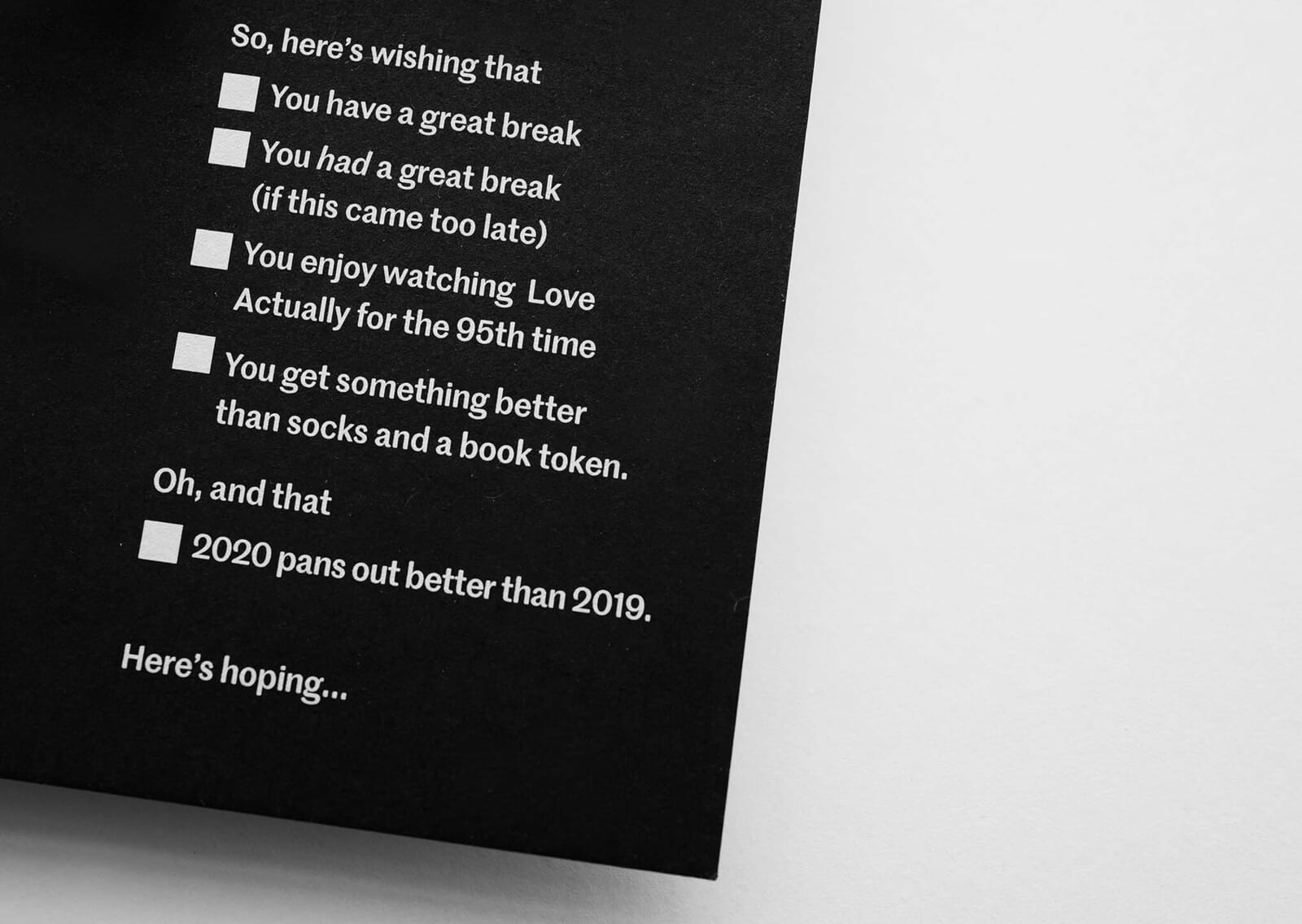
A year ago we were sending out our 2019 end-of-year card.
We’d plumped for what we thought was a witty, flexible, multiple-choice format that could cope with any Trump-Brexit-Farage related eventualities. And the card’s last solitary tick-box? It suggested that ‘2020 would pan out better than 2019’. Ha. Our credentials as fortune-tellers have now been well and truly shot into a thousand tiny pieces.
In fairness, even in February – unless you were a highly trained epidemiologist – the great upheaval still seemed unlikely.
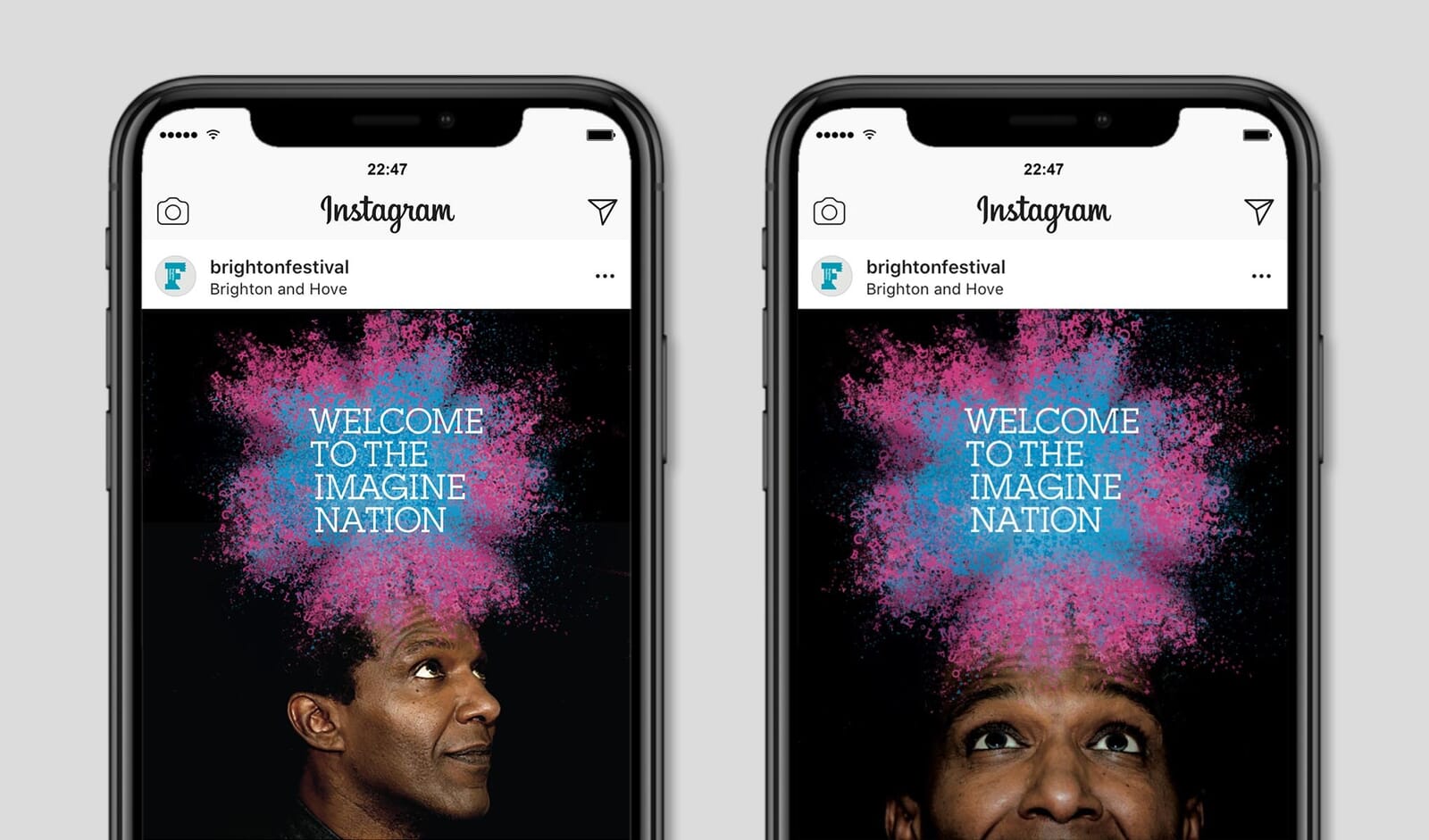
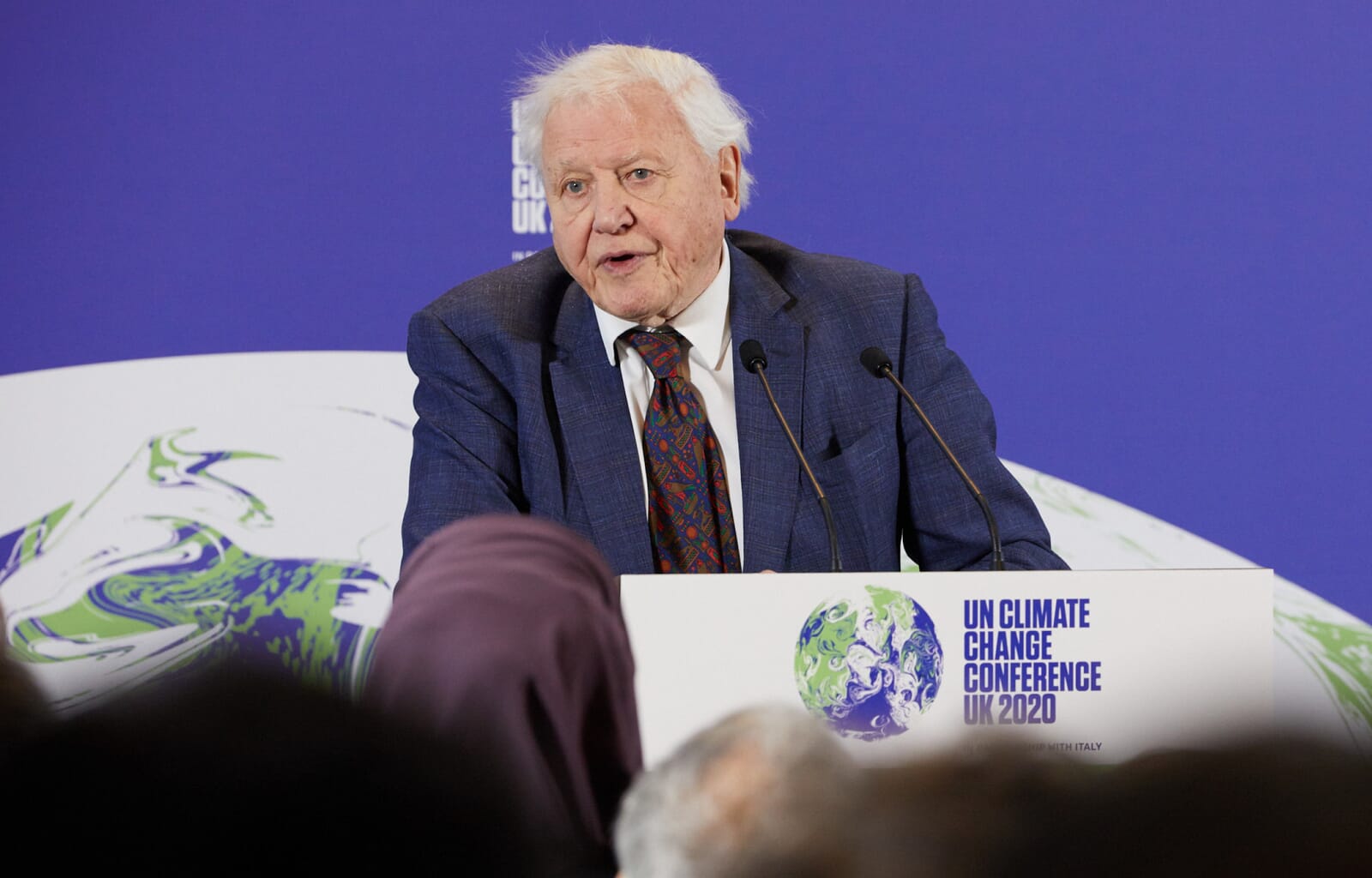
For us, the year had begun perfectly nicely, with the launch of new schemes for the Royal Astronomical Society, Brighton Festival and the prized commission for the UN Climate Change Conference (launched by David Attenborough, no less). So far, so good.
Then lock-down started, and everything stopped. Really stopped. For two weeks I carried a copy of our profit and loss in my back pocket, endlessly crossing things out, trying new calculations, constantly asking ‘how low can we go’?
Because previous crashes had taught me two basics – react fast, cut quick. Don’t wait for it to ‘pan out a little’. Running a creative business isn’t rocket science – you need 3x in turnover to cover salaries, bills and the odd new computer. But if, all of a sudden, you’re looking at 2x, or even 1x? That’s when things get perilous.
At the same time a collective ‘why are we here?’ moment seemed to hit the creative industries. For us, and many others, countless projects went on hold – and some never came off. The media was awash with adverts featuring empty streets from corporates explaining why THEY were ‘here for us in unprecedented times’ – yet precisely no-one seemed to be here for us, not that we could see.
All of a sudden we had collectively slipped way down Maslow’s famous pyramid and were concentrating hard on the basics: safety, food and family. That fancy holiday? Those new trainers? They seemed immediately irrelevant.
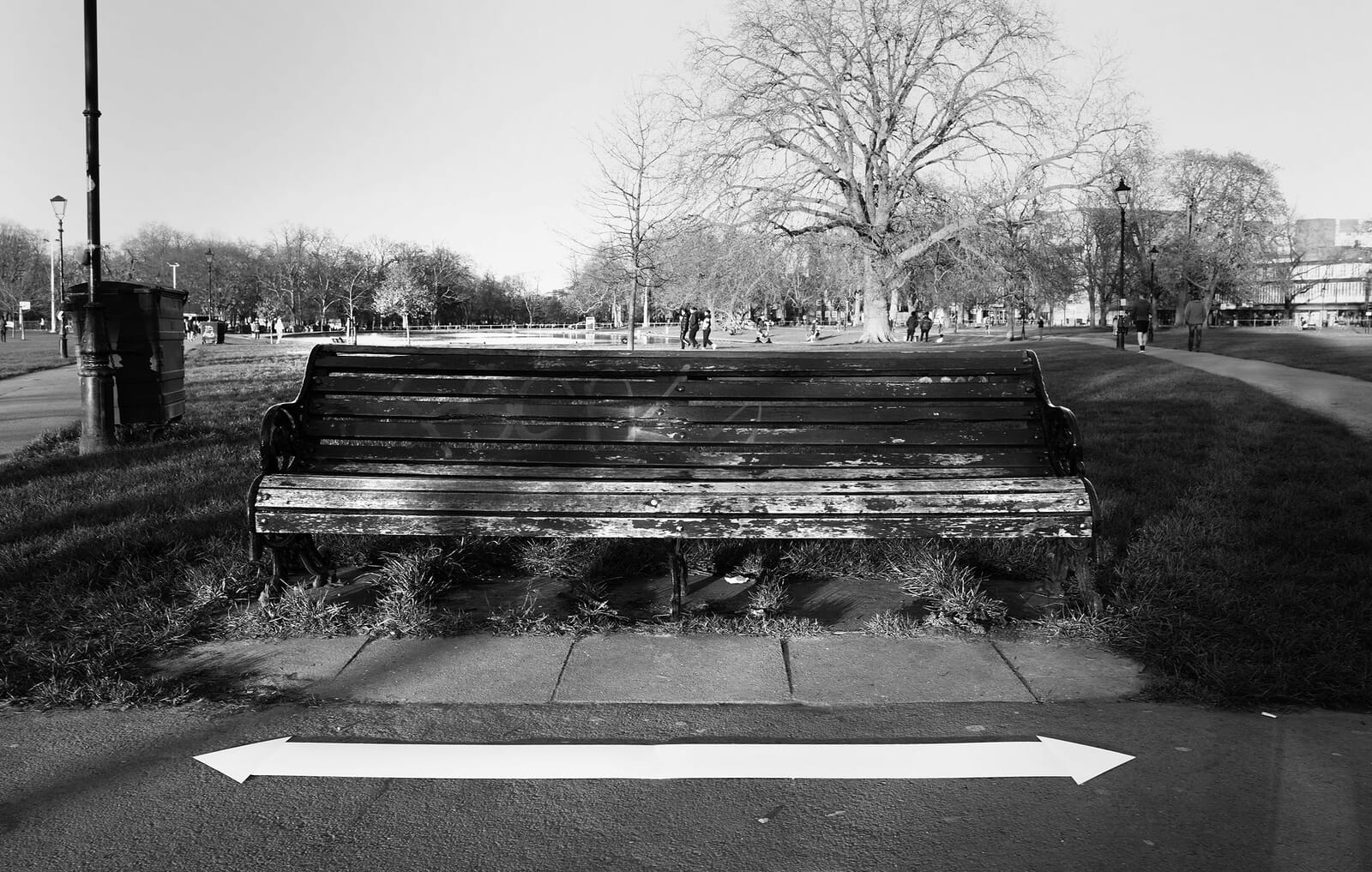
As I walked to and from work across Clapham Common trying to sum up the oddness of it all with my camera, it became even more clear why WE were here – to do something of use, with a genuine purpose.
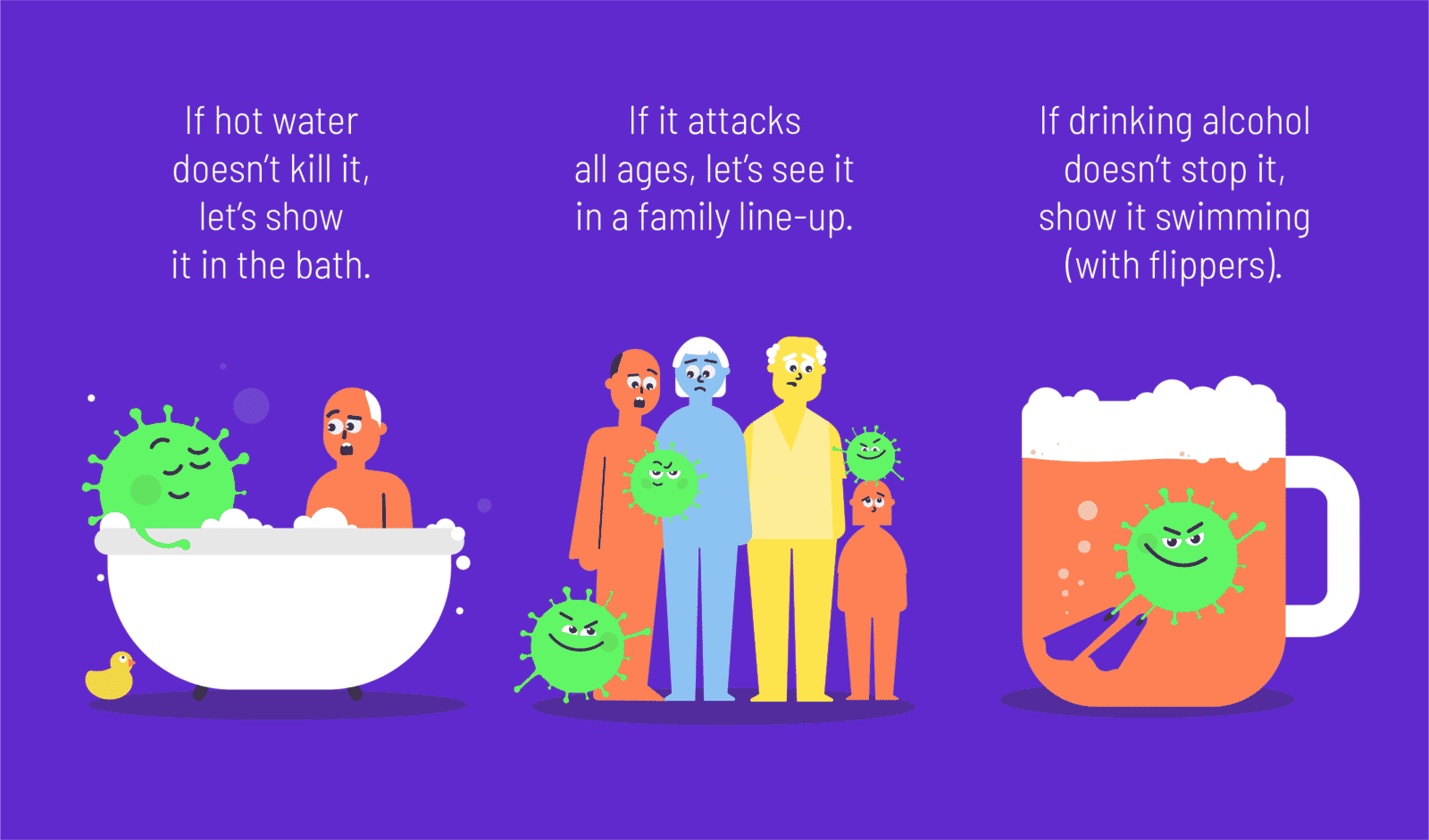
First we developed an entire communications campaign educating people on the virus in response to the World Health Organisation’s call for ideas – we felt our own Government’s messaging was light years away from where it should be.
No.10 were soon to unleash a whole series of verbal triptychs – ‘Stay home/Protect the NHS/Save lives’ or ‘Hands/Face/Space’ (in between trips to Barnard Castle) but sadly the virus doesn’t seem to respect this slavish dedication to the copywriting rule of three. On/It/Goes (You/Might/Say).
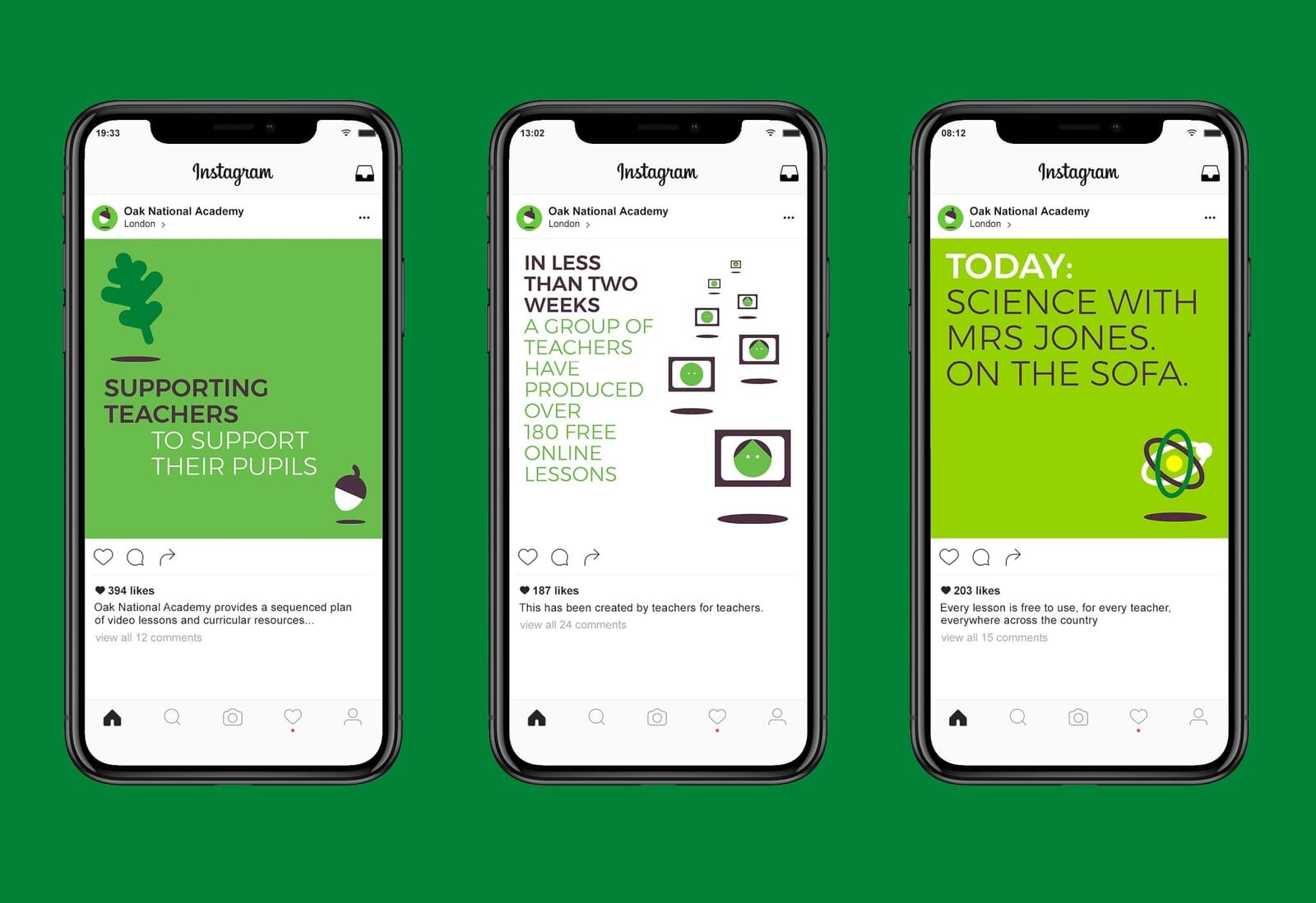
Soon we had found a route to making a huge difference. The requirement? To brand a newly created online national academy for the nation’s schoolchildren, over a weekend. Challenging, but just about doable. The Oak National Academy launched in late April and three months later it had delivered over 5 million free online lessons to the country’s stranded schoolchildren – and created over 300 years of teaching content. MBE’s all round (well, to the founders, not the logo designers).
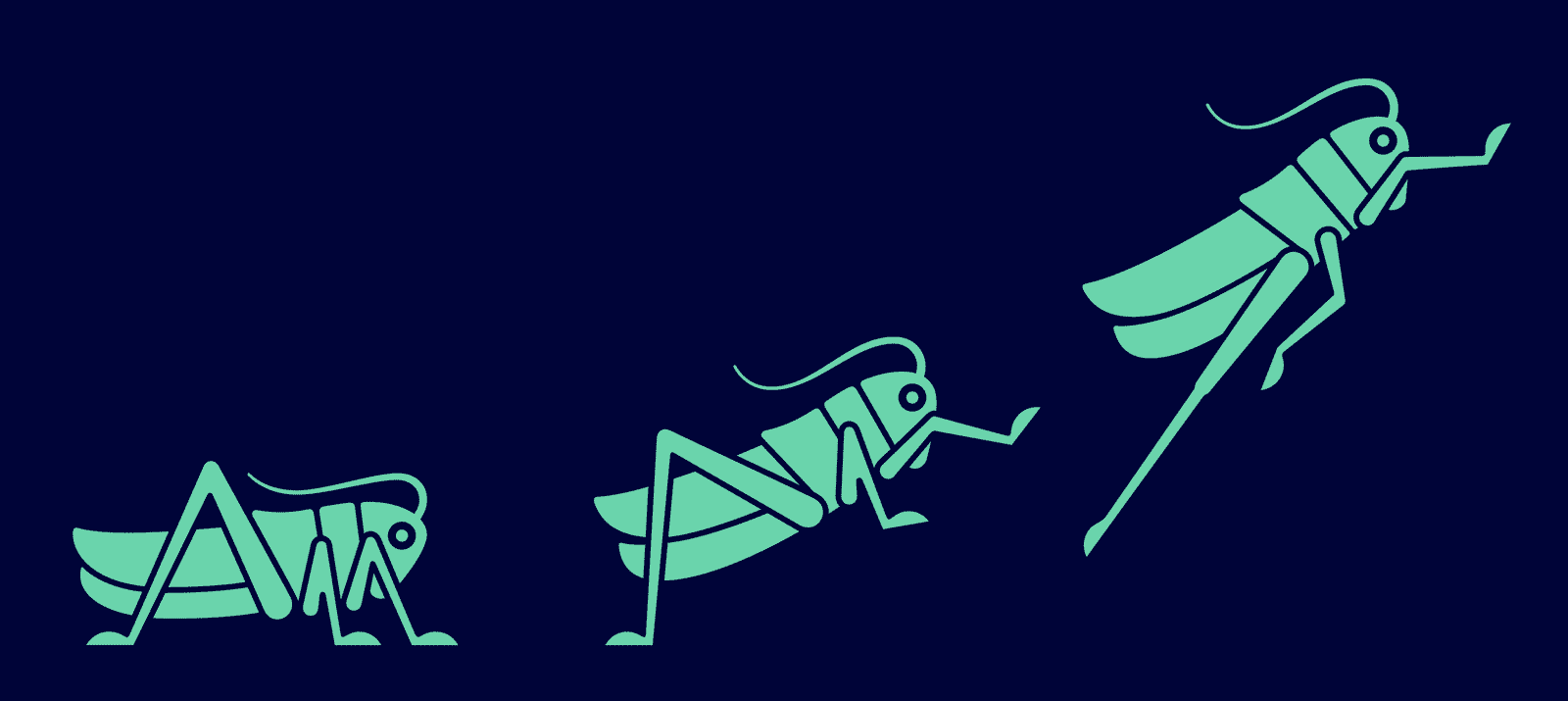
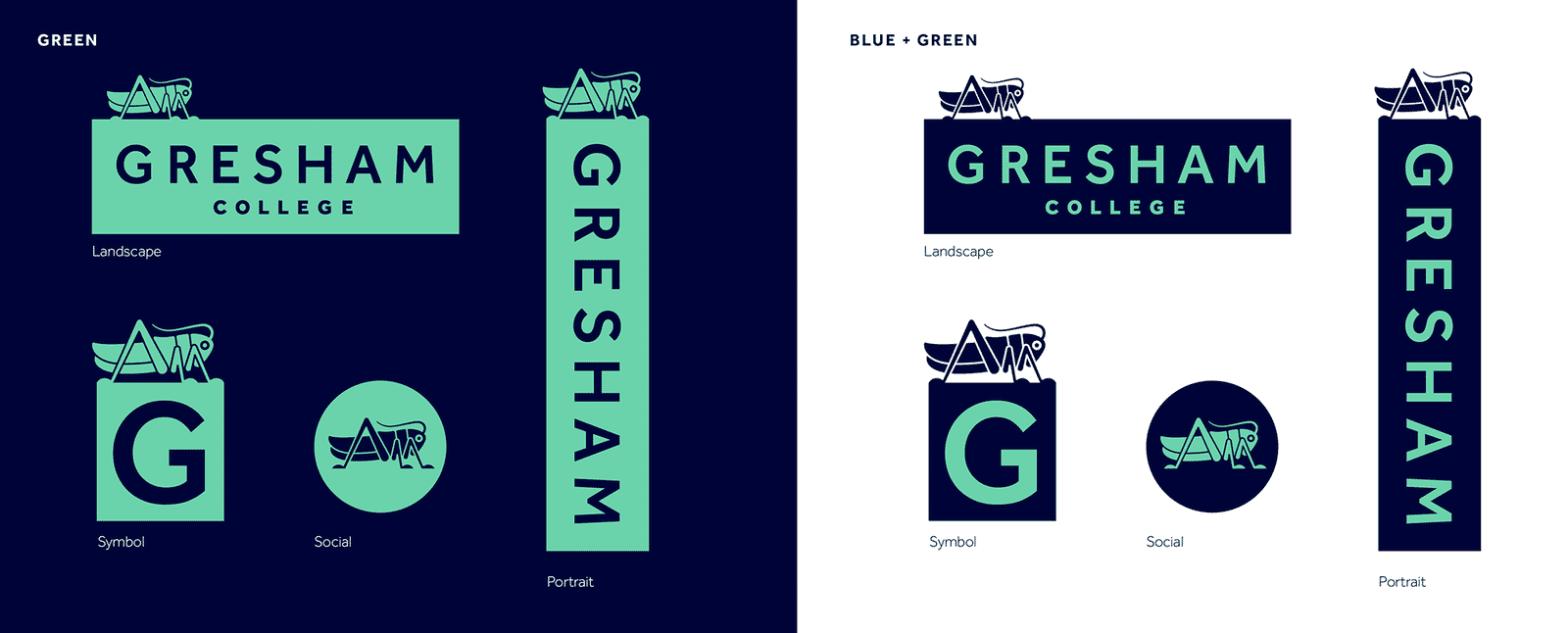
A series of projects began by looking in one direction then quickly changing their view. A meeting with Gresham College about the free lectures they had provided for 400 years led to a rebrand that would help point thousands of lockdown followers to their vast digital archive (and took a new look at Thomas Gresham’s grasshopper at the same time).
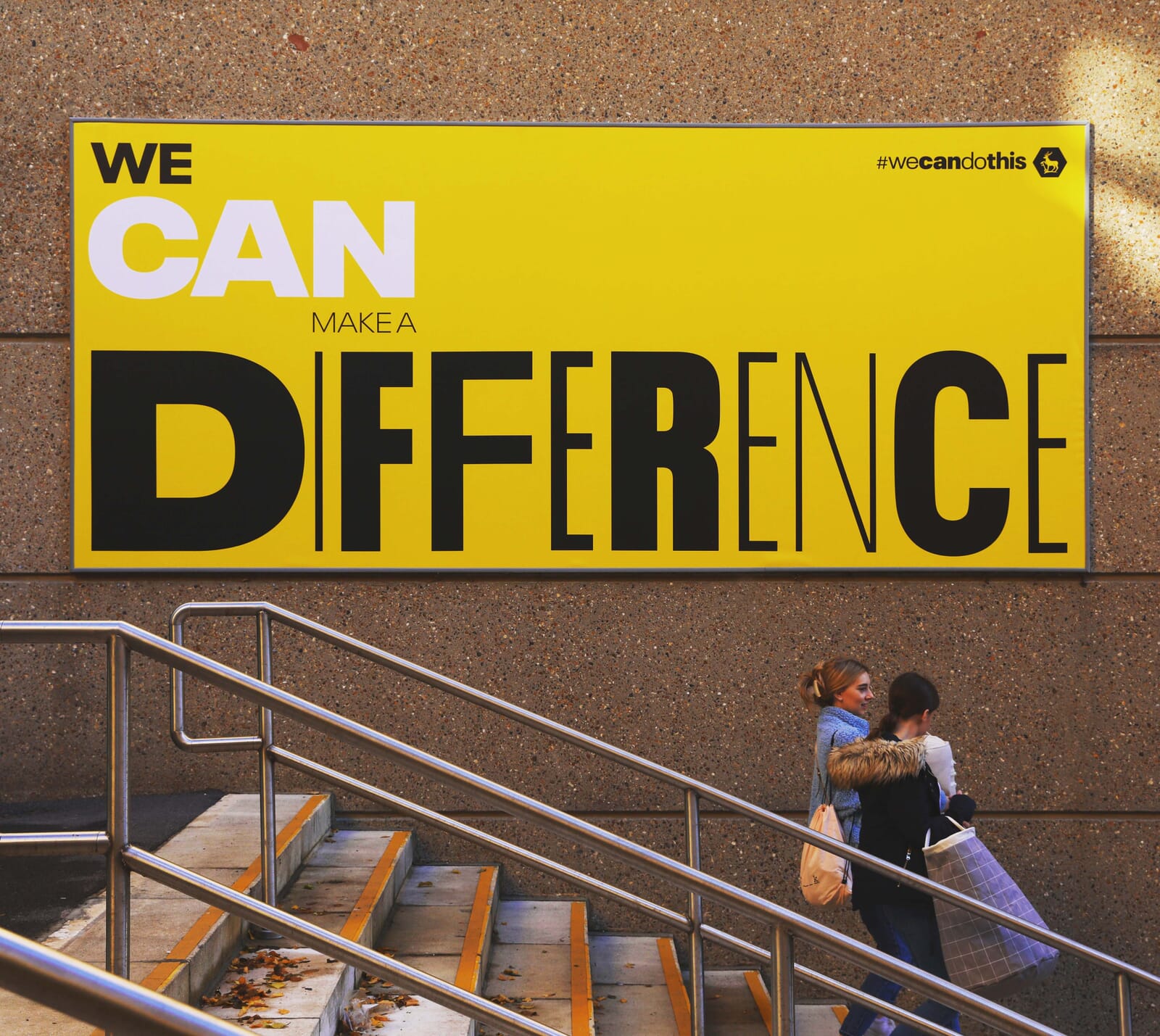
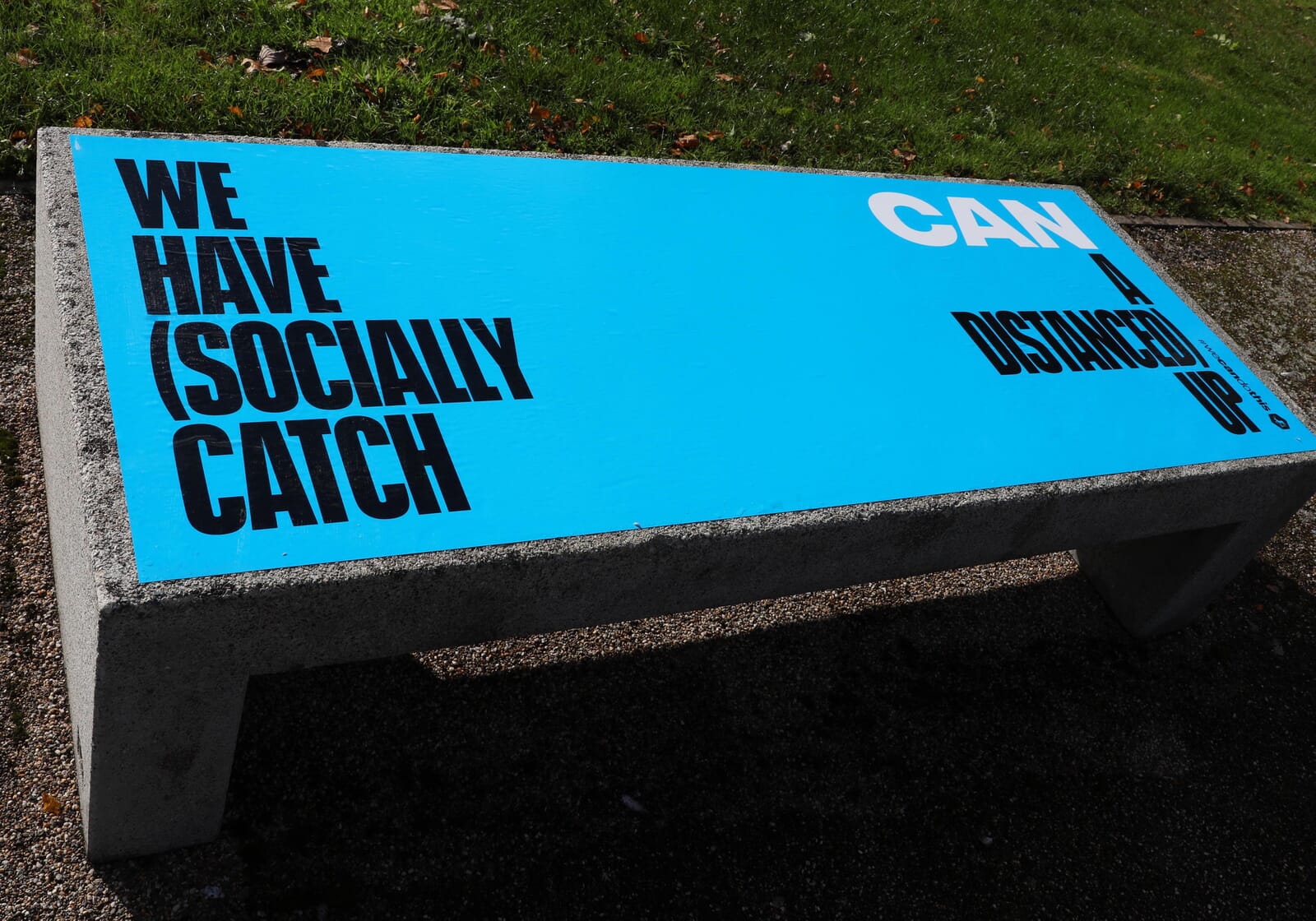
A fundraising conversation with the University of Surrey was several months in – before switching to a campus-wide set of messages suggesting that returning staff and students could do this, and still get through a difficult year.
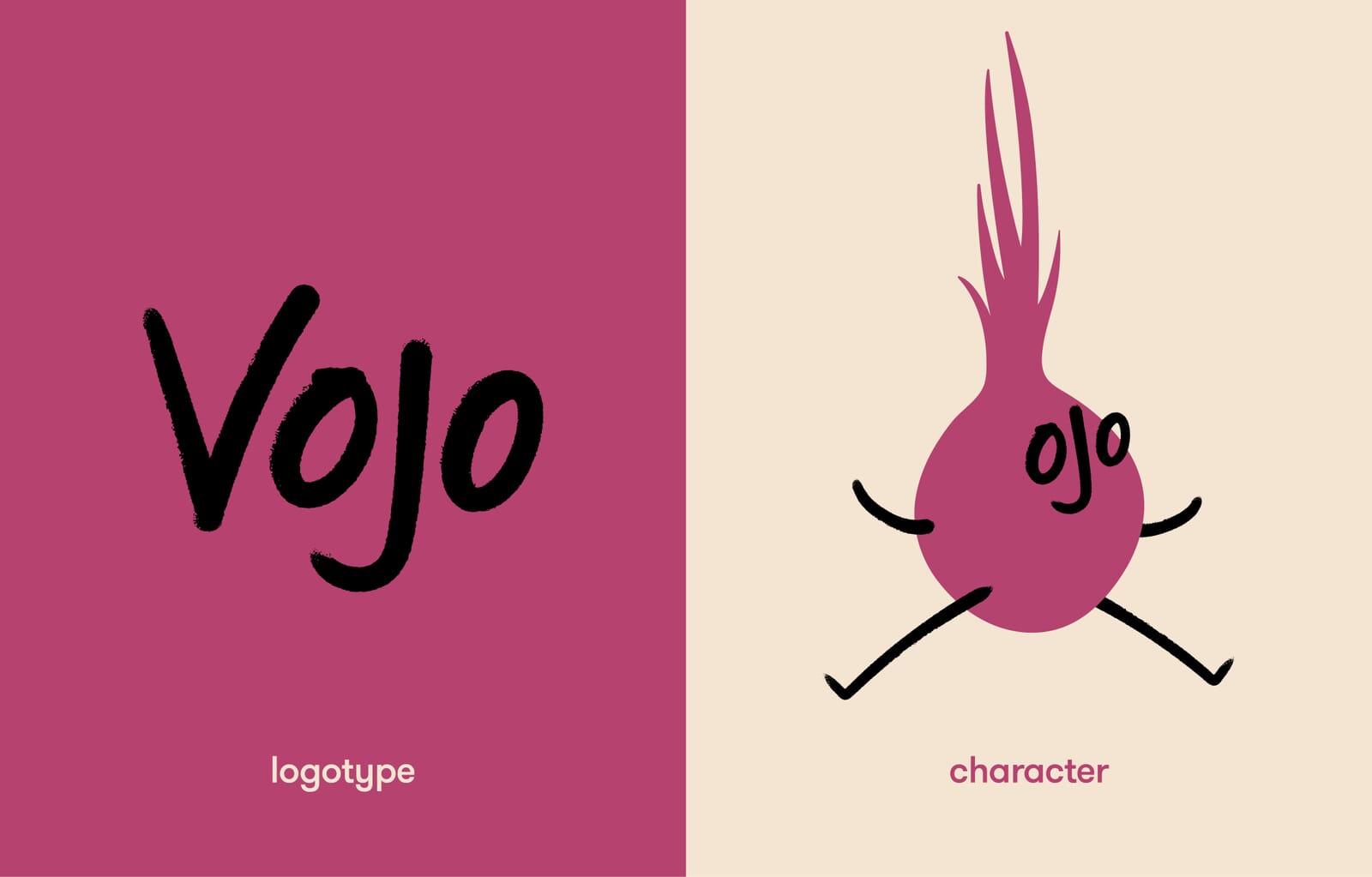
Health, fitness and well-being had jumped onto everyone’s agenda – so our work naming and branding vegan nutrition start-up Vojo was especially timely, helping to spread vegan facts, not fiction.
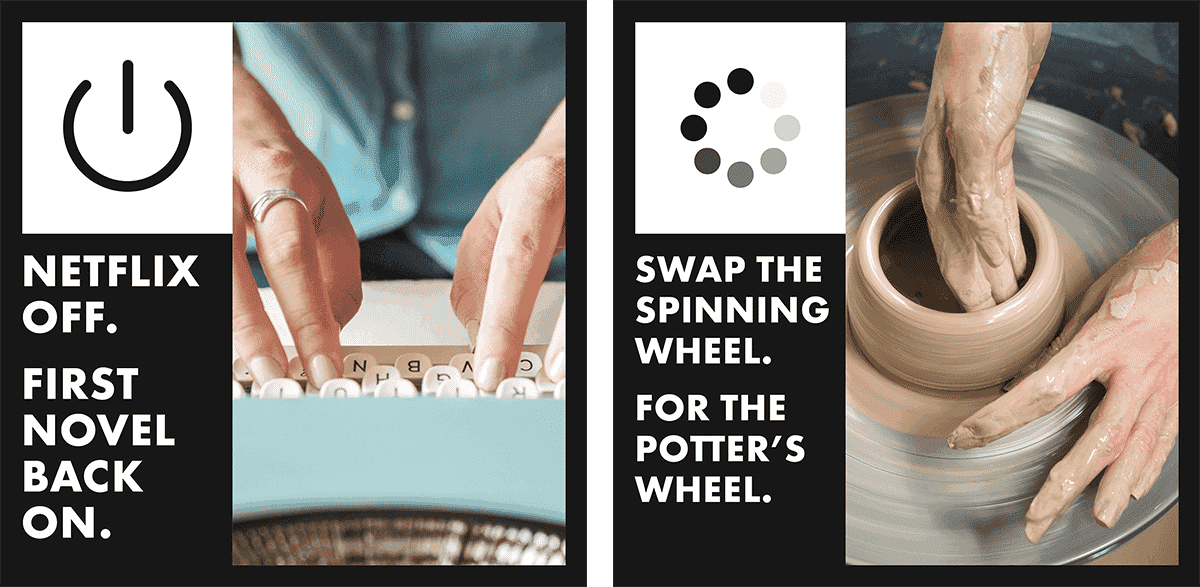
West Dean College initially wanted to talk about all aspects of their communications. Then more pressing worries about filling places on their short courses saw us creating an entire online campaign, suggesting multiple ways for us to pause the zoom calls and do something with our hands instead.
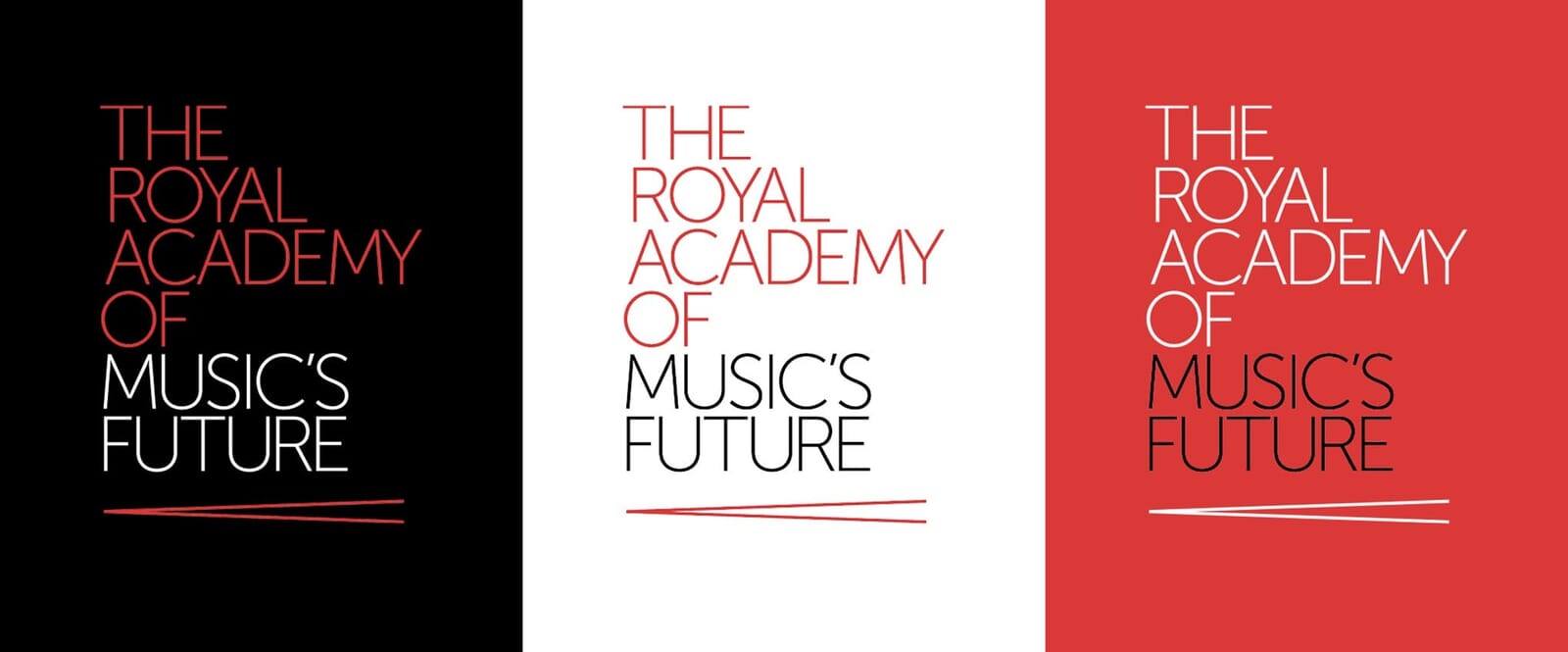
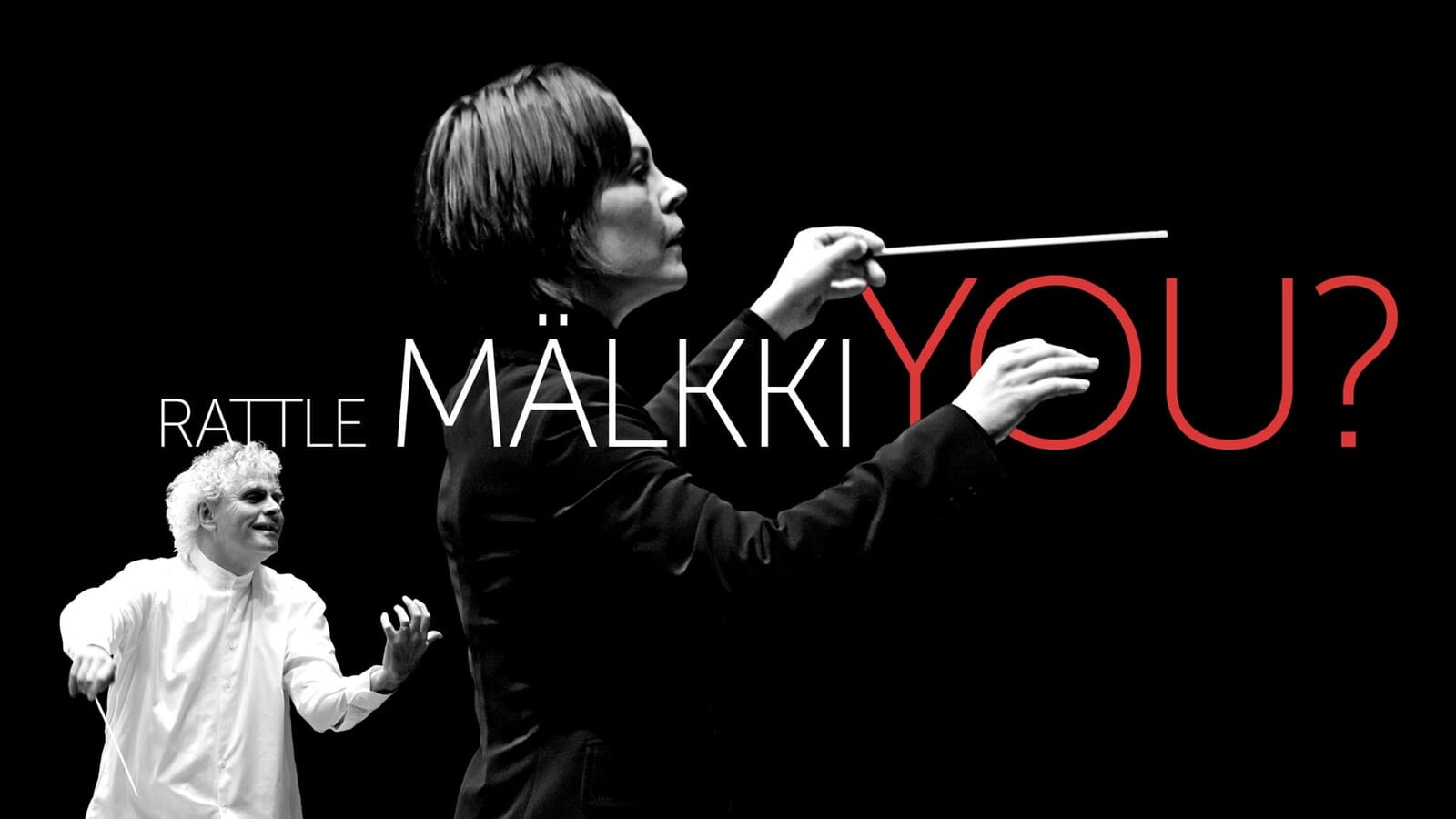
For some long-term projects such as our rebrand of the Royal Academy of Music, their new brand and website has a new focus on what’s coming next for music, not what’s been. From the outside this probably seemed perfectly timed, yet was just the culmination of two years hard graft to prepare the Academy for their bicentenary.
In the new year we’ll be able to talk in detail about projects that have only just begun: a fintech brand built to help not hinder; a micro-museum dropping hints about Shakepeare’s early career and Imperial’s College’s first concerted attempt to talk to and attract future students. There’s a big campaign coming for a national museum, rebrands of famous member organisations, and our work for the Climate Change Conference will finally see the light, just a year late. But this time with someone in the White House who’s listening, not just tweeting.
For the team at Johnson Banks, this has been the year where our determination to help those with a true purpose and make a genuine difference has felt timely and has come to fruition. Our simple aim – to do good work, for good people – doesn’t feel like a pipe dream any more.
Unlike last year, I’m not preparing any tick-boxes or making any predictions about the next. Many of us have had the trickiest year for a long, long time and have earned the right to lie on the sofa, eat too many mince pies and NOT try to look too far ahead.
But, still, here’s hoping…
By Michael Johnson
Our huge thanks to the Johnson Banks team, our regular collaborators and our clients new and old for their support this year.