Designers seem to be hard-wired to protect their work. It starts at college, where, scarred by dysfunctional 'crits', they curl their arms around their project, only to reveal them in their full glory minutes before the deadline. This is partly self-preservation - it avoids the annoying quip from the class know-it-all - or it stops their tutor from meddling. They bring this mindset into the real-world, pulling all-nighters before the deadline because this has become their modus operandi.
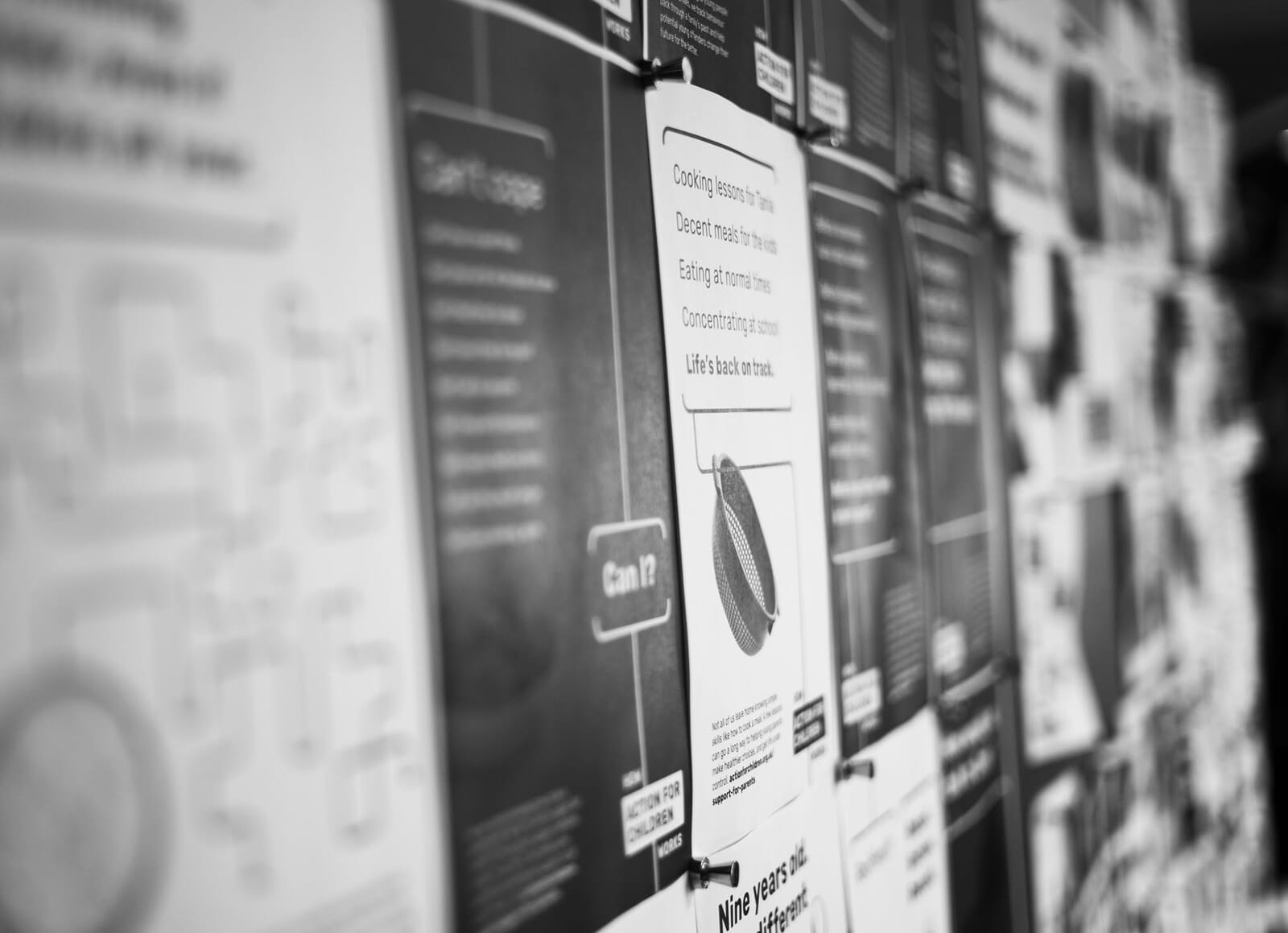
Yet, if they arrive at Johnson Banks, they are faced with acres of metal walls. Ideas everywhere. Magnets by the million. Rolling, every-day discussions and the expectation that their thoughts should be shared, for dissection and improvement, not hidden until the very last minute. They discover that half an idea might be picked up by someone else, and by the next day, become whole.
Some simply can't handle this way of working and run away to more traditional climes. But we've discovered that this multi-headed, hive-mind approach produces genuine collaboration and more robust ideas. After all, if they can make it through three weeks of internal interrogation, they are already halfway there.
Why am I telling you this? Because designing 'in the open' starts in the design studio, with colleagues. The next step is sharing this with clients.
Now, the time-honoured presentation technique is the obligatory 'three routes'. One is safe. One is 'just right'. And one is weird-and-very-unlikely-to-be-chosen. But, share the design journey you have been on, and the presentation becomes a workshop: two-way, not one. A reciprocal exchange of ideas, not a monologue.
At first, I was concerned that lesser ideas might win out. But that hardly ever happens. Explain why route B was abandoned and how it informed route F, and most people agree, whilst better understanding the design thinking that got us there in the process.
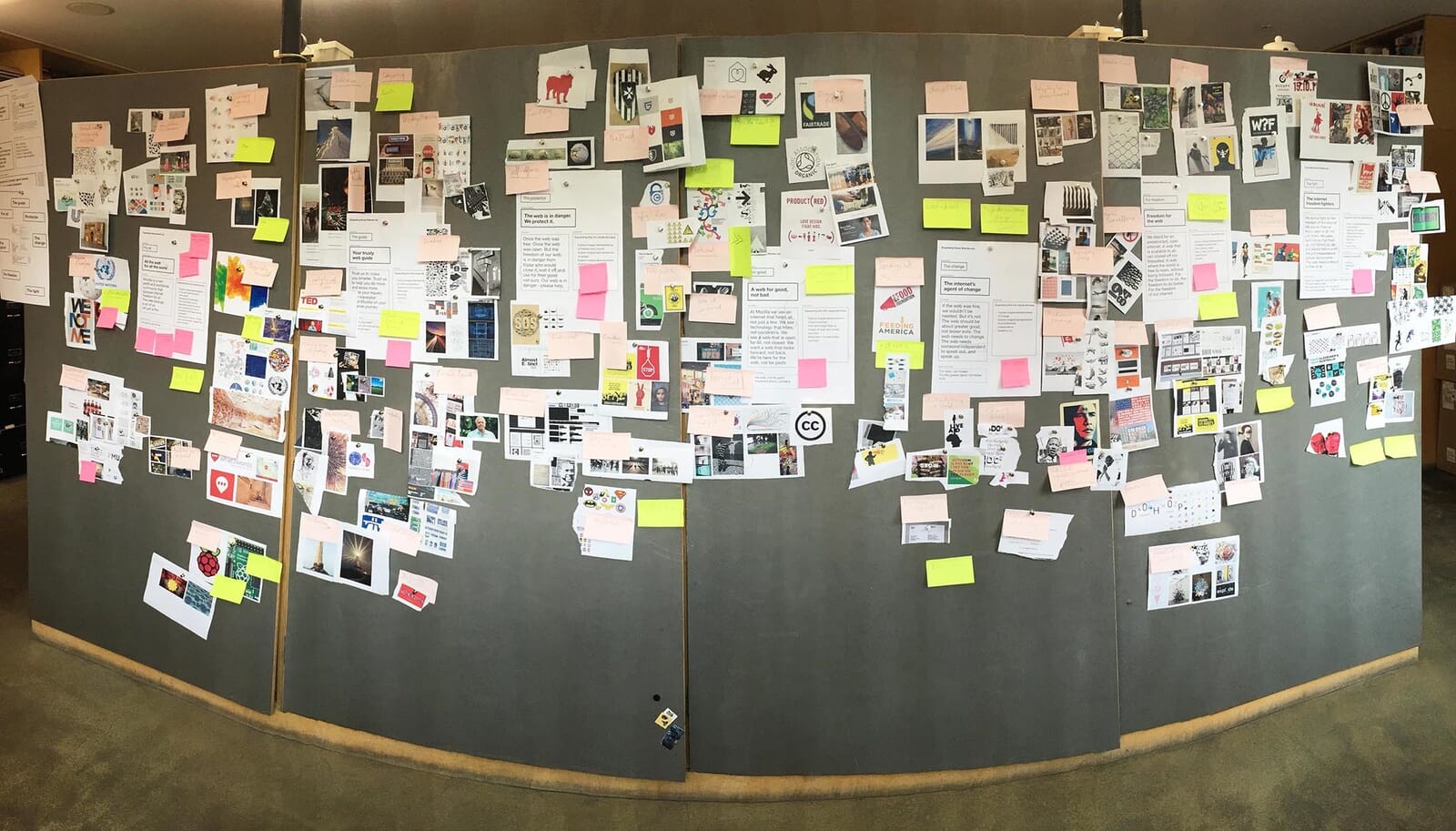
So the next logical step is to do this in public. When Mozilla said 'we're an open source software company, we'd like to rebrand in the open', we gulped a little and thought, 'what's the worst that could happen?'. As it happens, quite a lot of fairly awful things did happen - but - from the initial strategic options onwards, every single stage WAS shared.
Now, at first, the comments on the project blog were polite and considered. When we got to the design stages, less so. And yes, the public scrutiny did have an effect, and some design decisions did change. Some of this was initially painful, especially when routes were revealed to be too close to those elsewhere. But soon we realised that traditionally expensive and time consuming copyright checks were now being carried out in real time, and saving us and our client from any future embarrassment.
Slowly, bit by bit, stage by stage, we got from our initial designs to four, which were shared again, tested, and discussed. And after a final burst, we had found the best way forward - and Mozilla agreed.
Some of the trolling hurt a little, I'll admit. But - we'd said 'yes' - and we were determined to hang in there. And, perhaps in retrospect, by allowing the many 'Mozillians' around the world to have their say along the way, once we got to the final route, the shock of the new was already old. There's a chance that the process side-stepped the now rather predictable 'new logo' debacle and accompanying hoo-ha.
Is this the right process for all clients? Perhaps not. And this is something that can't happen overnight - you can't 'bolt it on'. It starts weeks, perhaps months back from the client presentation, involves a climb-down from traditionally confrontational studio practices and a reboot in thinking for all.
Should we all be more transparent about what we do? Maybe.
It is worth giving it a try? Definitely.
By Michael Johnson
A version of this article appears on the Designerd website