Most diseases start in childhood, yet most health research is carried out in adults. If that research could begin earlier in our lives, we could spot the recurring patterns sooner, intervene earlier and make a huge impact on the future health of generations.
A team led by the National Institute for Health and Care Research (NIHR) BioResource in partnership with the NHS, Anna Freud and the University of Cambridge approached us with a solution. They needed help to name, brand and communicate a new long-term nationwide scientific study that would study two key things: childrens’ genetics and the impact of environment on their health, from ages 0 to 15.
On paper, the idea was impressive. Studying children today could provide clues for diabetes, mental health conditions, heart disease, rare diseases and immune conditions tomorrow. But the challenges of getting children, schools and ultimately parents interested in – and prepared to sign-up to – a long-term scientific study needed careful thought.
Our naming solution was D-CYPHR (shorthand for the DNA Children + Young People Health Resource), which was unusual, memorable, and neatly captured the ‘deciphering’ of data that will take place. The next task was to create clear design directions to be assessed – not in our clients’ boardrooms – but in the classrooms of schools across the country.
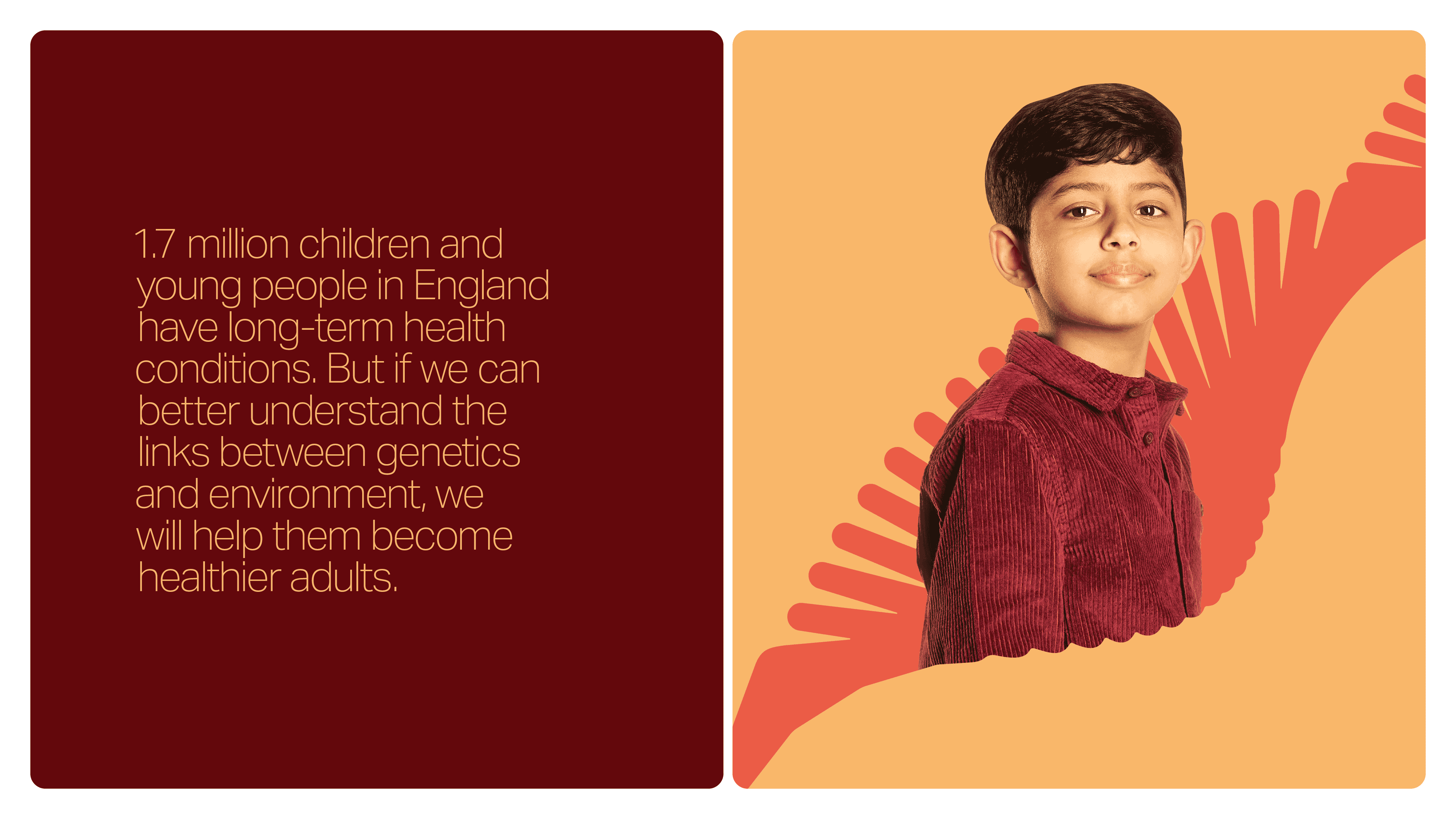
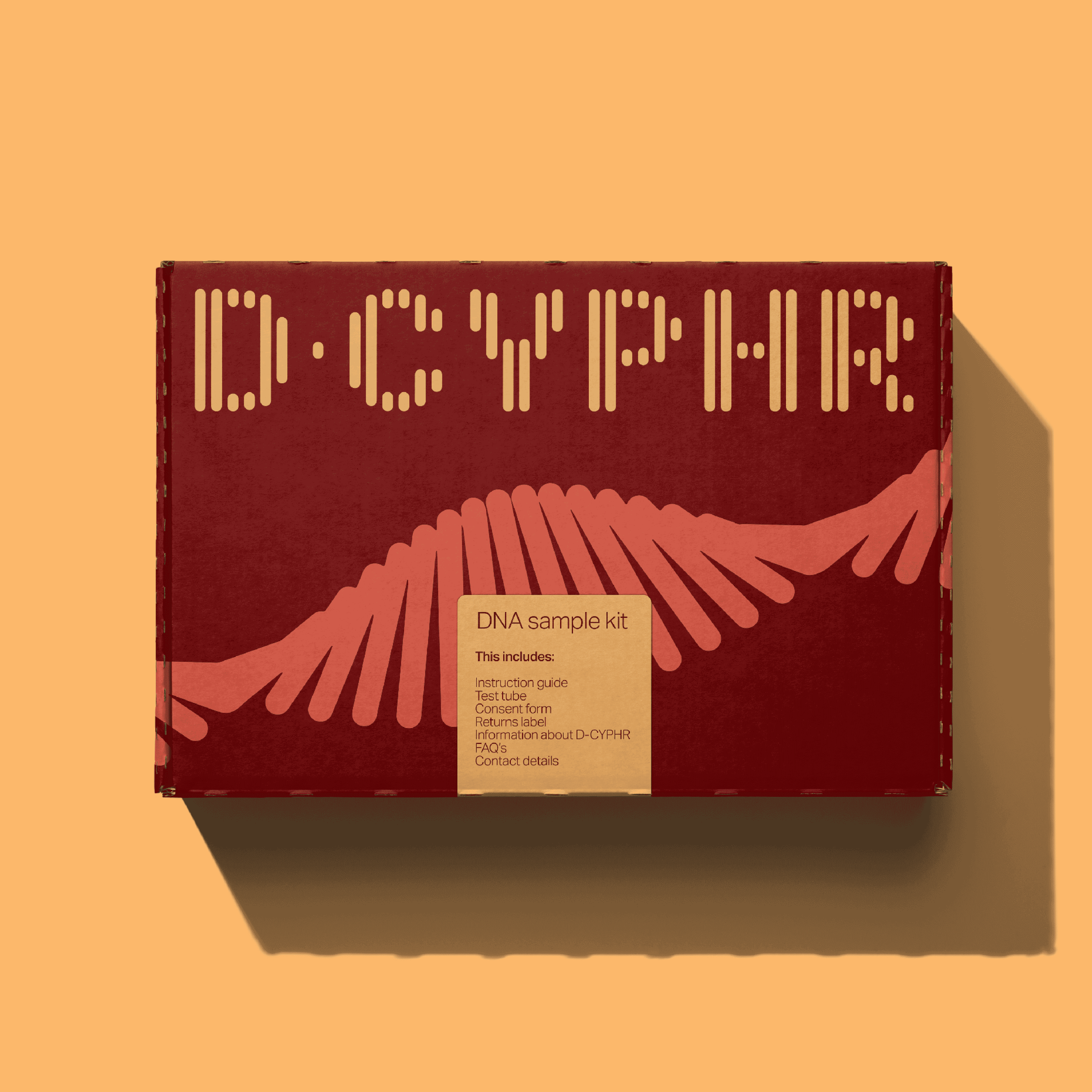
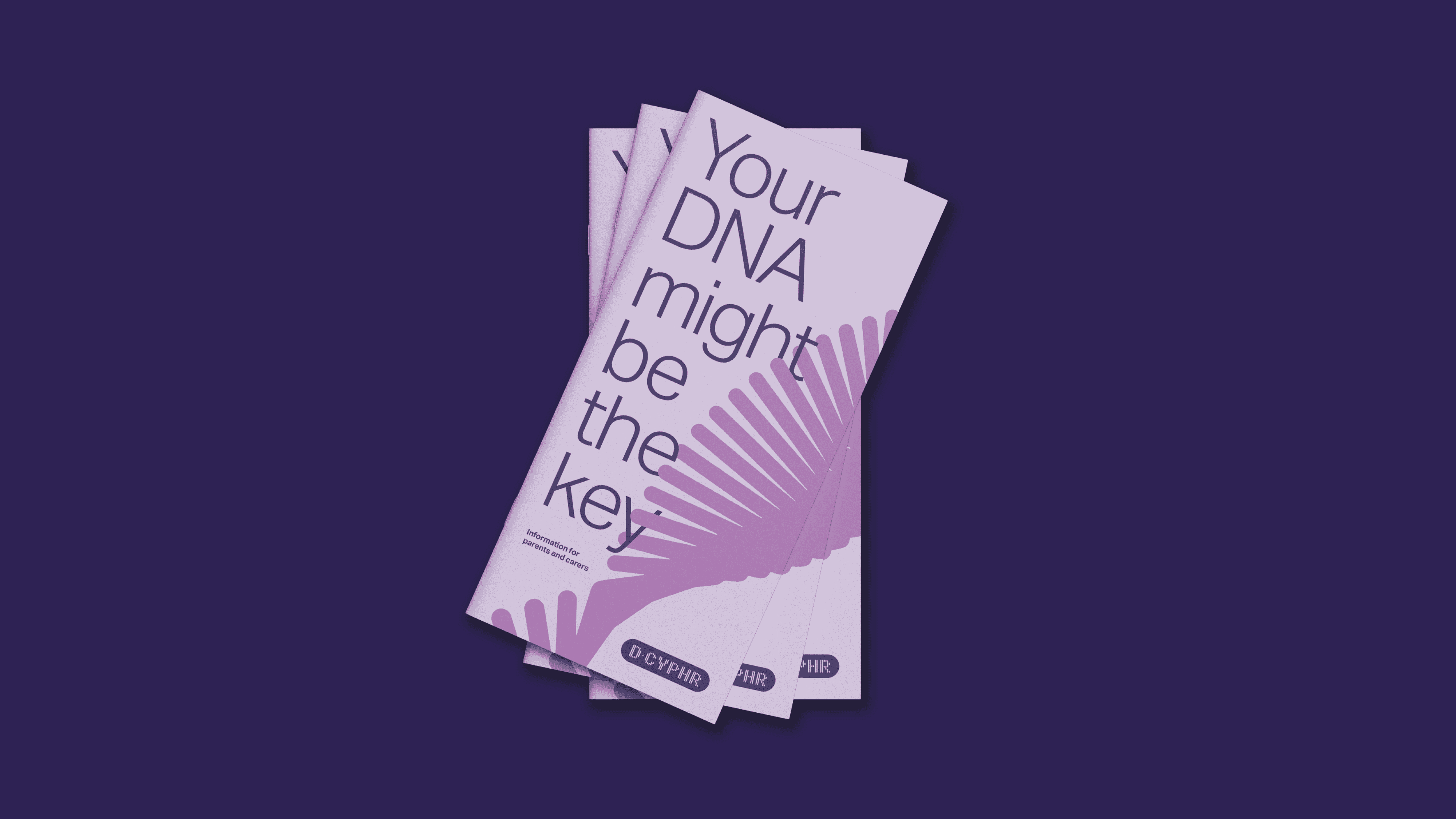
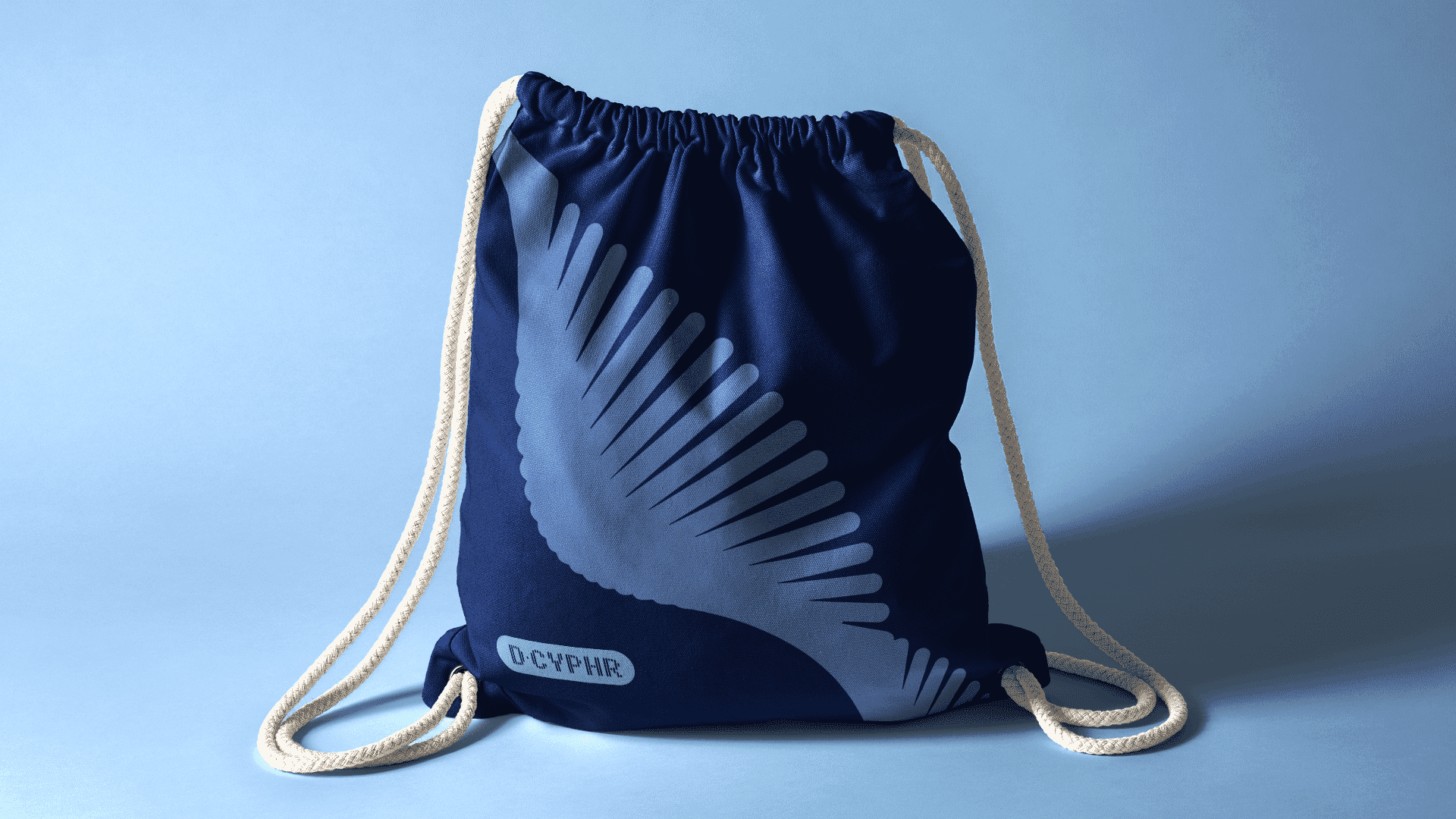
The clear winner, after extensive testing, was a route that communicated the gravity of the task to teachers and parents, but still appealed to and attracted the children themselves. It expresses the project’s name in ever-turning DNA-like rods, an unusual visual solution that lends itself to infinite animation, stands out a mile in the health sector, and opens up a rich visual language of rods and helixes.
By combining the logo with a clear and highly accessible colour palette, adding the helix graphics and images from a dedicated and diverse photoshoot, we have built a toolkit that is designed to stand out within the everyday clutter of a school environment.

The tone of voice for the project is straightforward, but celebratory. It has to explain the benefits of getting involved in simple terms, yet position the children themselves as ‘DNA superheroes’ – whose data could do great things.
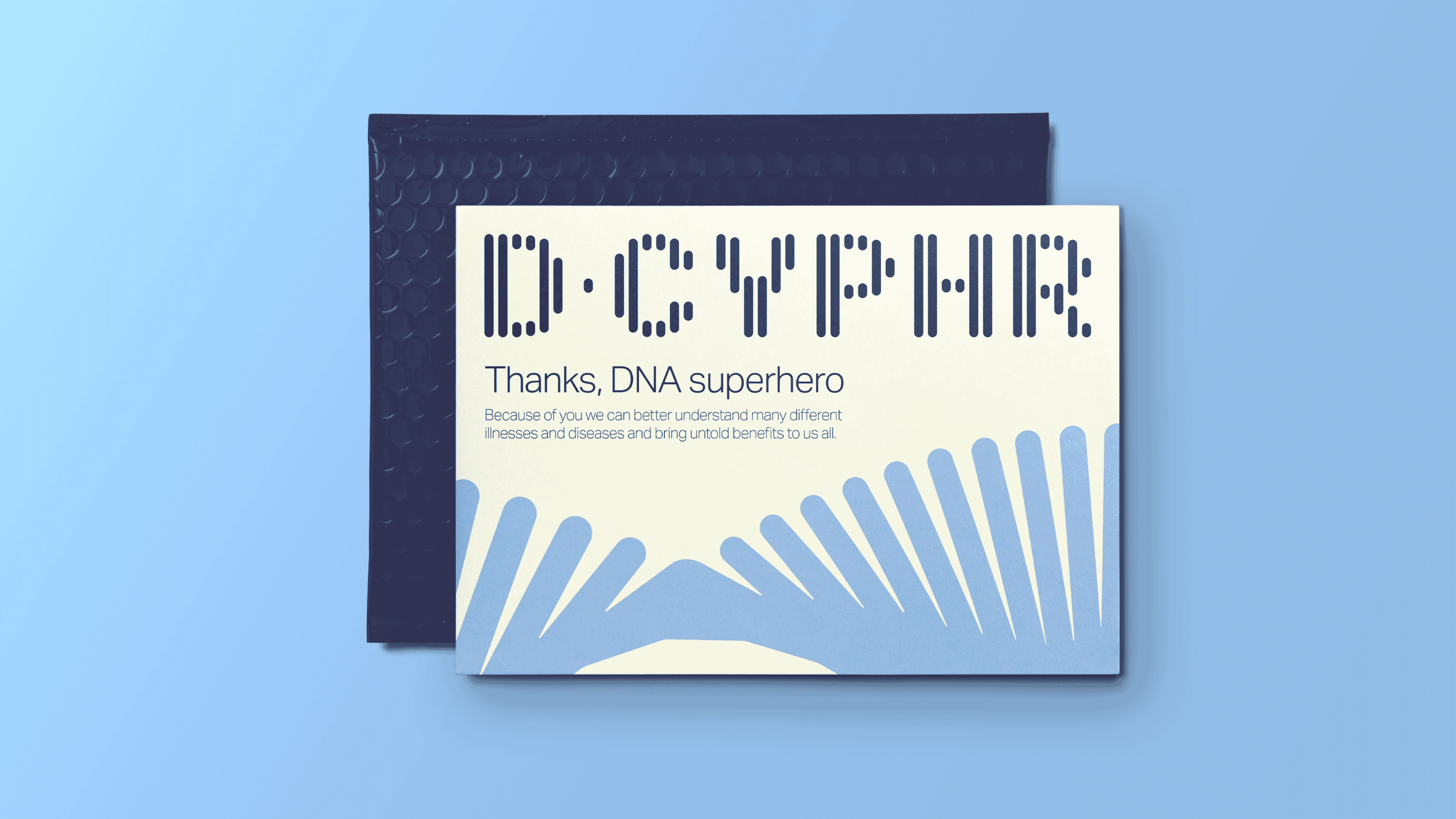
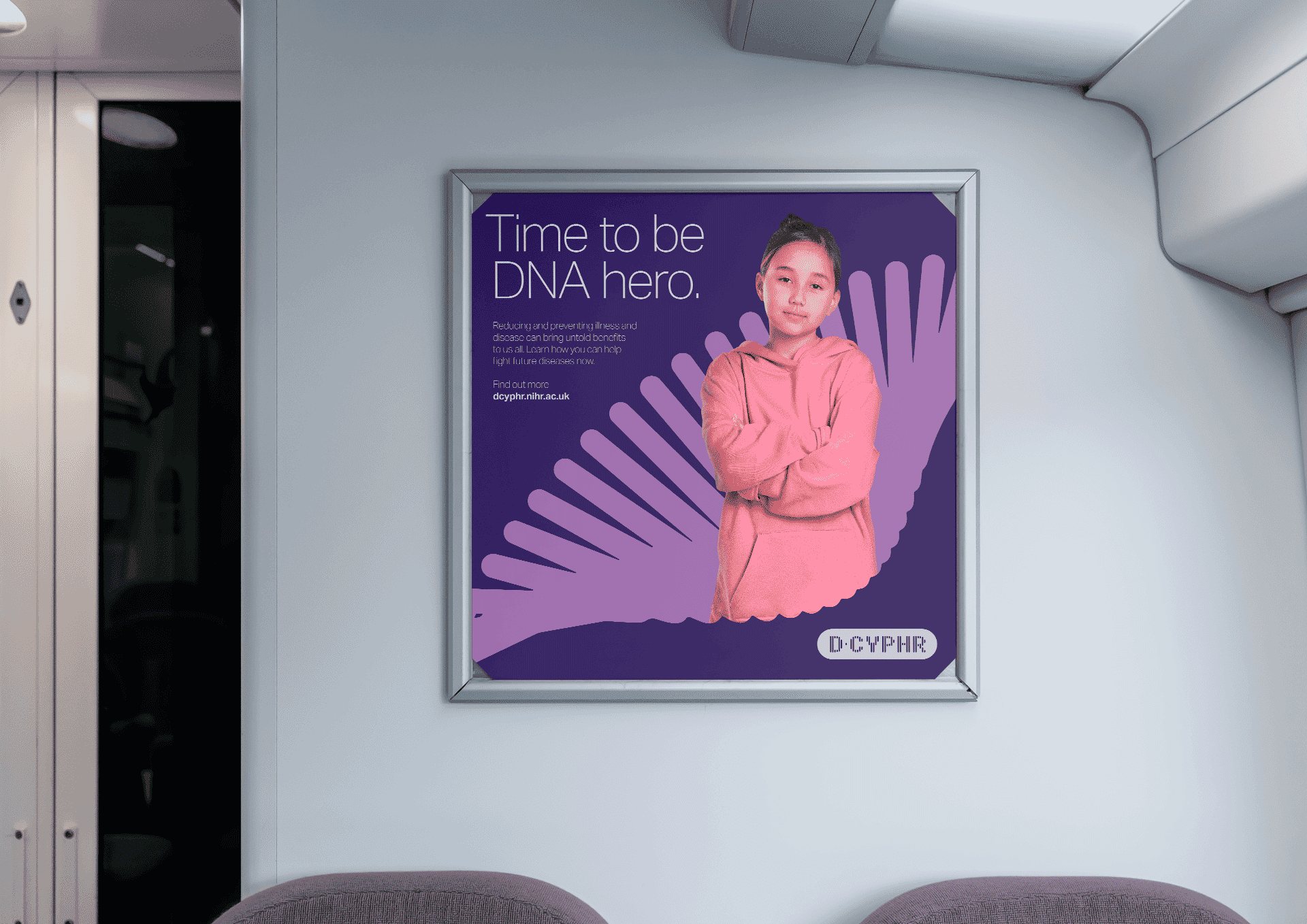
And in application, the scheme has to be simple to use, inspiring for children and schools, without alienating parents.
1.7 million children and young people in England have long-term health conditions. From improvements to how diabetes is treated in children and accelerating the solutions for cystic fibrosis, to the national roll-out of whole genome sequencing for babies and children in intensive care, this project is one of the keys to the tracking and treatment of an entire generation, pioneering new treatments and creating better care for children – and the adults they will become.
The team
- Naming, brand design & animation: Johnson Banks
- Photography: Peter Mason