Minutes after we’d made the final presentation to be appointed for this project, University College London’s President and Provost pressed a book of essays into our hands. In it he’d made the remarkable observation that ‘UCL was the biggest University in the world of which no-one had ever heard’.
Quite a statement for an organisation of about 65,000 staff and students, located in nearly 300 hundred buildings across the capital, containing over a dozen faculties and camped in the world’s top ten for years. And for those who knew them, many things were going right. But externally, perceptions of who they were – and what made them different – were lagging behind. For example, in the key North American market, there is constant confusion with UCLA.
So being clearer about their differences became key – and UCL’s origin story is a fascinating one. As London’s first University, by being determinedly secular and open to all they enraged King George IV (who set up King’s College London in response). They were also the hot-bed of 19th century progressive thinking through their association with Jeremy Bentham.
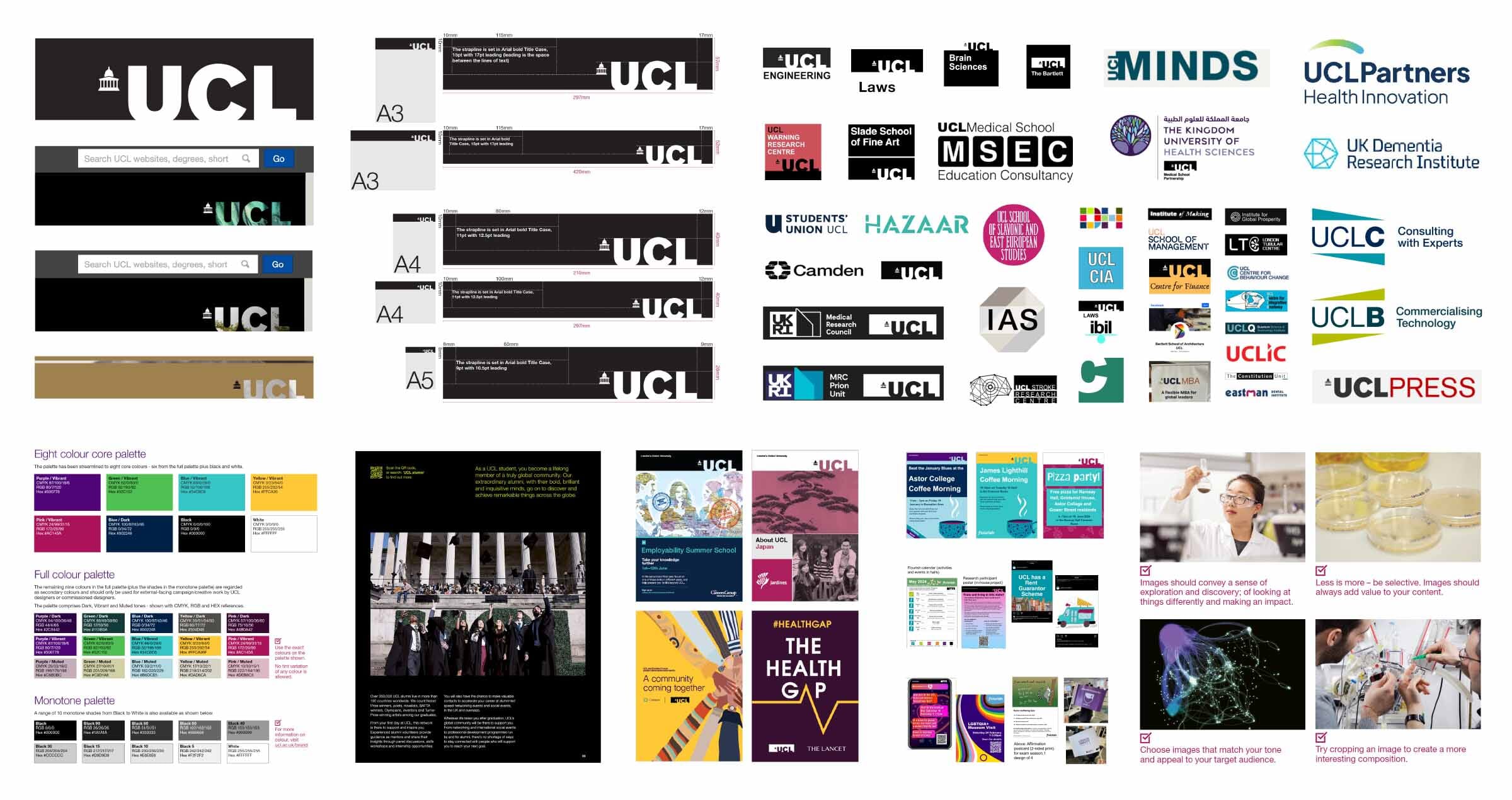
Within their previous brand, two key elements had been lost. Their iconic ‘portico’ building – beloved by students and alumni as their most identifiable symbol – had been rendered so small it often got lost. Their traditional colours of purple and blue had been replaced with black and white. The ‘bar’ device was meant as a ‘window’ into what lay below, but over time had become just a badge in the corner. The overall design system had become decidedly neutral.
We soon realised that to staff, students and alumni, UCL continued to be an educational meritocracy that had opened up a myriad of possibilities. There isn’t a ‘cookie-cutter’ graduate of UCL – each is their own person, on their own path or journey. And what kept coming up in ours and others’ research was that UCL was seen as London’s most modern University, and provided a ‘platform for possibility’.
This insight endured throughout multiple meetings and workshops, and eventually led directly to UCL’s new core idea – ‘Here, it can happen’. It encapsulates a ‘can-do’ spirit that we’d unearthed, but with a splash of humility (which is increasingly rare in this sector). We could also see how to adapt and extend the idea across the triple task that lay ahead: a rebrand, their bicentenary celebrations and a philanthropic campaign. And we were soon to discover that messaging and tone of voice work could use it as a vital springboard.
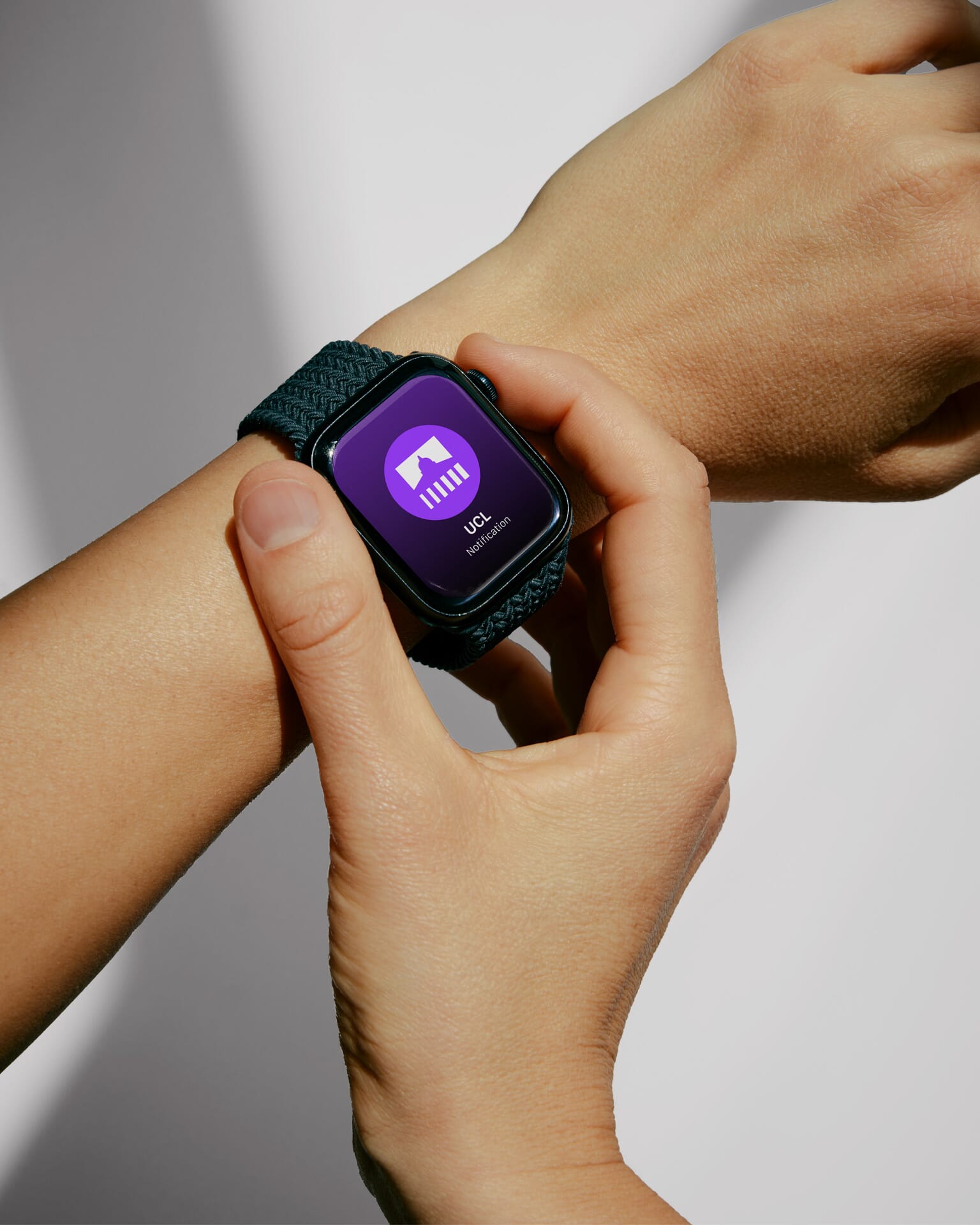
As we began the design stage, first we began an extensive journey to redesign the portico in a contemporary way. Eventually, imagining how light and shadow could play across its pillars inspired a modern take on the building’s facade.
In parallel, multiple typographic experiments with their acronym resulted in a stronger, bolder, modern logotype which matched nicely with the symbol – and together could flex across pretty much every format we could think of.
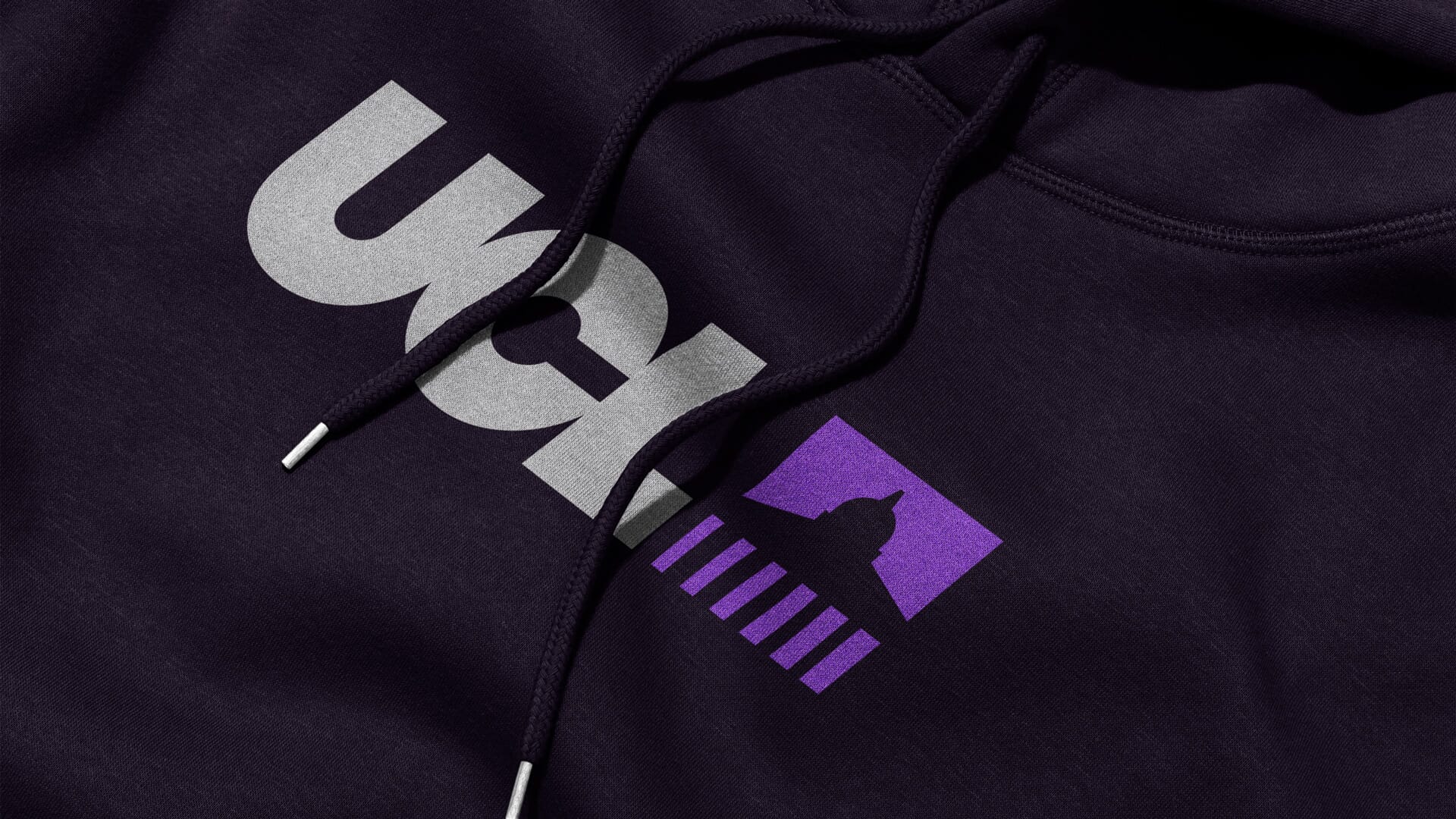
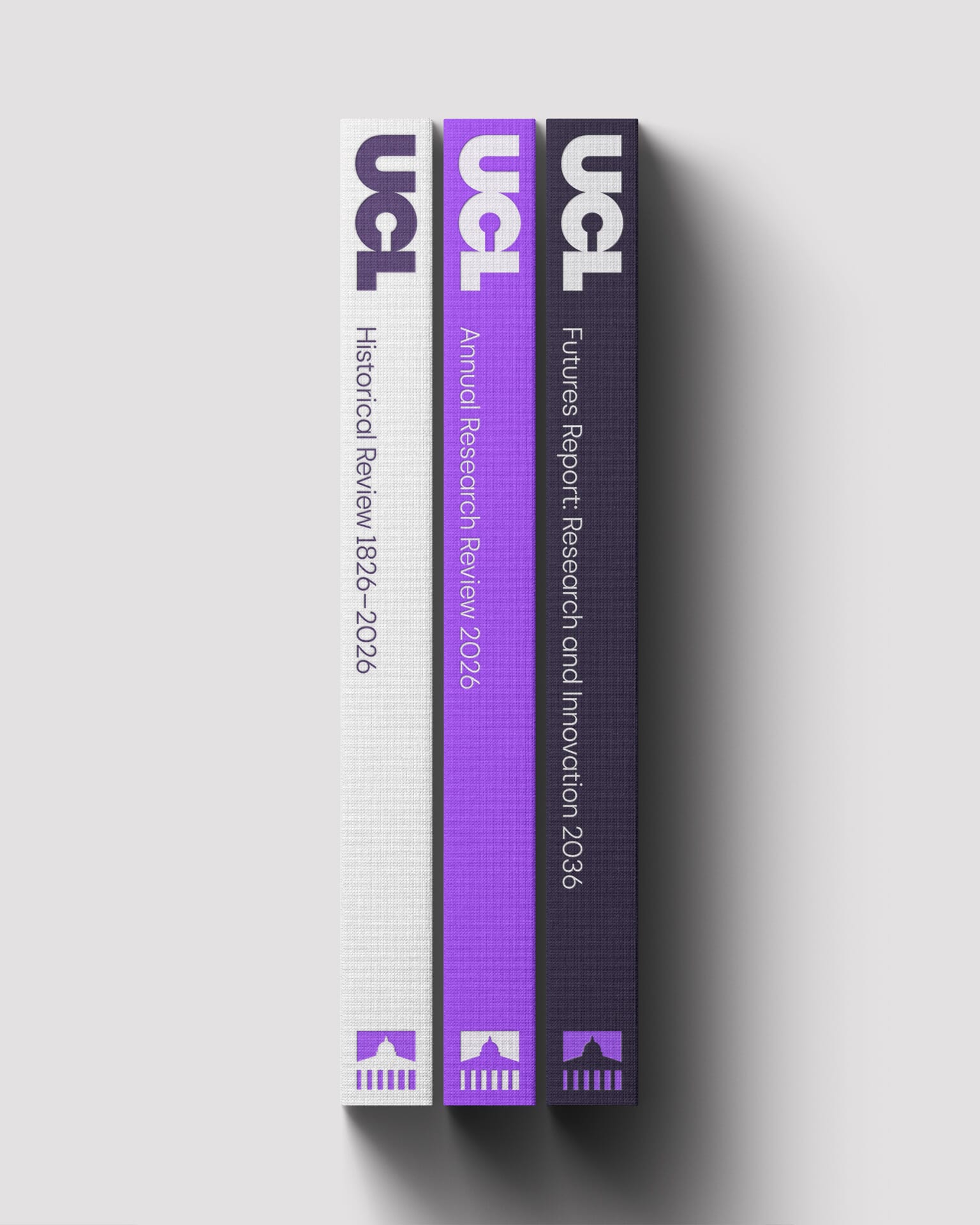
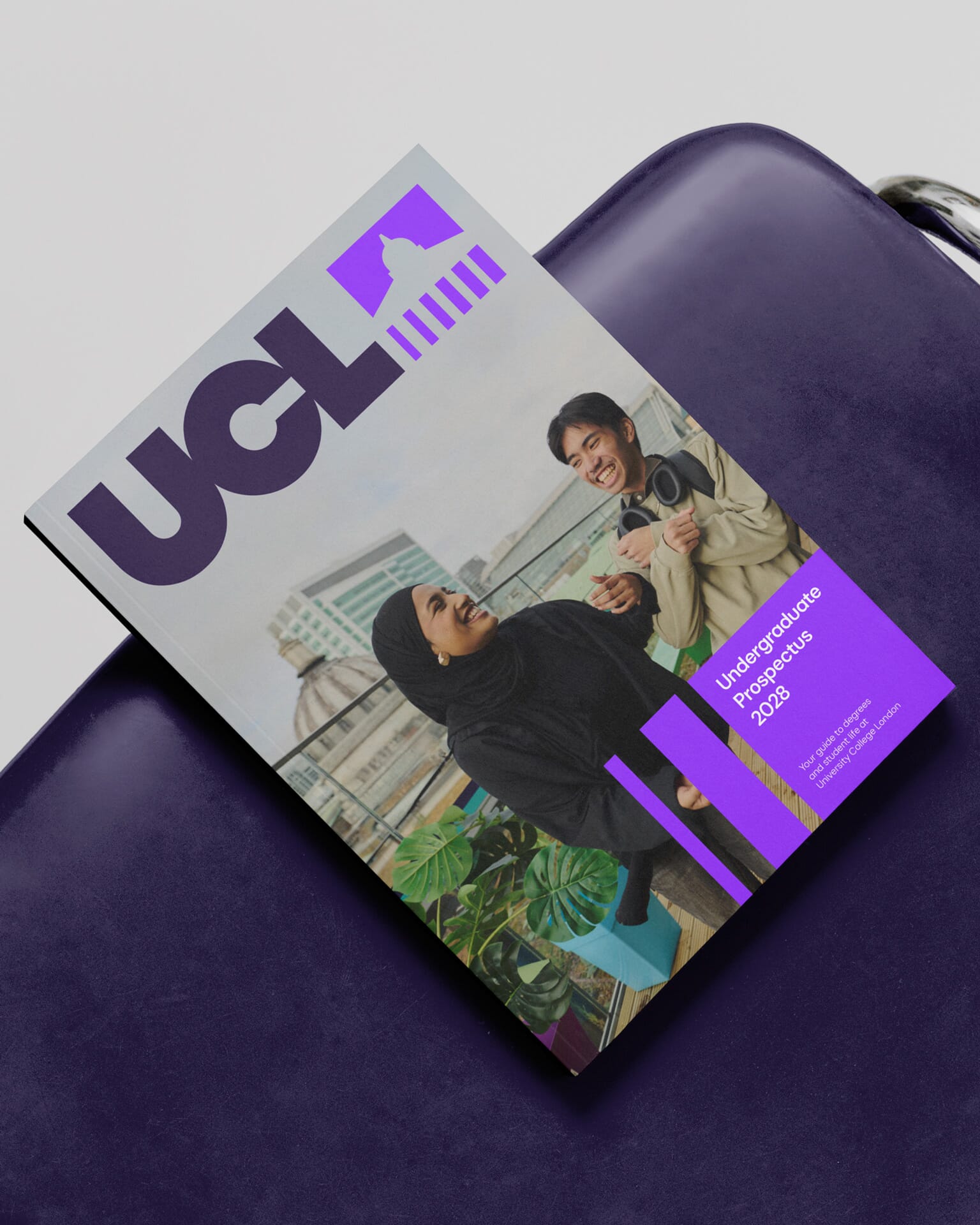
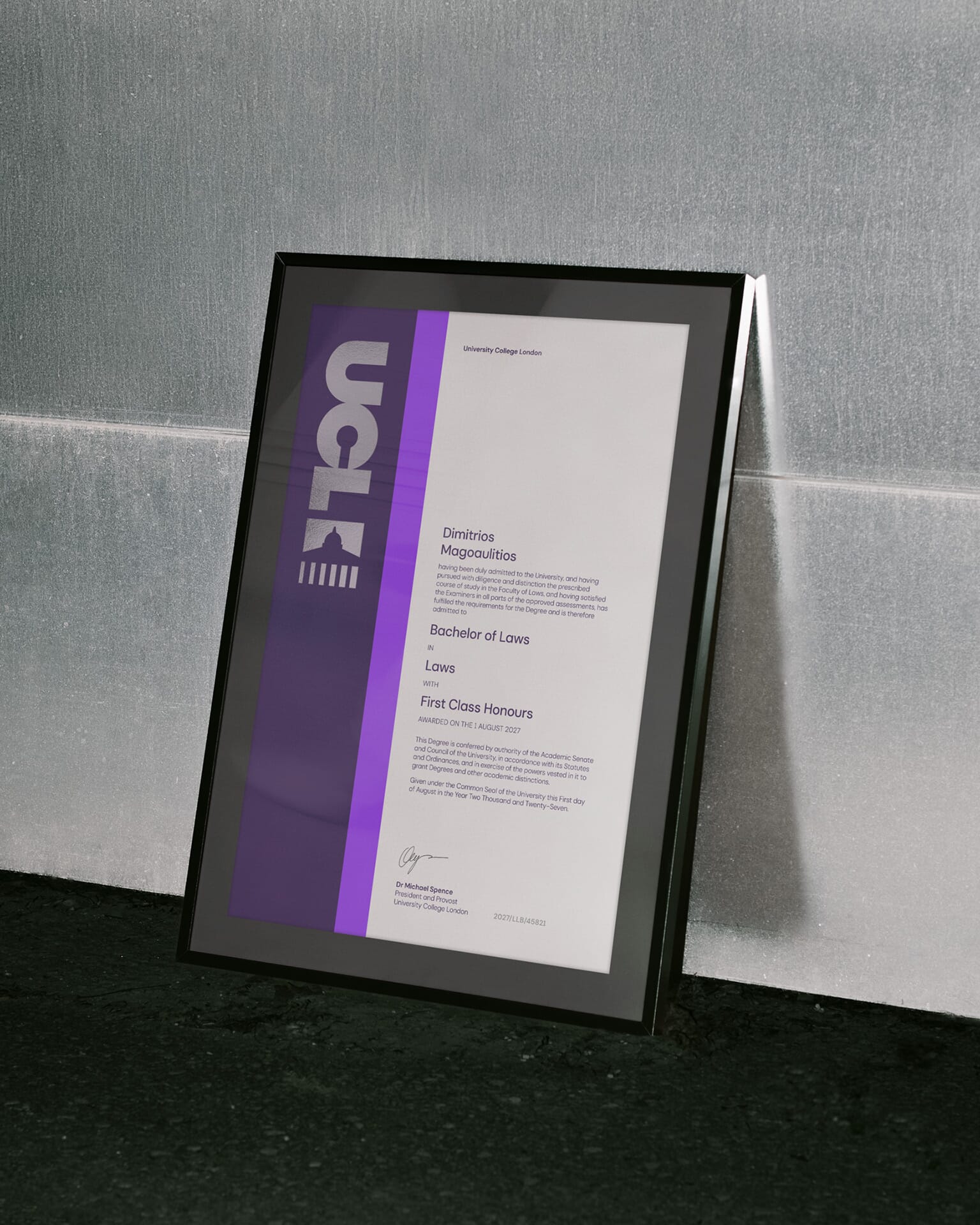
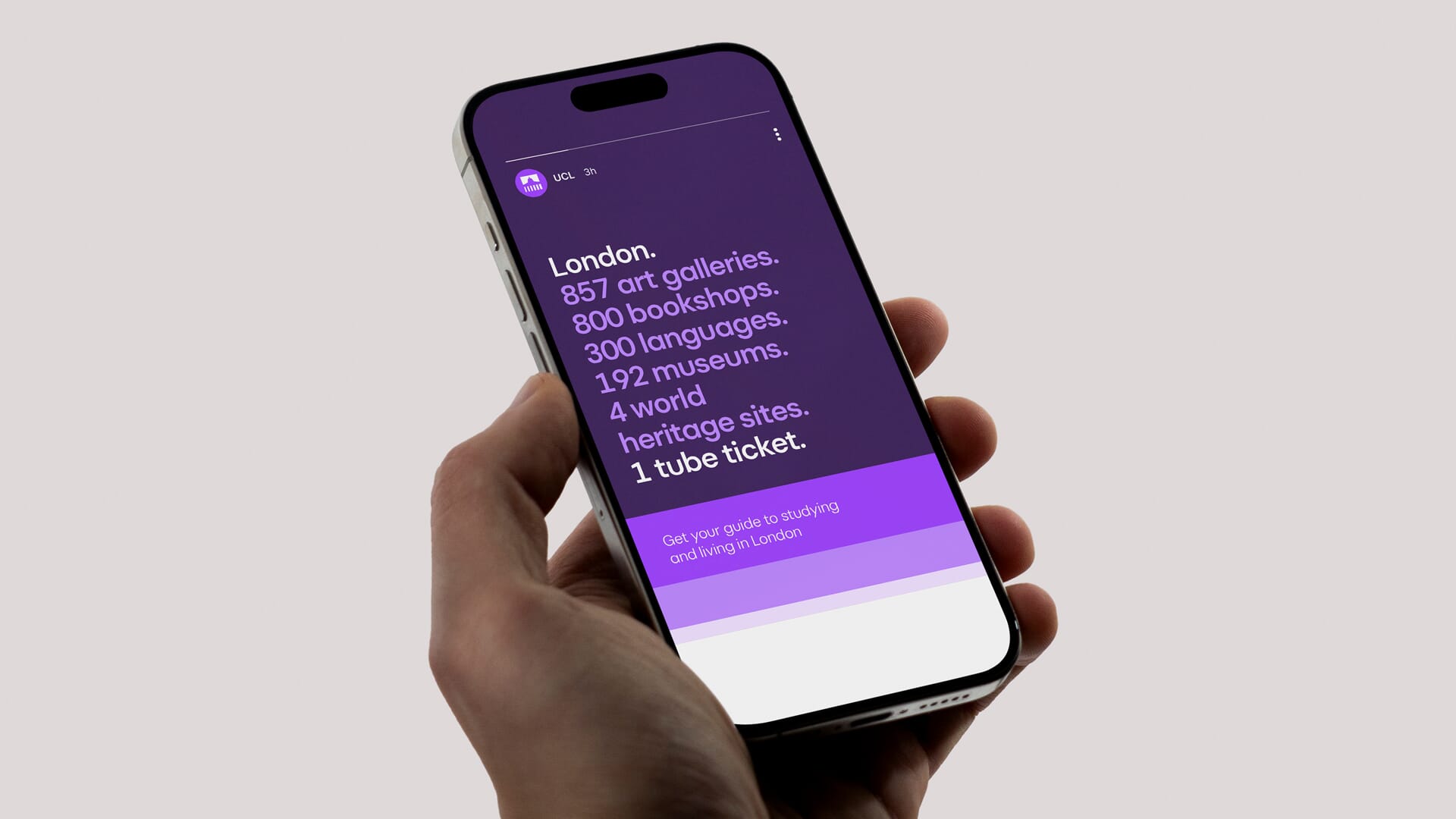
Higher education is a heavily colour-coded sector (where dark blues and reds prevail) so we wanted to take another look at their heritage colours. By introducing a series of screen-friendly purple hues, a hint of the light blue and carefully tooling everything to be hyper-accessible, we’ve developed a colour palette that will help them stand out on the world stage.
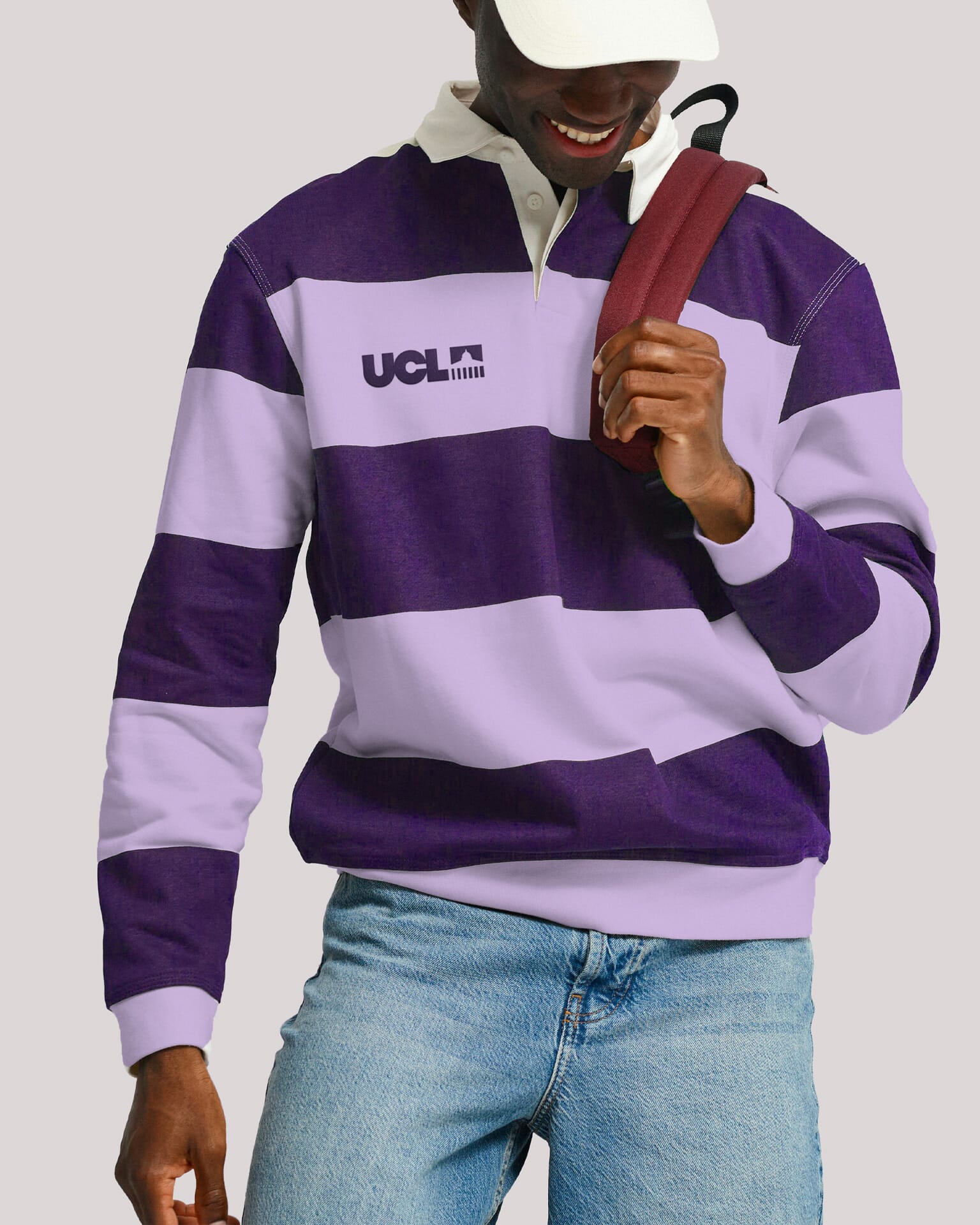
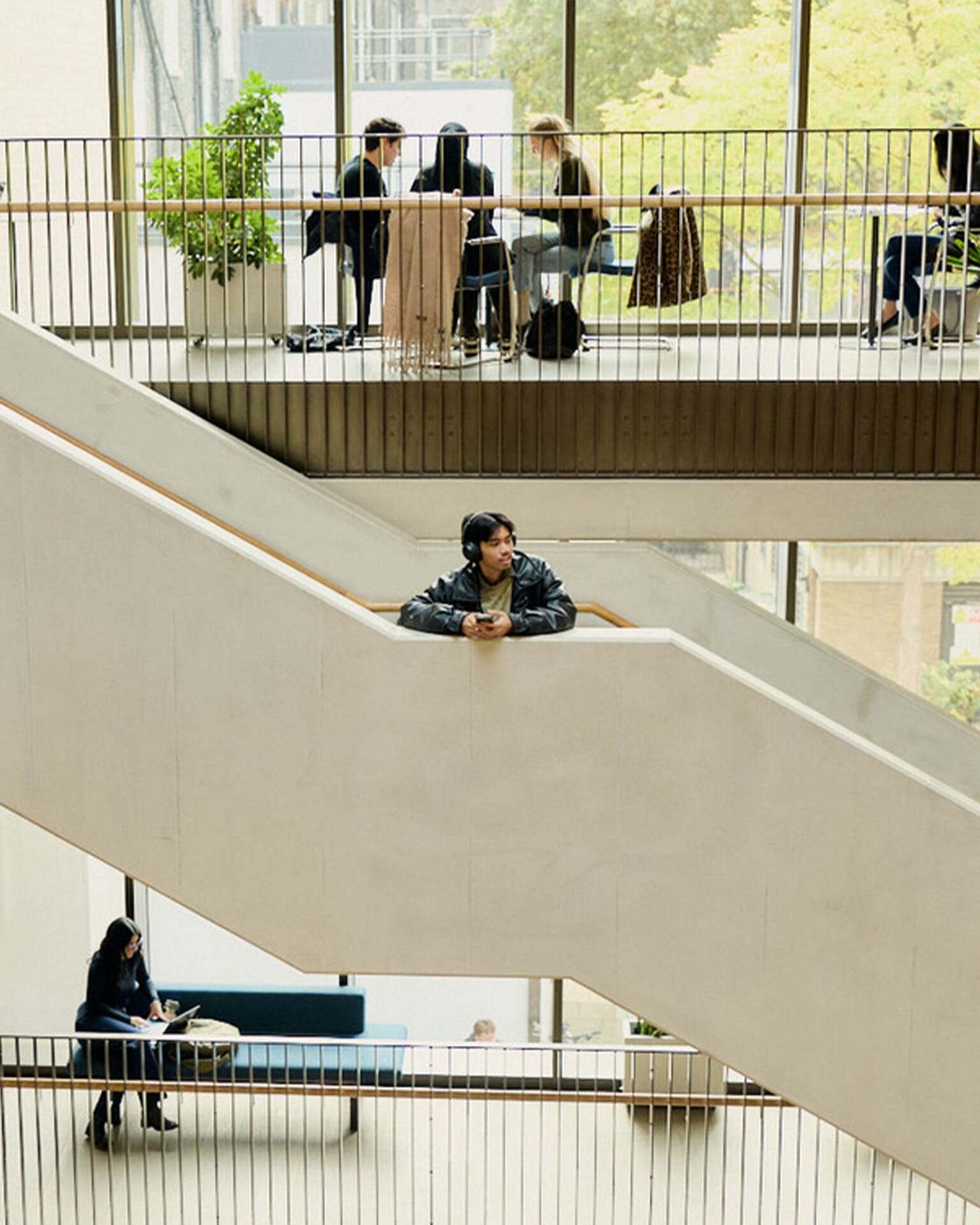
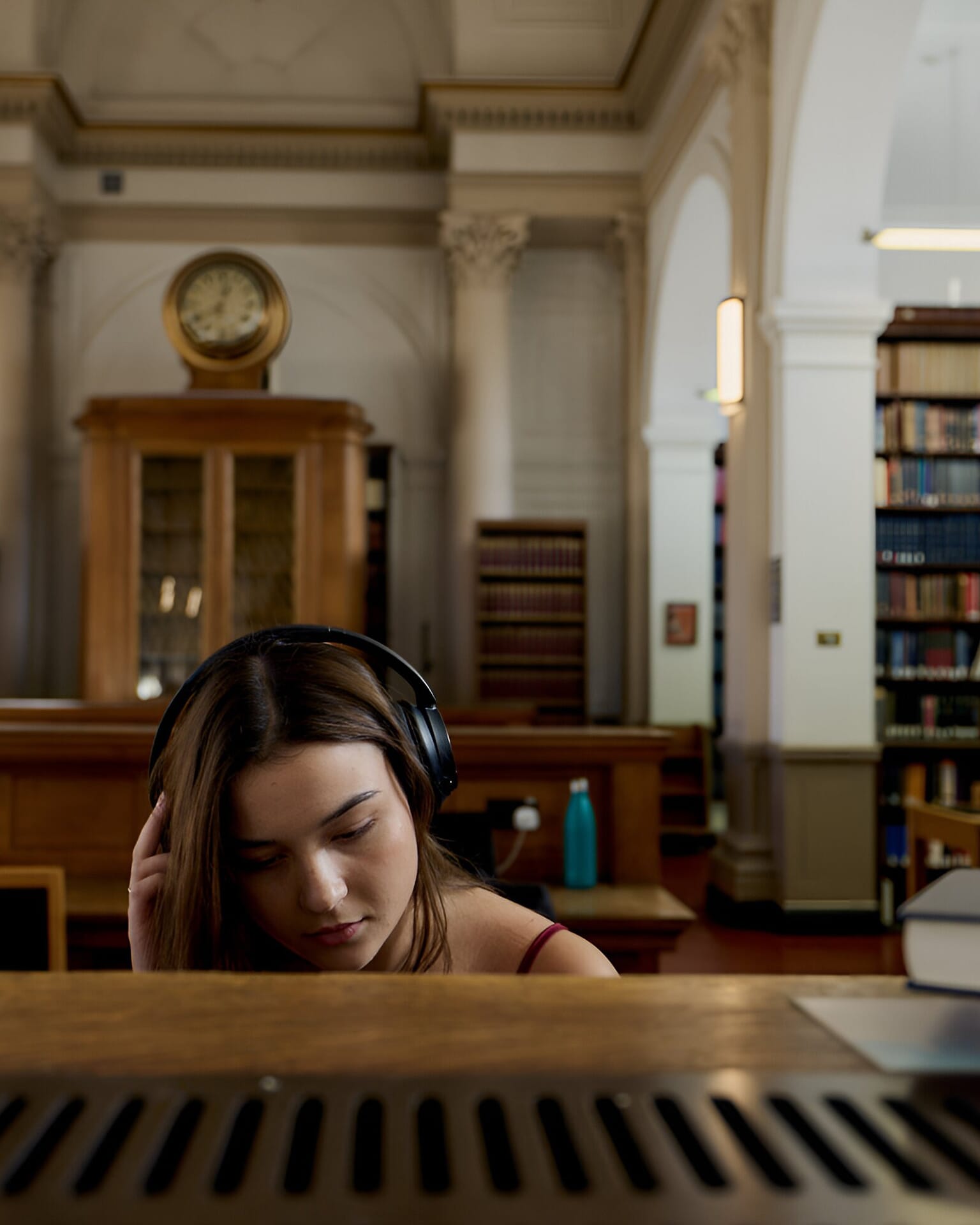
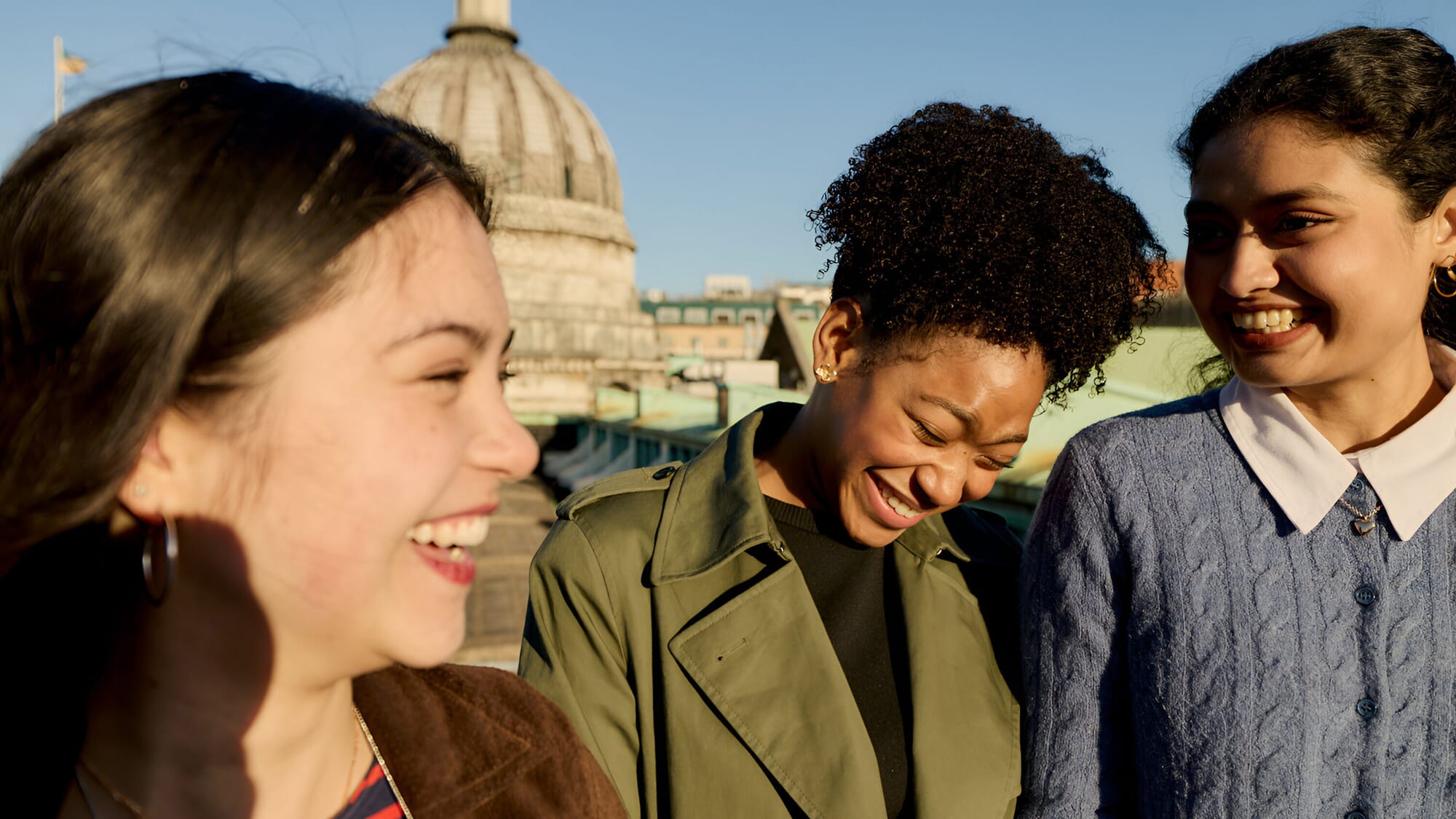
A new set of photos was commissioned to capture the urban feel of its vast Bloomsbury site (almost a city-within-a-city) and its new east London campus. Most Universities are stuck in the same imagery rut, so we were keen to add dynamism with a more authentic, street photography feel.
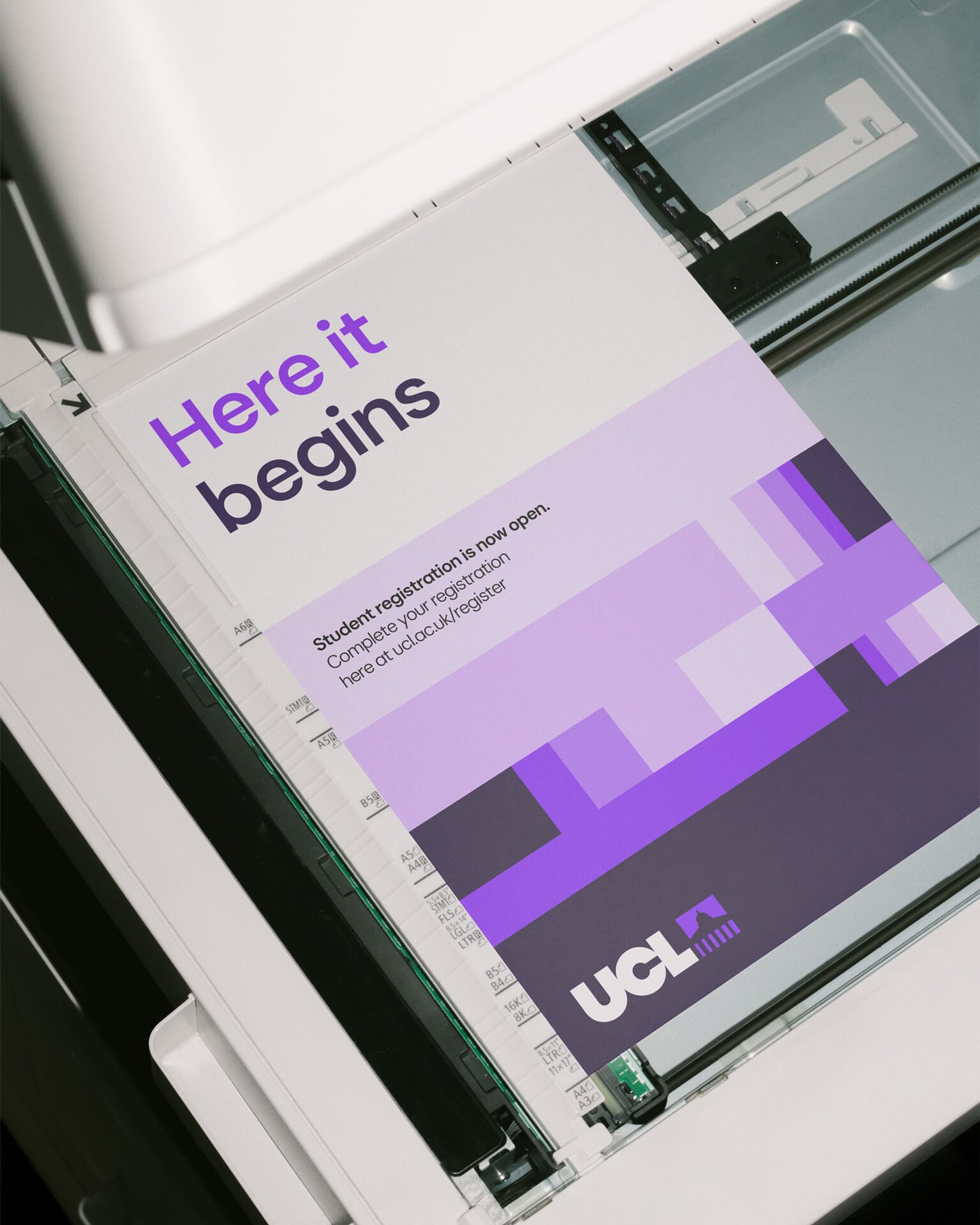
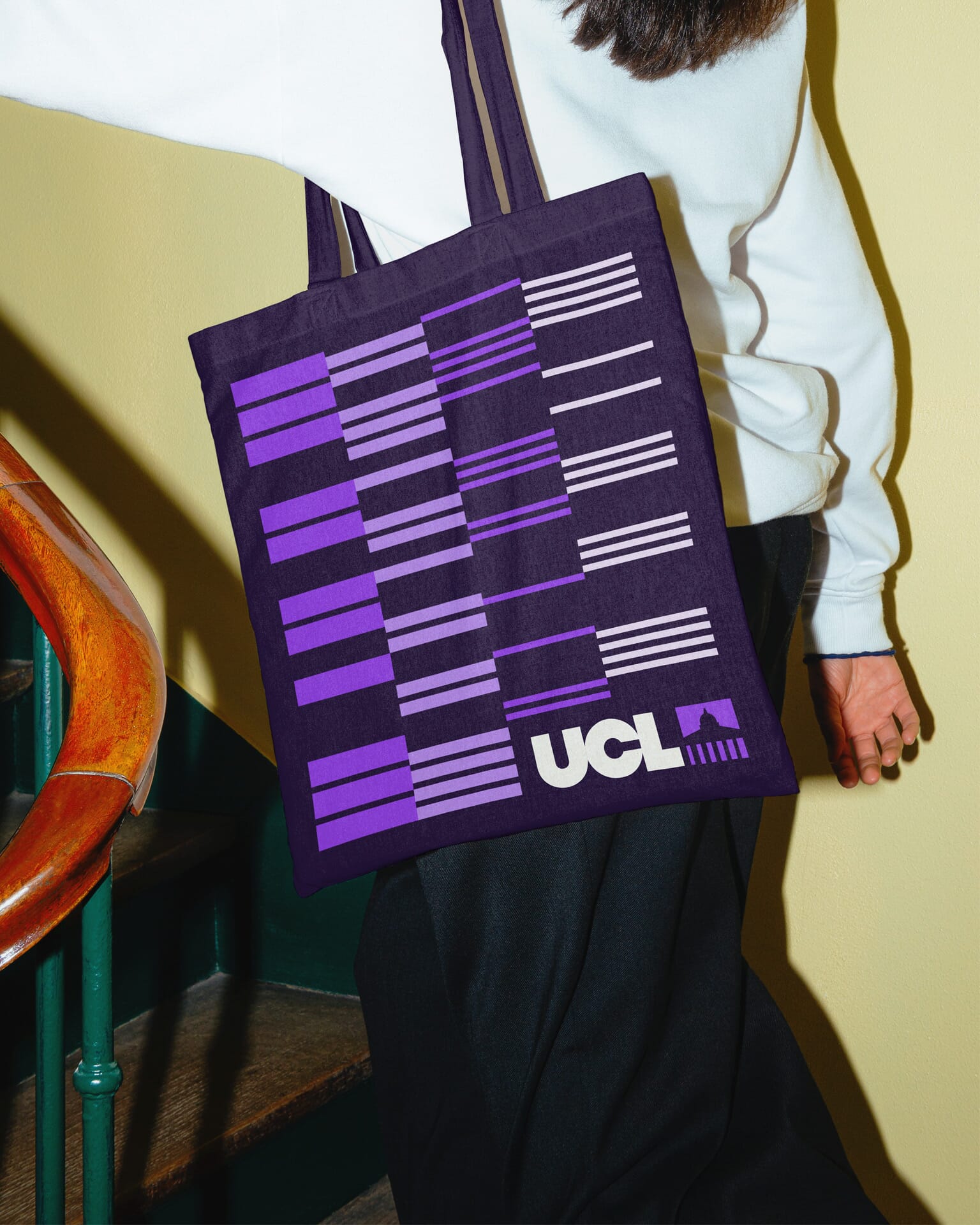
Combining all the elements with a carefully adapted open-source font, we then began to bring the scheme to life. By leaning into the visual ‘shuttering’ effect of the symbol we can use the pillar devices as active design elements, creating an always-in-motion, restless, digital-first scheme.
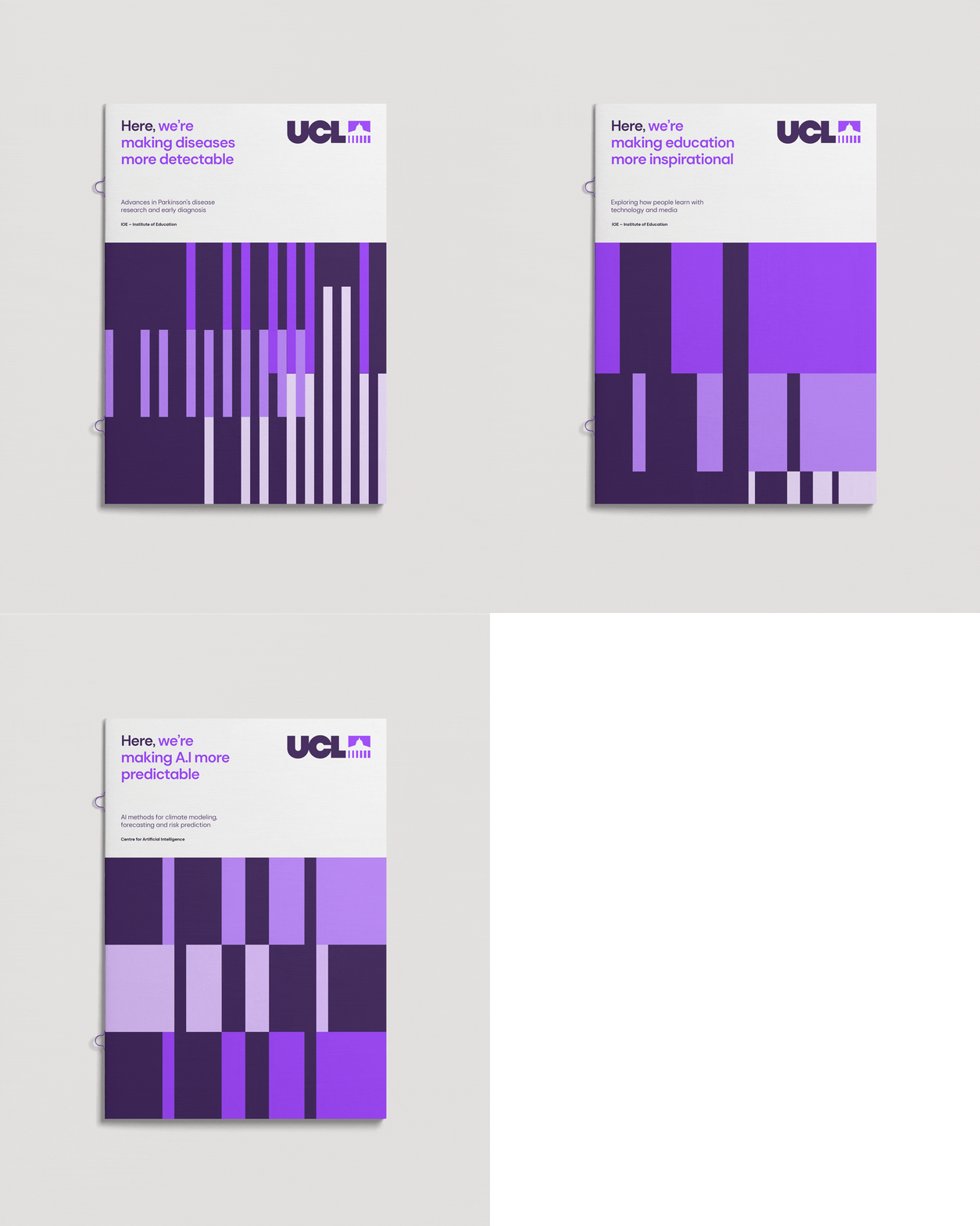
For ease of use and application, we’ve developed a system that allows UCL’s in-house team and external designers to apply the pillar elements to words, graphics and text blocks in a flexible way.
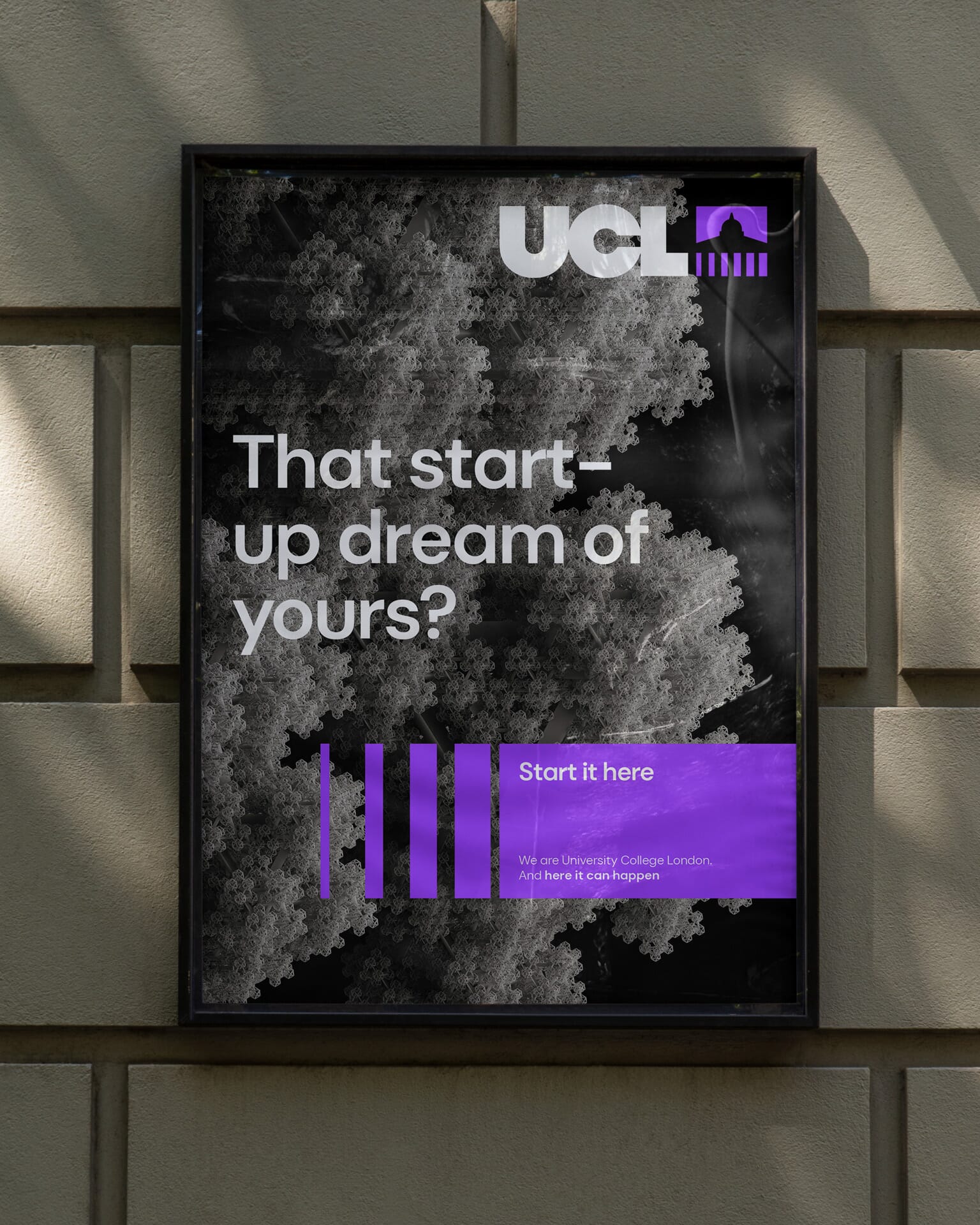
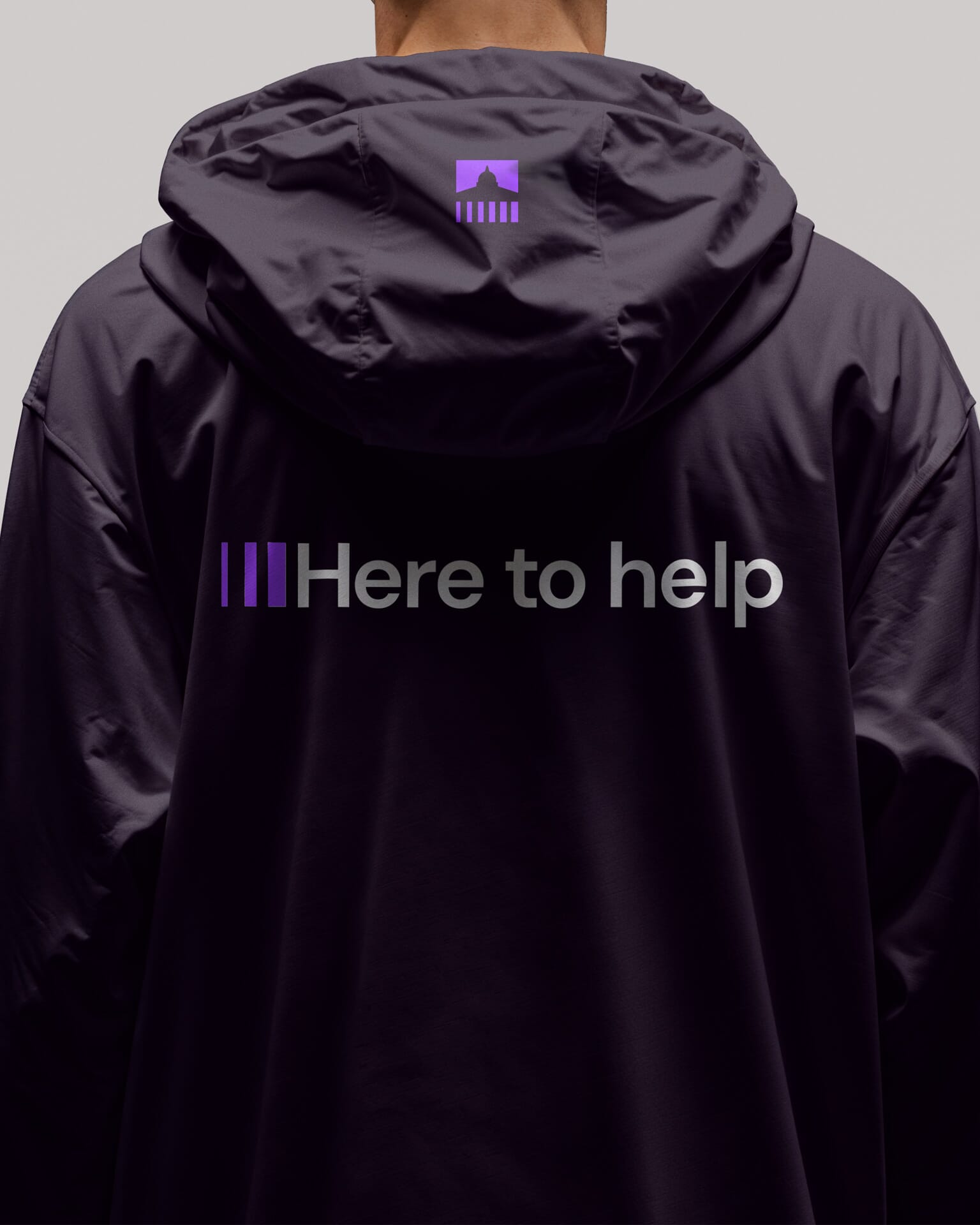
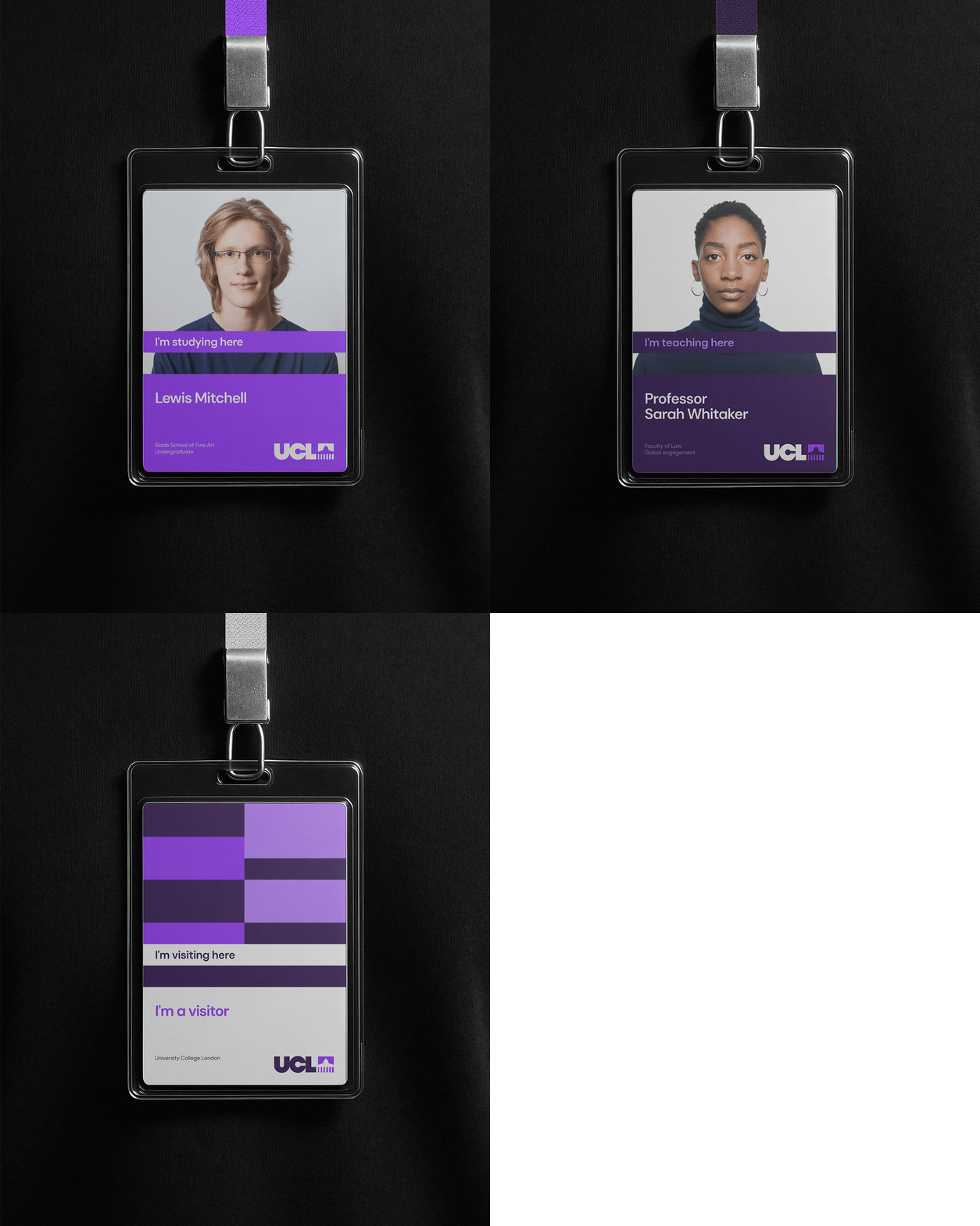
The system then extends across all layouts, in digital and print form. The layout principles have been carefully tooled to work from the most basic of Word and PowerPoint templates up to more dynamic animated applications.
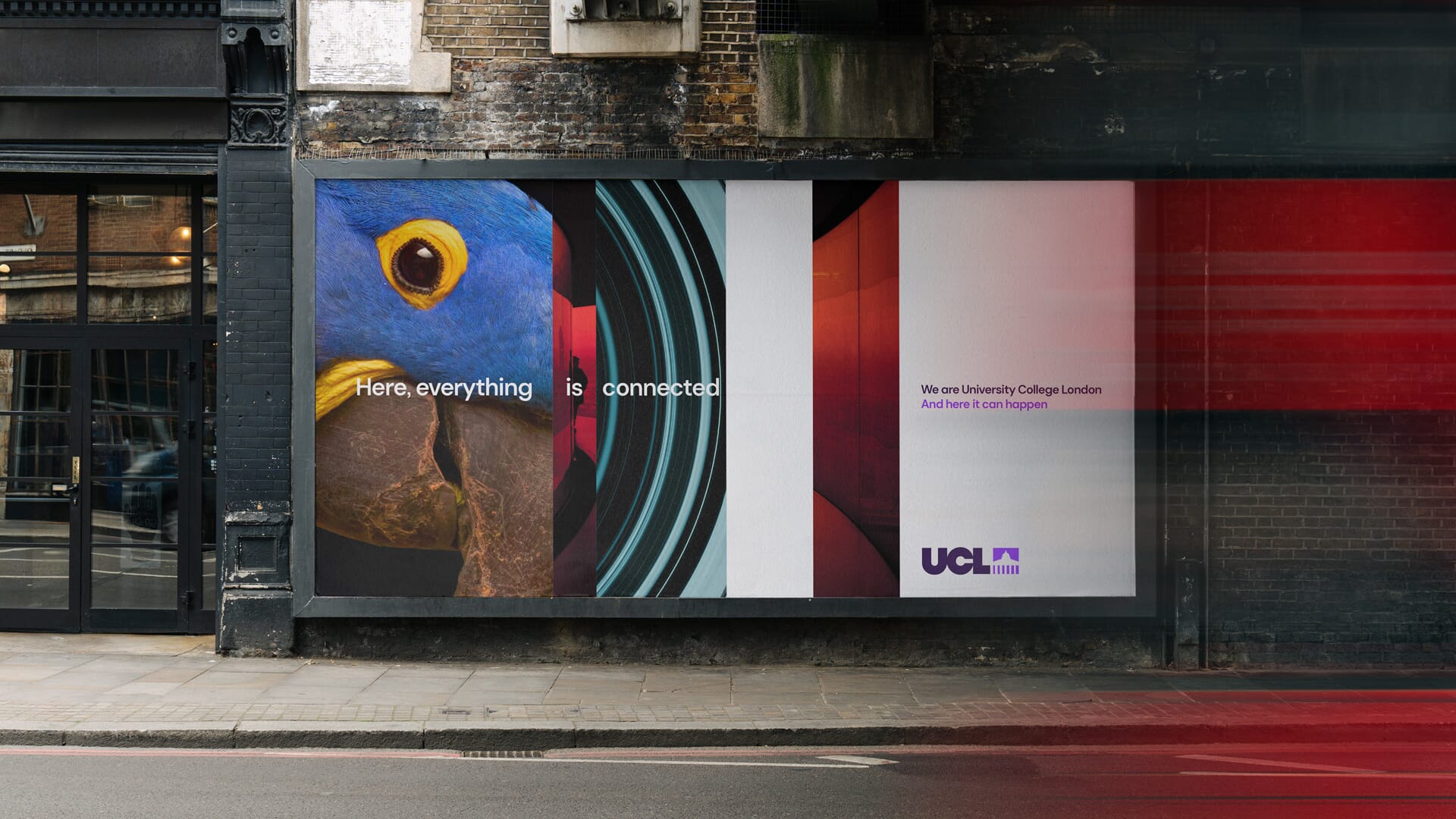
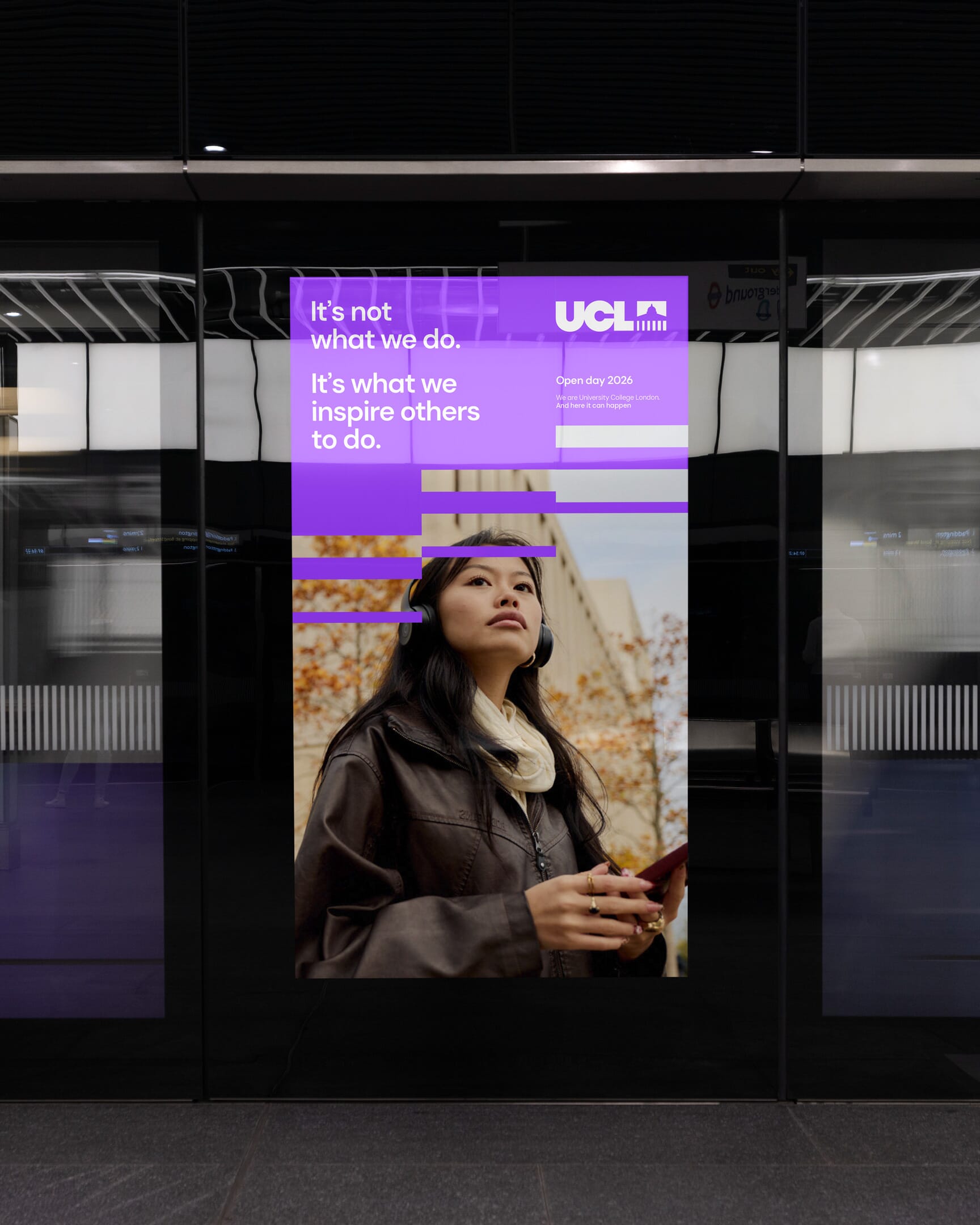
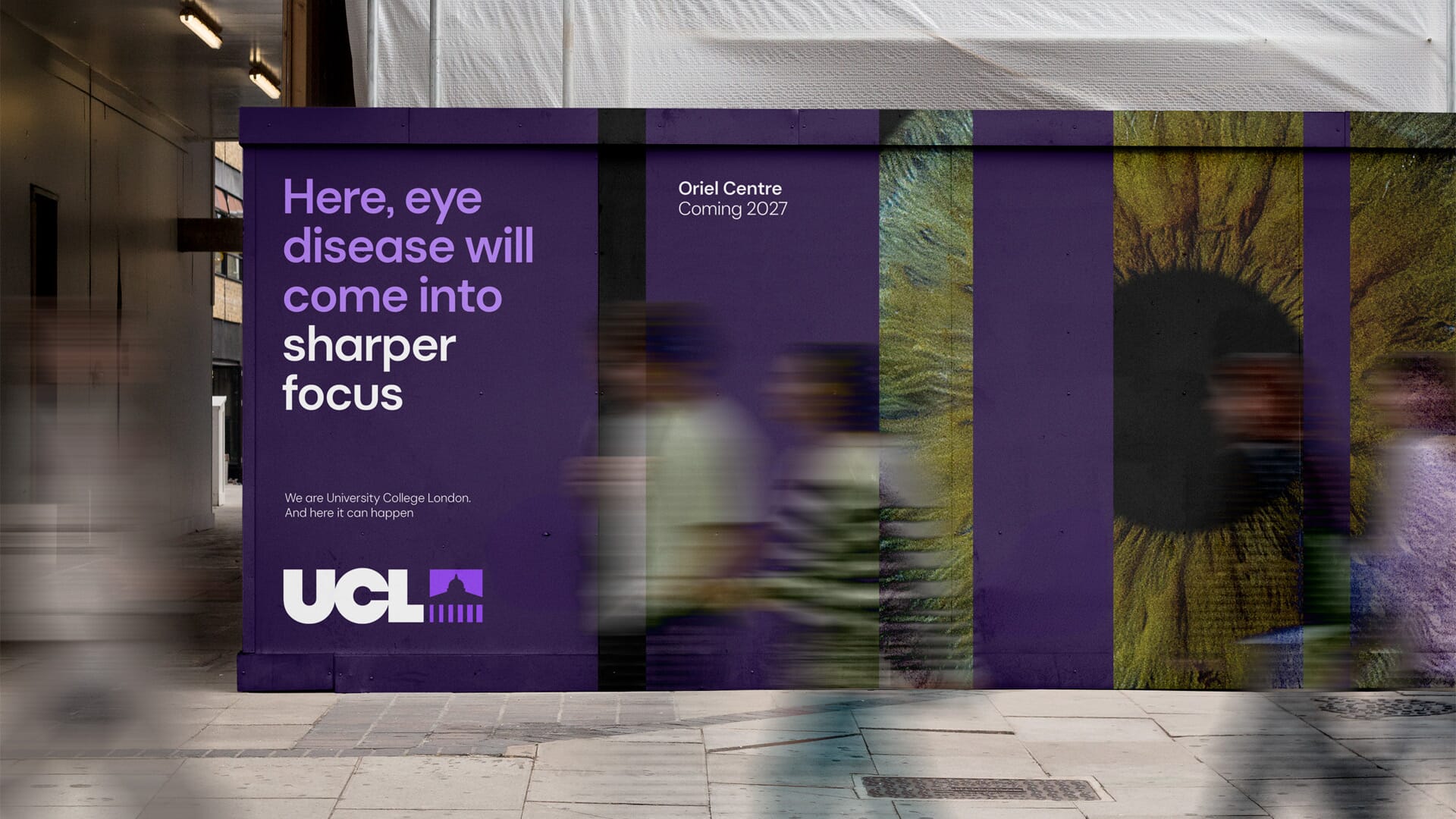
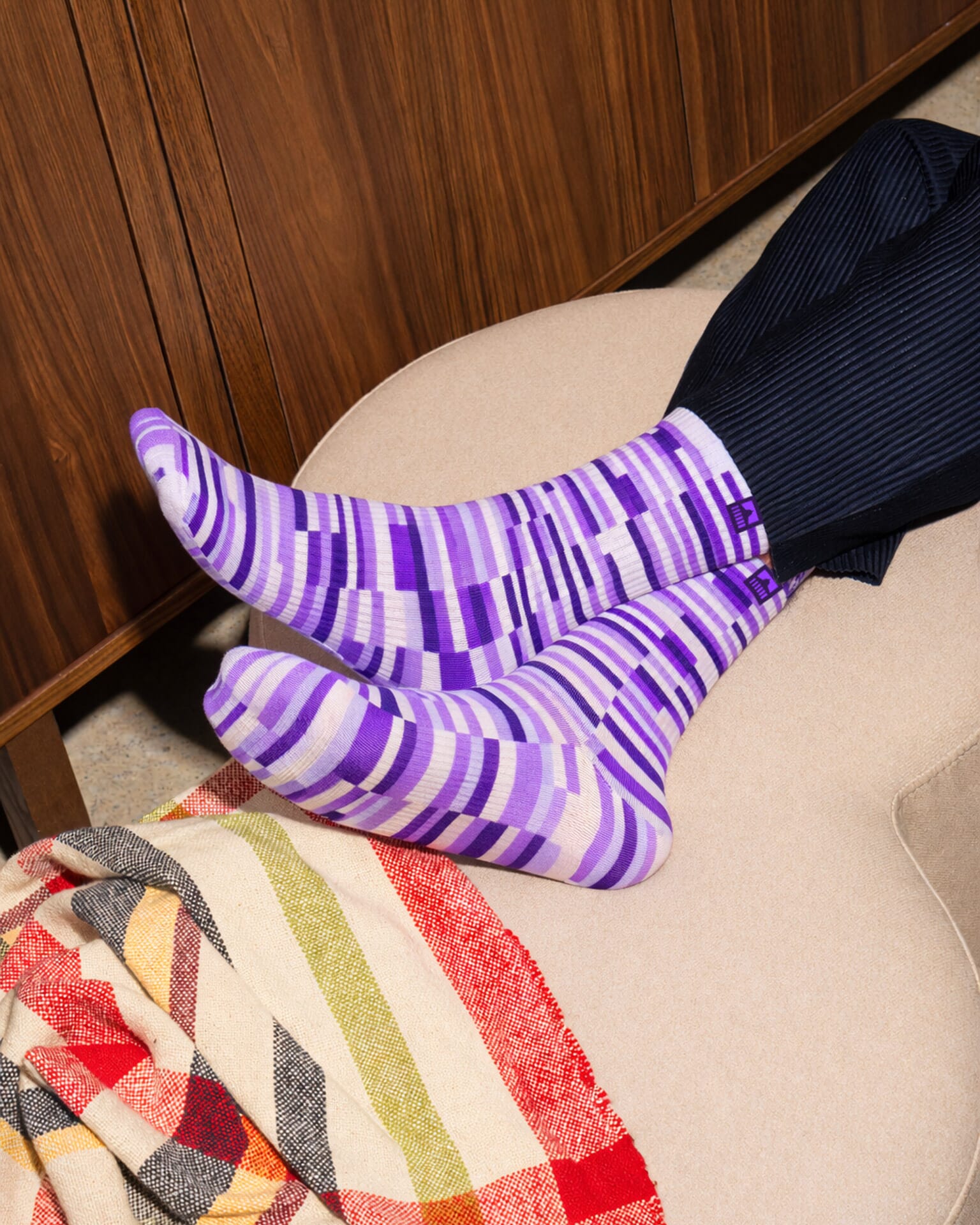
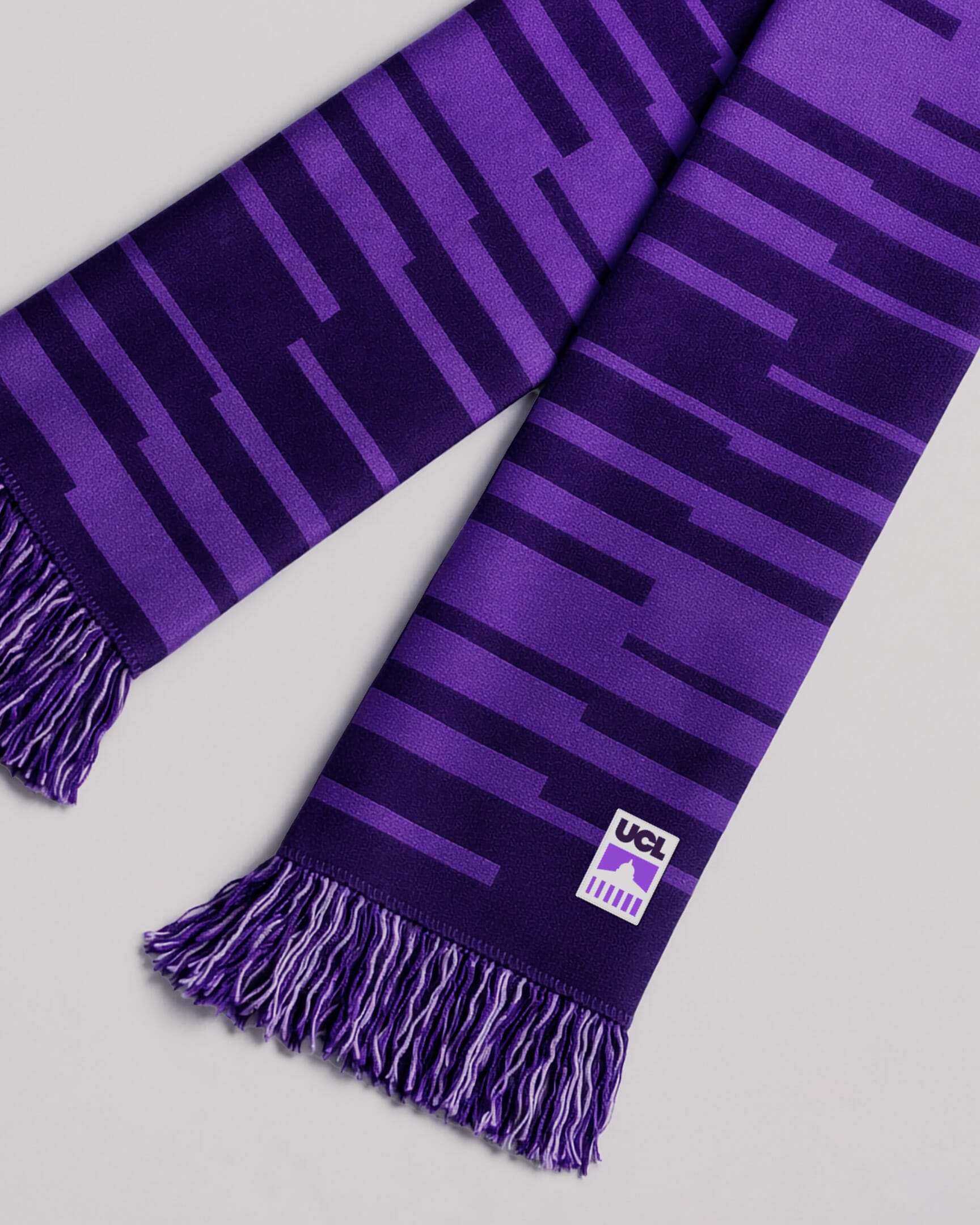
The shuttering effect of the pillars can then be captured in moving and still form in a series of dynamic, branded patterns that the UCL team will be able to use in multiple ways.
Adapting the approach for their bicentenary
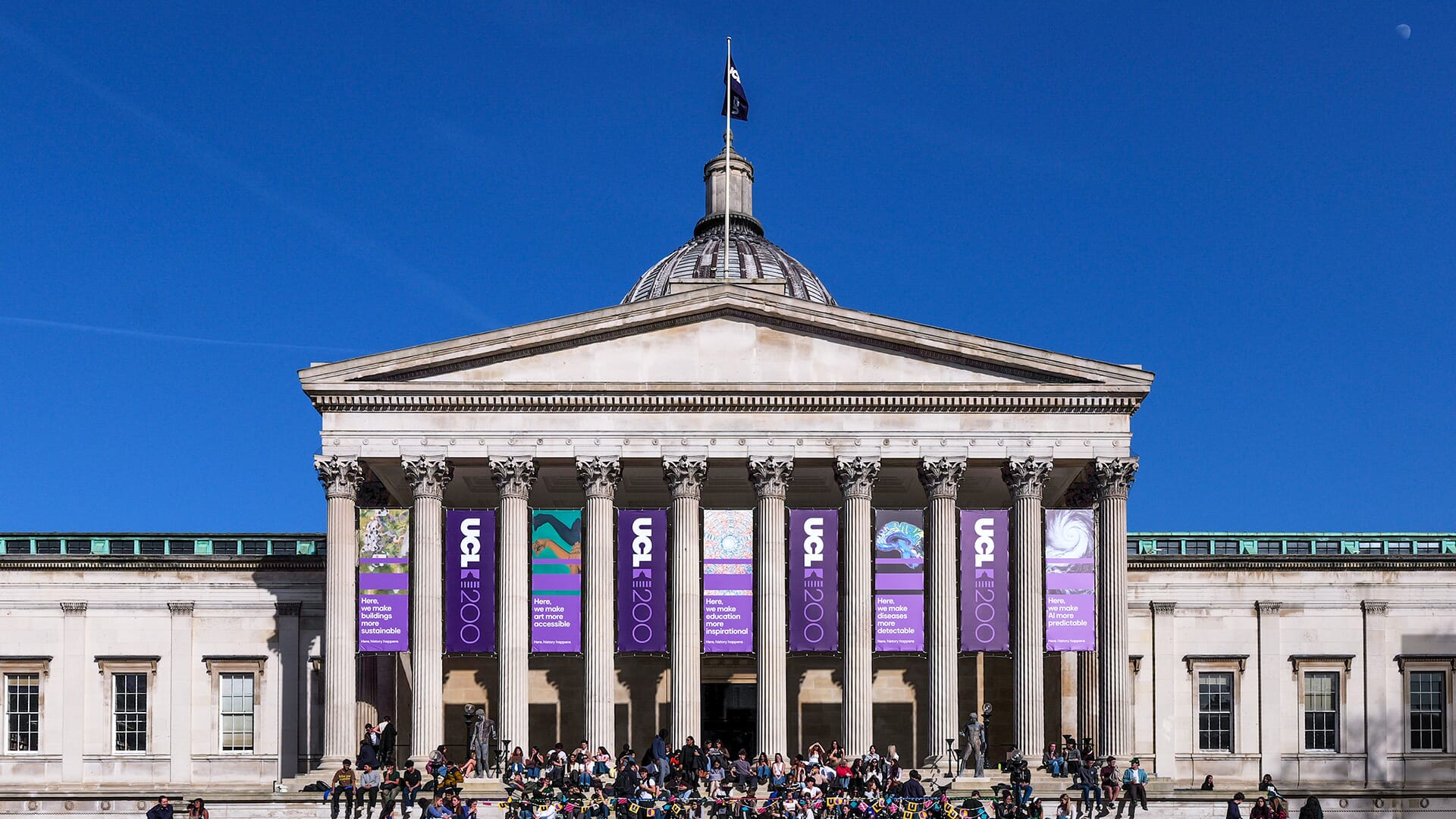
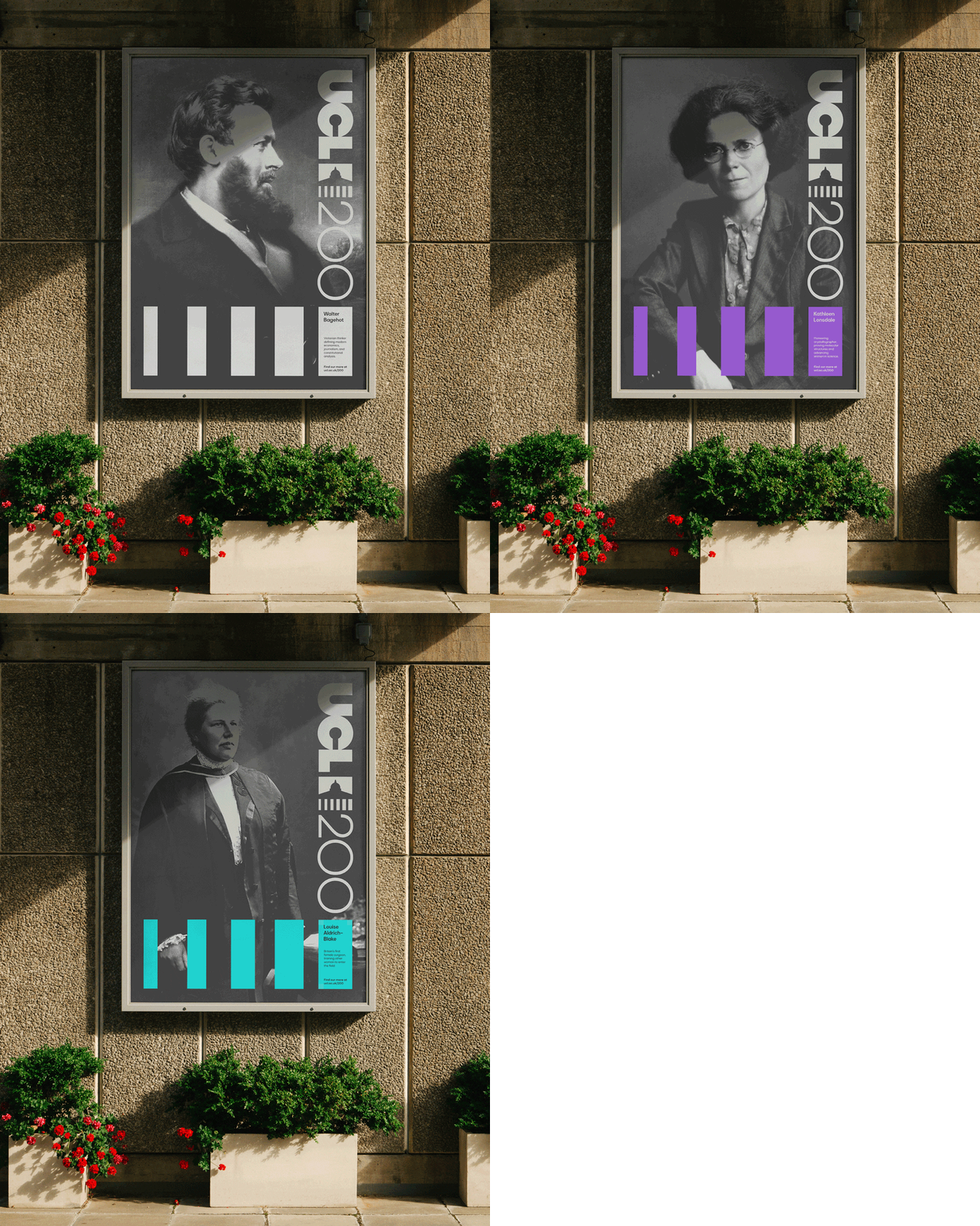
The second part of the project has been extending the idea for their bicentenary. As the main scheme concentrates on ‘Here, it can happen’, the verbal hook for the birthday year is ‘Here, history happens’, allowing the team to lean on UCL’s long list of discoveries and alumni (from adding five elements to the periodic table, a whole tranche of world-famous Slade School of Art graduates and giving Christopher Nolan his first film opportunity). We’re also adding more of a brightened version of UCL’s heritage blue, to give the birthday celebrations a slightly extended palette.
For launch, the emphasis is very much on the ‘200’ marque and their past achievements, but there’s much more to come.
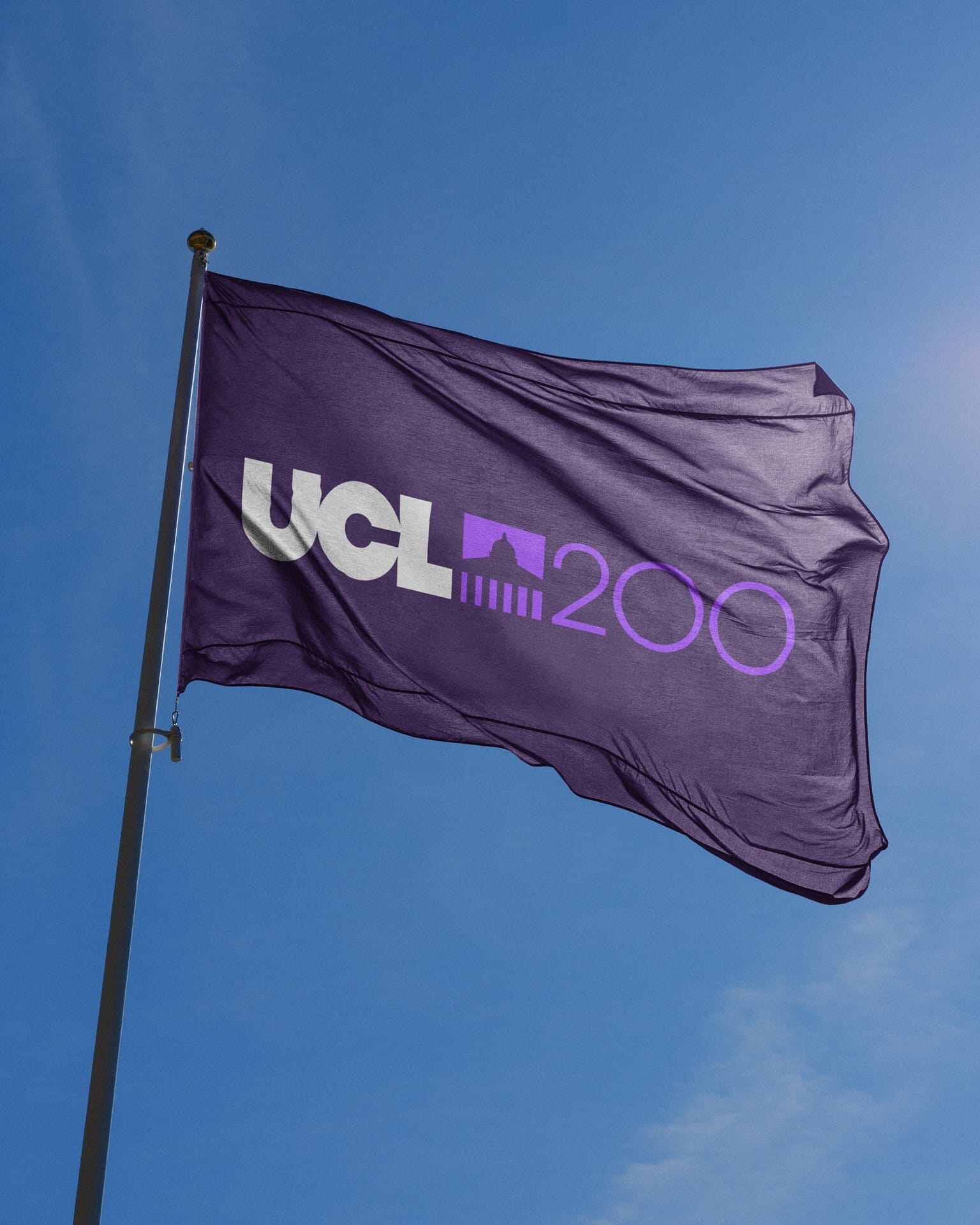
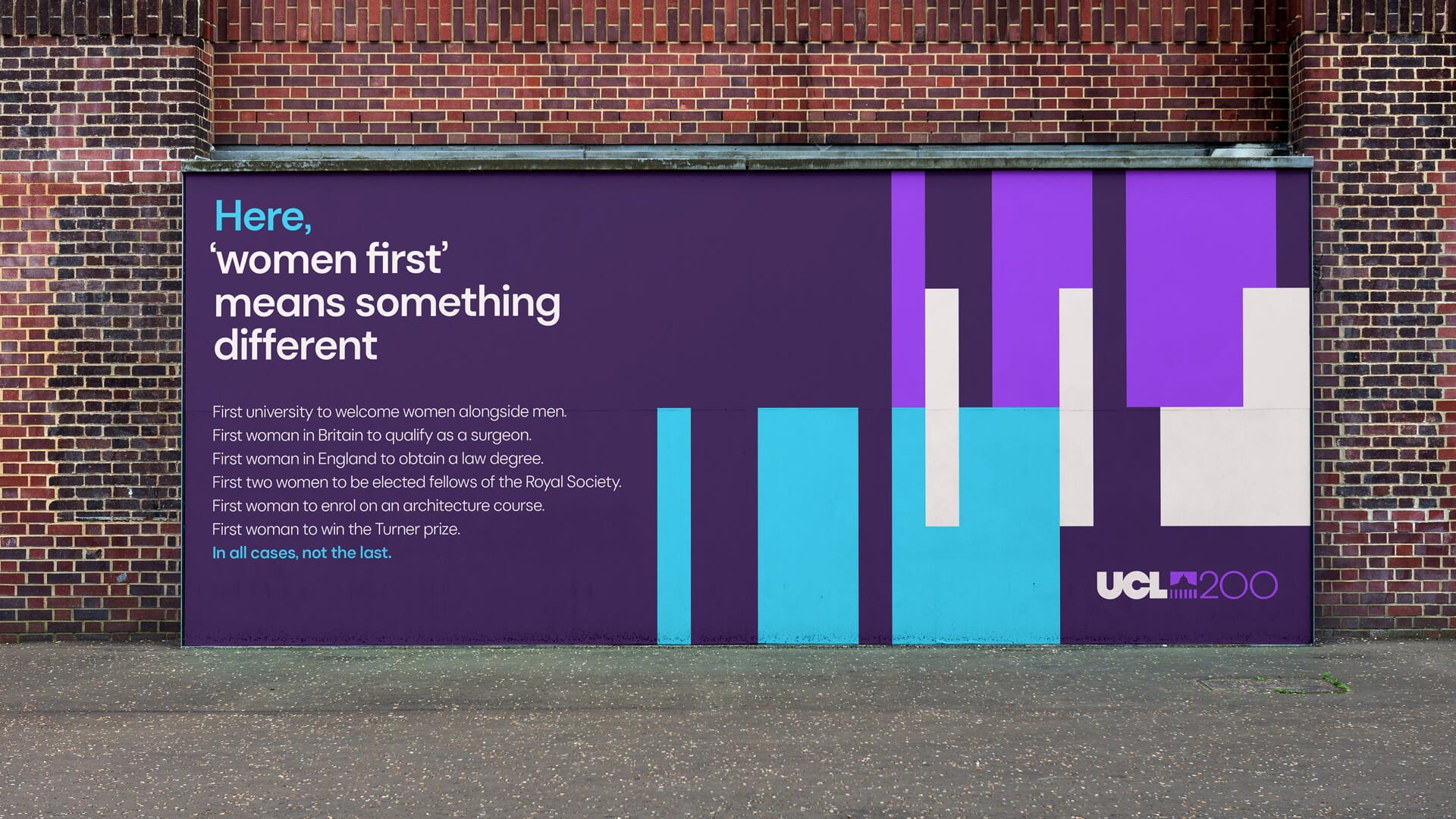
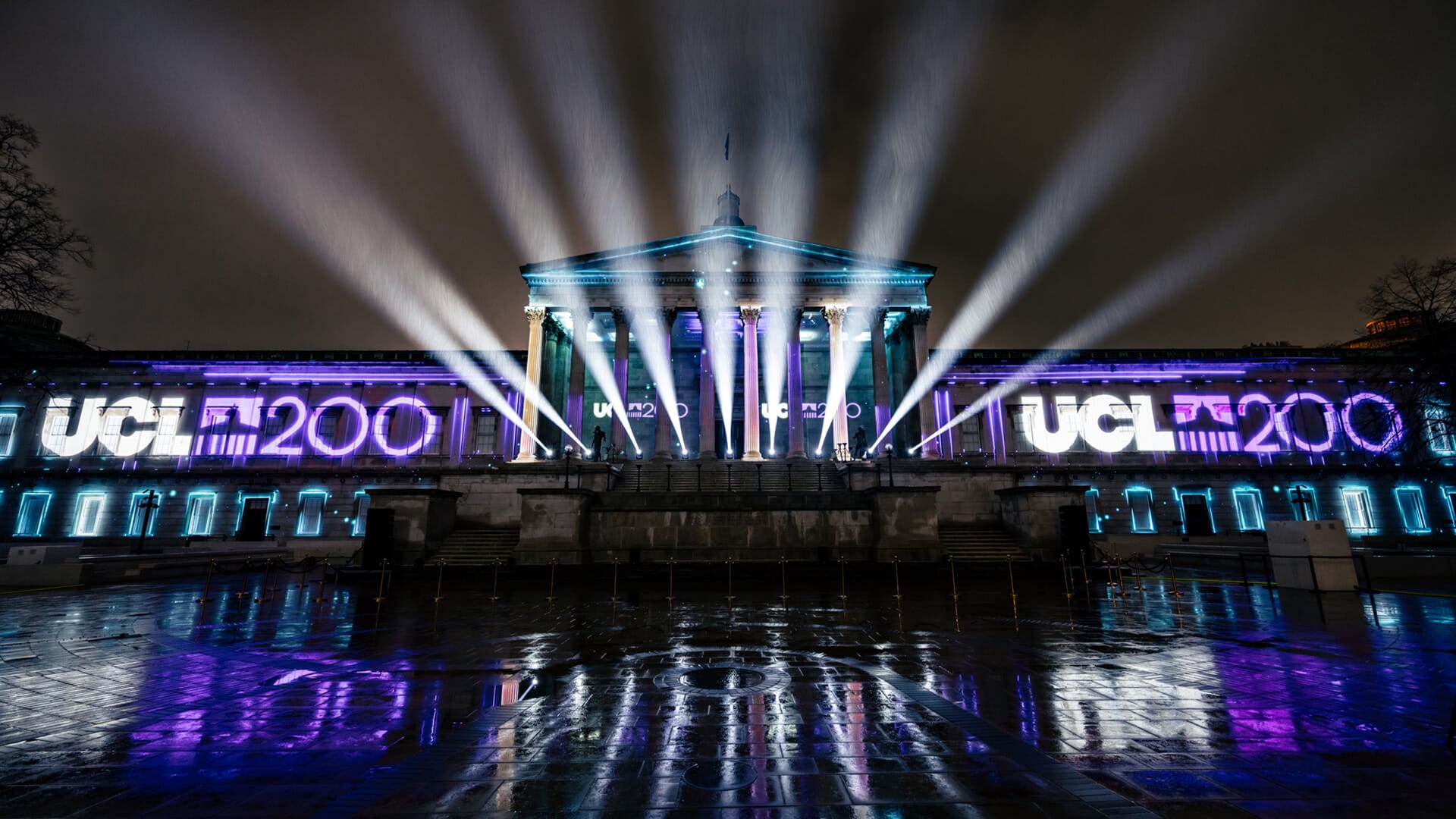
A philanthropic and engagement campaign
The third pillar of our work has been helping the organisation prepare for a significant fundraising campaign. As well as months of work advising on the campaign narrative and content, we’ve created a distinct look and feel for their campaign which concentrates on the ‘Here’ of the core idea, and slightly tweaks it to be future-facing 'Here, it will happen'.
By putting one word front and centre, this helps their campaign stand out amongst what is now a crowded field of University campaigns. We deliberately paired slightly intriguing headlines with unusual and unexpected imagery to further push them away from the sector defaults.
Here’s just a few of the first applications, and a glimpse of some of the hundreds of items, films and animations prepared for their launch at the British Museum and across the world.
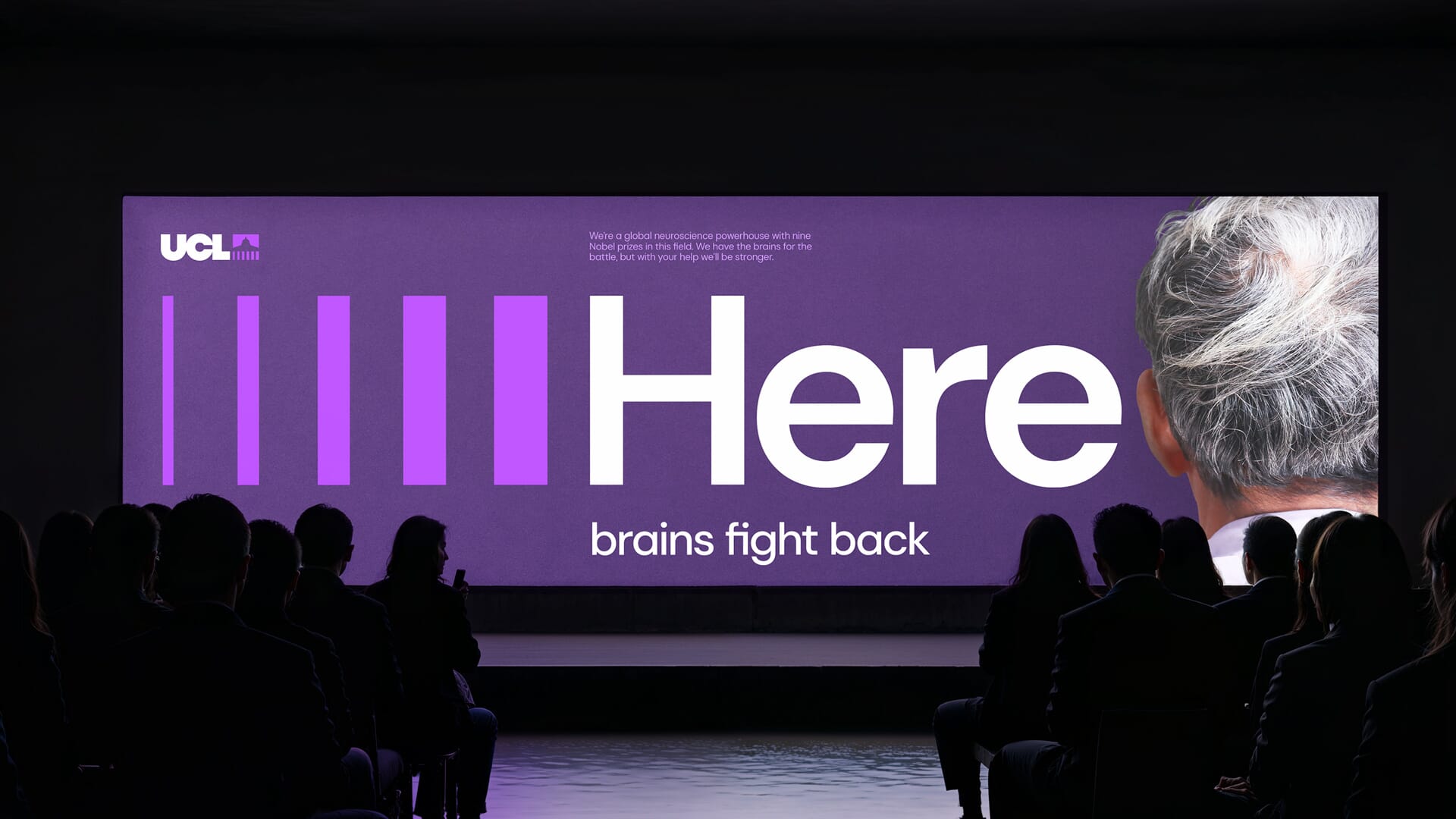
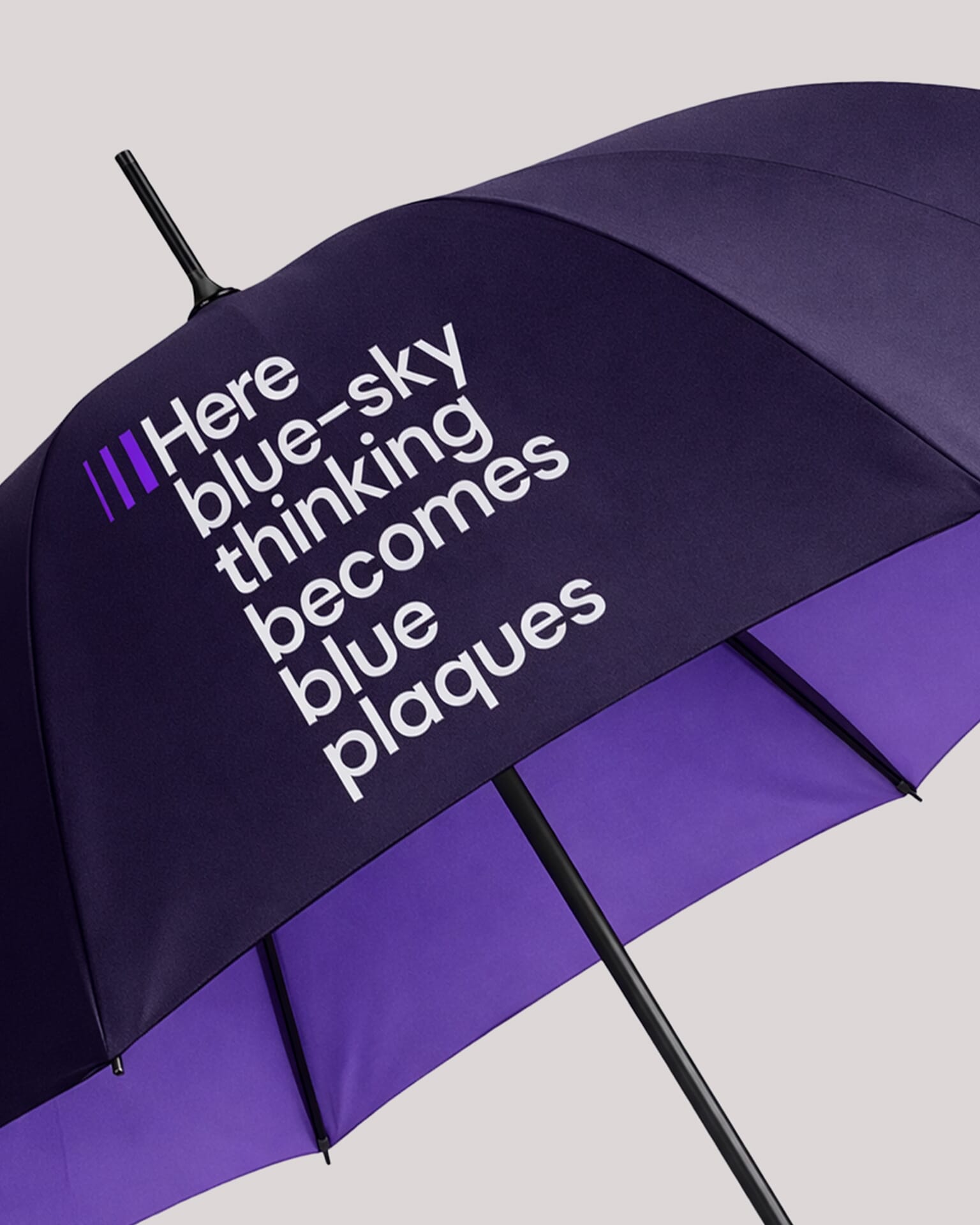
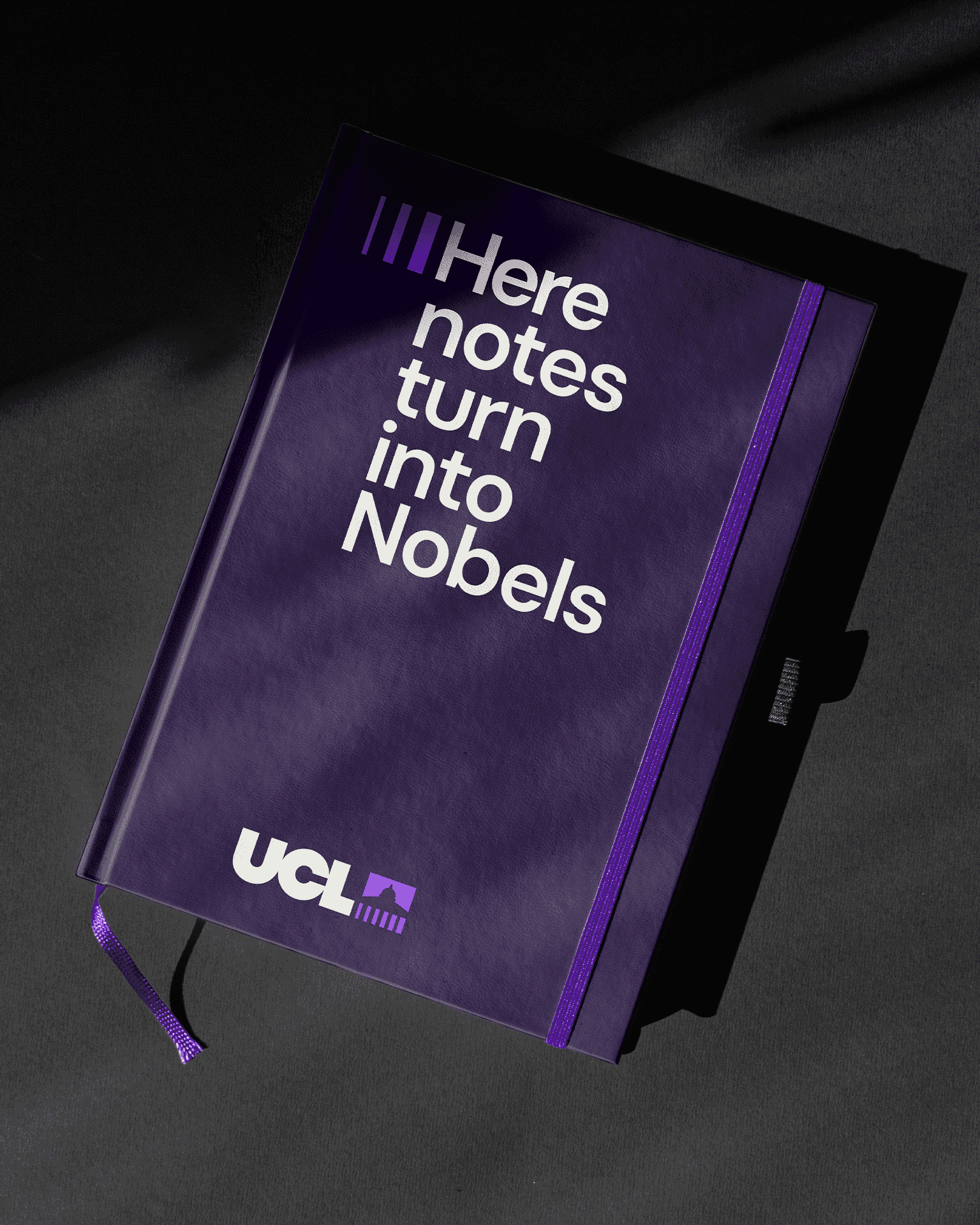
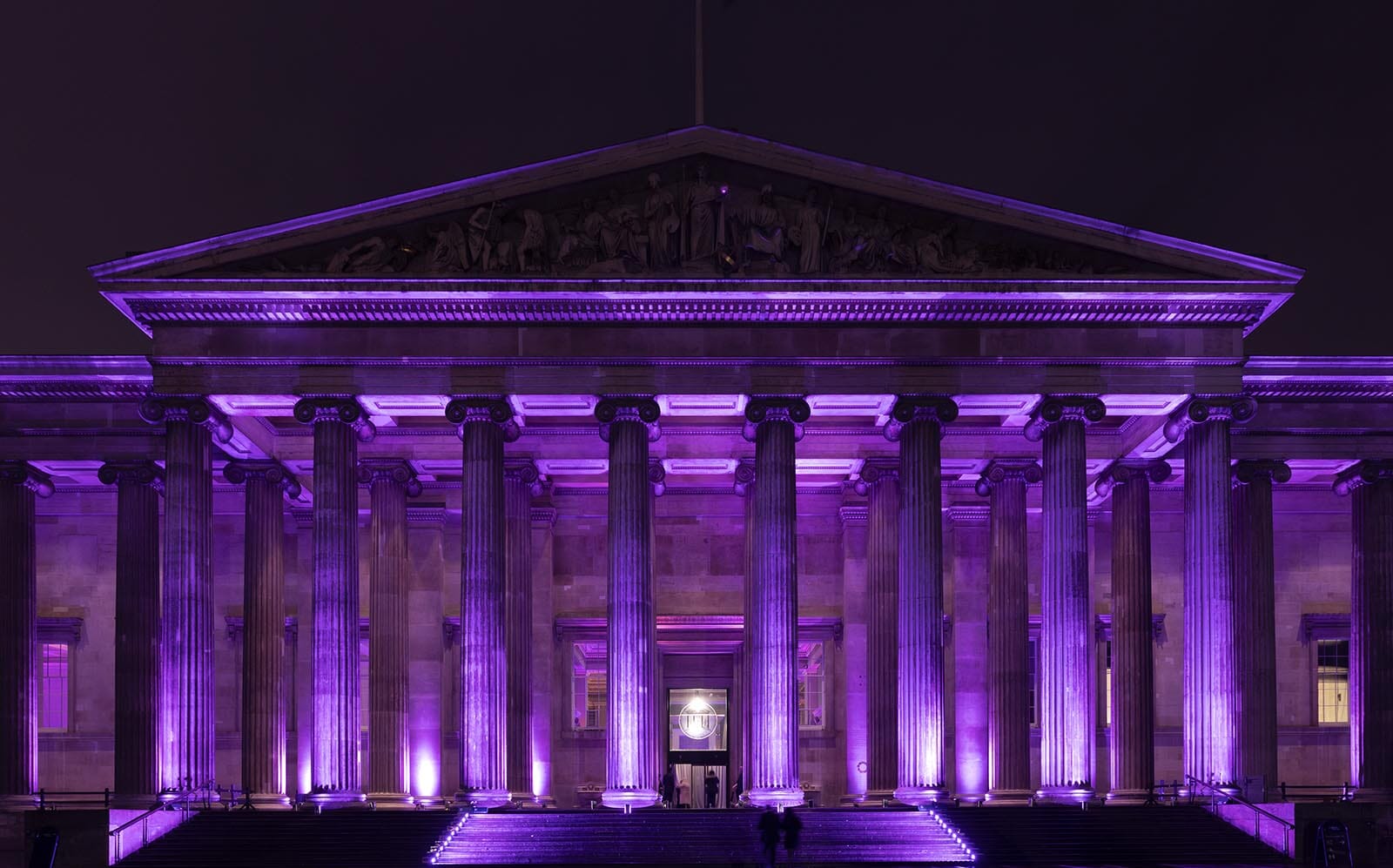
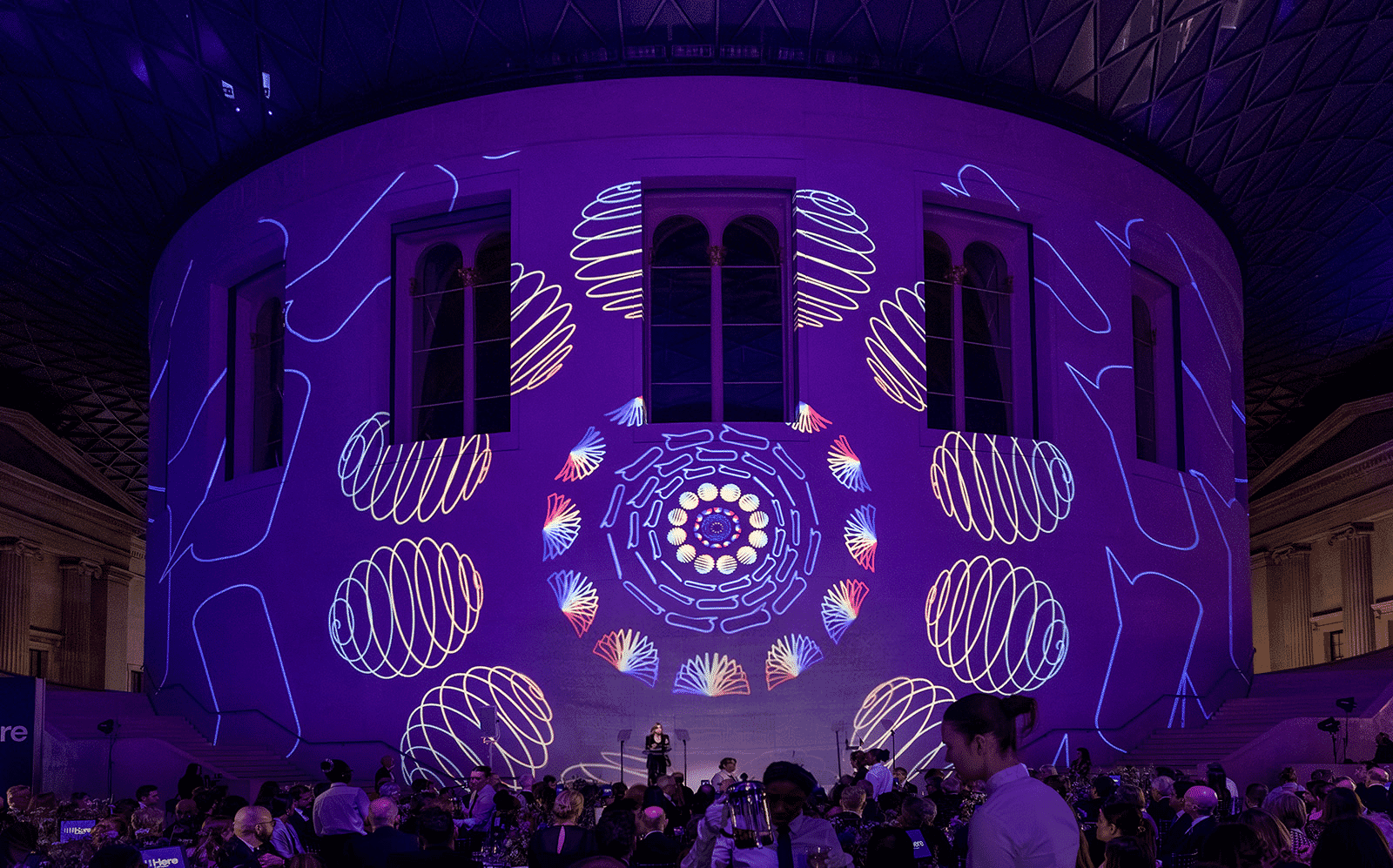
This is our largest ever higher education project that has taken nearly two years to complete. It has involved consultation with over a thousand staff, students and alumni. It’s meant working at every stage with internal teams and external consultants to ensure the project’s highest possible levels of accessibility. And it’s tackled UCL’s core brand, bicentenary and philanthropic campaign simultaneously – an unprecedented triple.
The team
- Strategy, narrative and design: Johnson Banks
- Audience research & testing: Carrington Crisp and Humankind
- Writing and tone of voice: Johnson Banks, Naresh Ramchandani, Nick Asbury, Nick Carson
- Animation graphics: Johnson Banks, Richard Caldicott, Paul Plowman, Gary Smith, Dave Whyte, Marinus Klinksik, Jonathan Nielson
- Sonic identity: James Locke-Hart
- Typography: Johnson Banks, The Foundry and Tom Baber
- Photographers: Sam Robinson and Tal Silverman
- Event co-ordination and production: Assemble and Event Concept
- UCL200 projection mapping creative: Double Take Projections
- Event photography: Ryan Buchanan and Cody Bamford
Some of the illustrations in this case study are indicative, to show future possible applications of the new brand identity