The World Wildlife Fund in the UK has retooled its strategy to make the threat to the world’s tropical rainforests their number one priority. They’d started talking to trusts, corporates and philanthropists about how to fund their work across deforestation and supply chains, and were thinking about how to take that message to the public.
But shifting perceptions of what a world-famous NGO does isn’t that easy. Especially for the WWF, who are inevitably associated with the orangutans, elephants – and yes pandas – who live in these rainforests, rather than the forests themselves.
After weeks of discussion, our key insights were that the visual language of deforestation (burnt-out forests) and the well-worn verbal clichés (‘the lungs of the planet’) had become almost meaningless. Just simply repeating what we’ve all heard for decades hadn’t cut through. Nothing would it change if we kept saying the same thing.
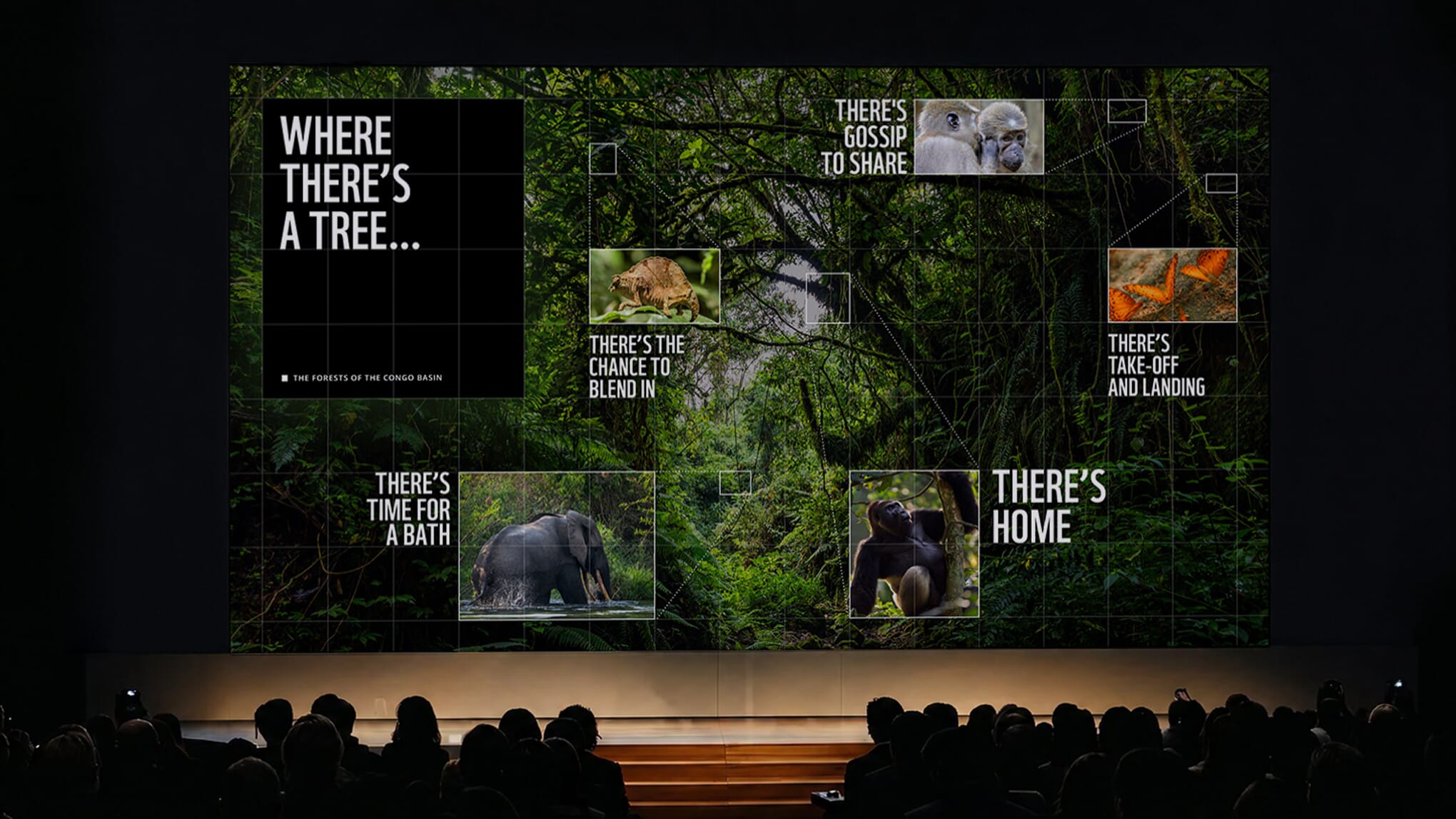
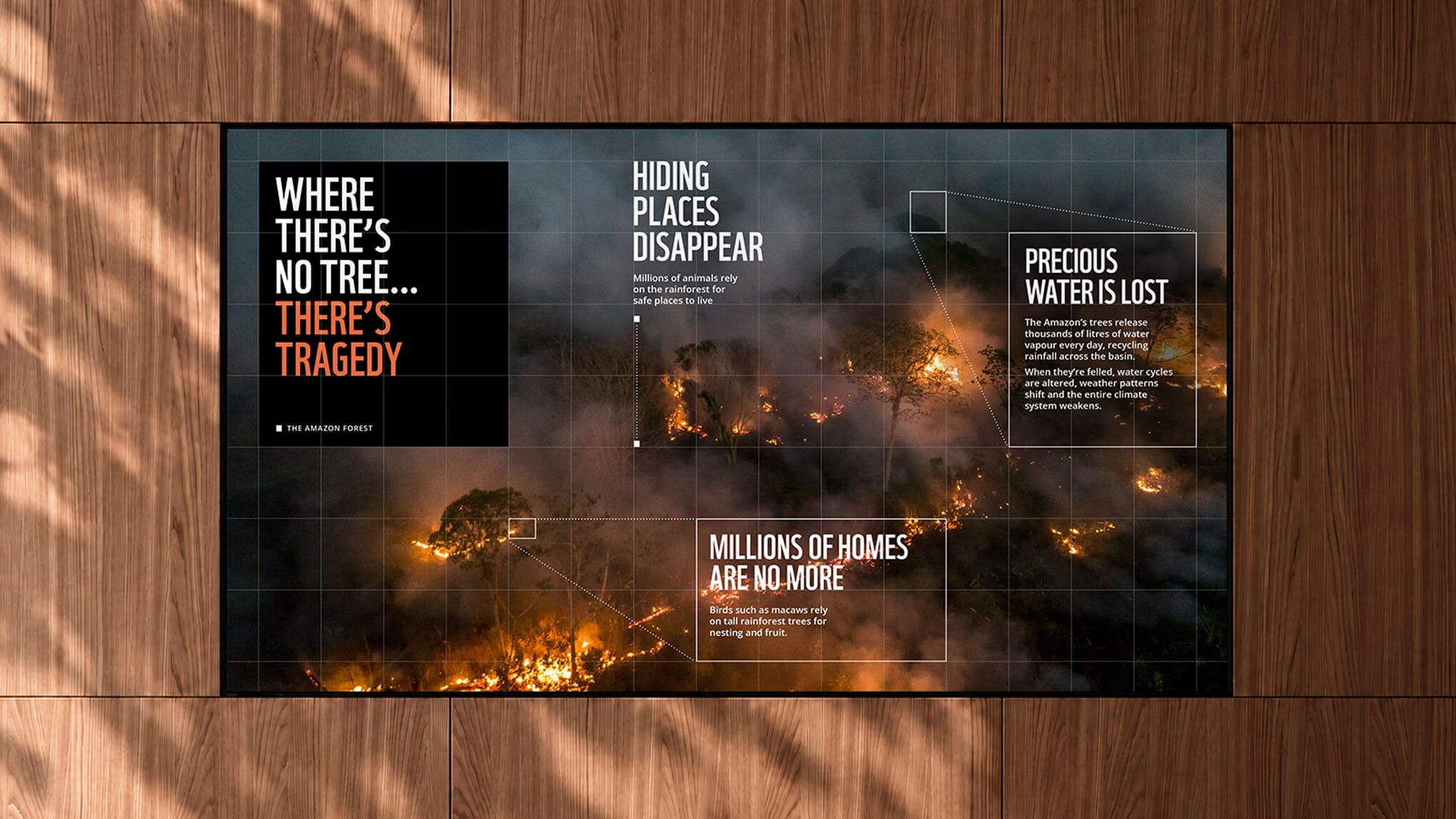
We had to tell a new story. We had to make a clearer link between species, and their habitat, why the tropical rainforests are critical to both animals and indigenous people, and what lies behind the global supply chain demand that removes acres more rainforest every week.
At first, we mined the same clichés as everyone else.
But one day, we switched the story around with an almost poetic approach that led with just four words: ‘where there’s a tree…’
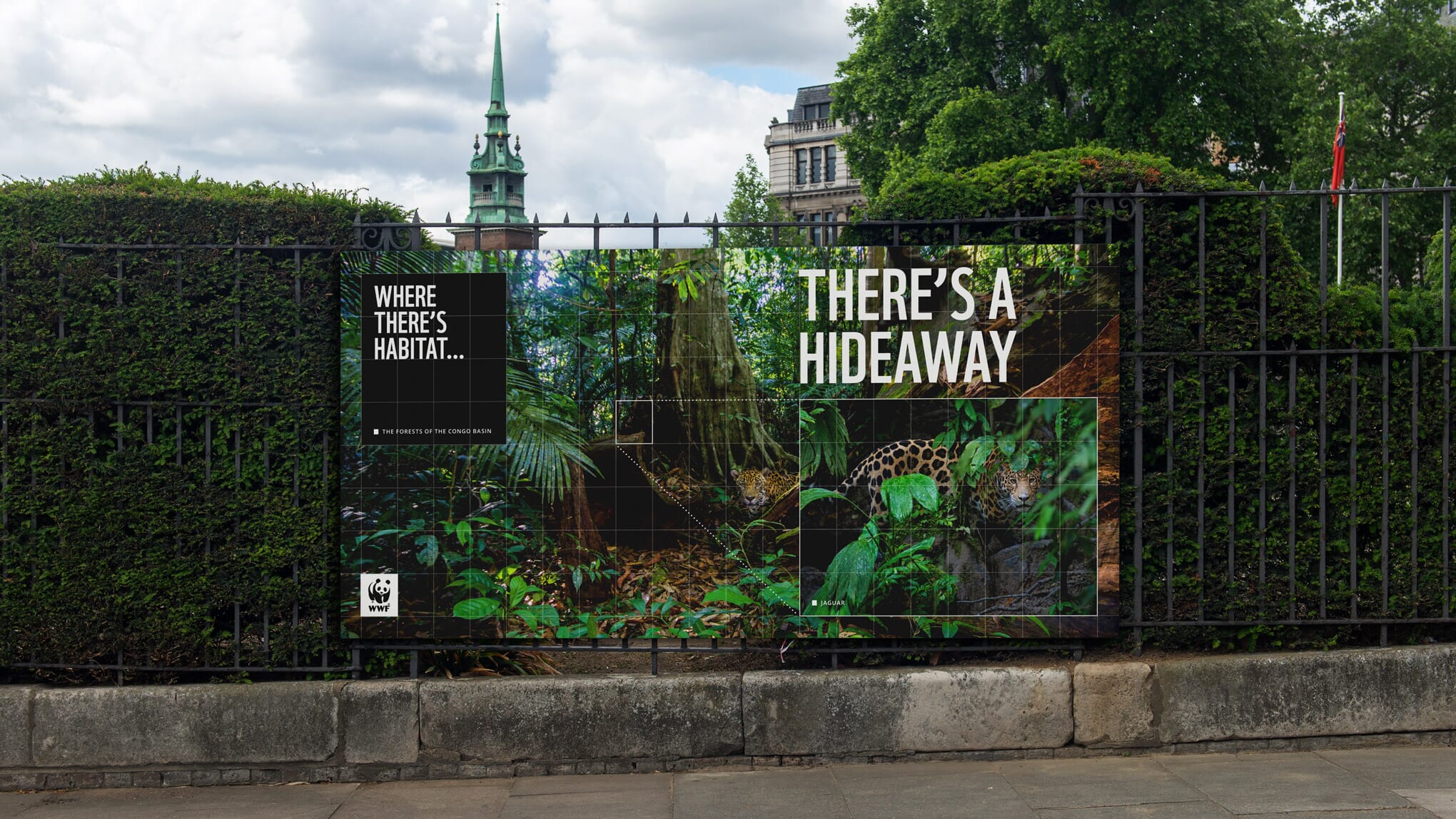
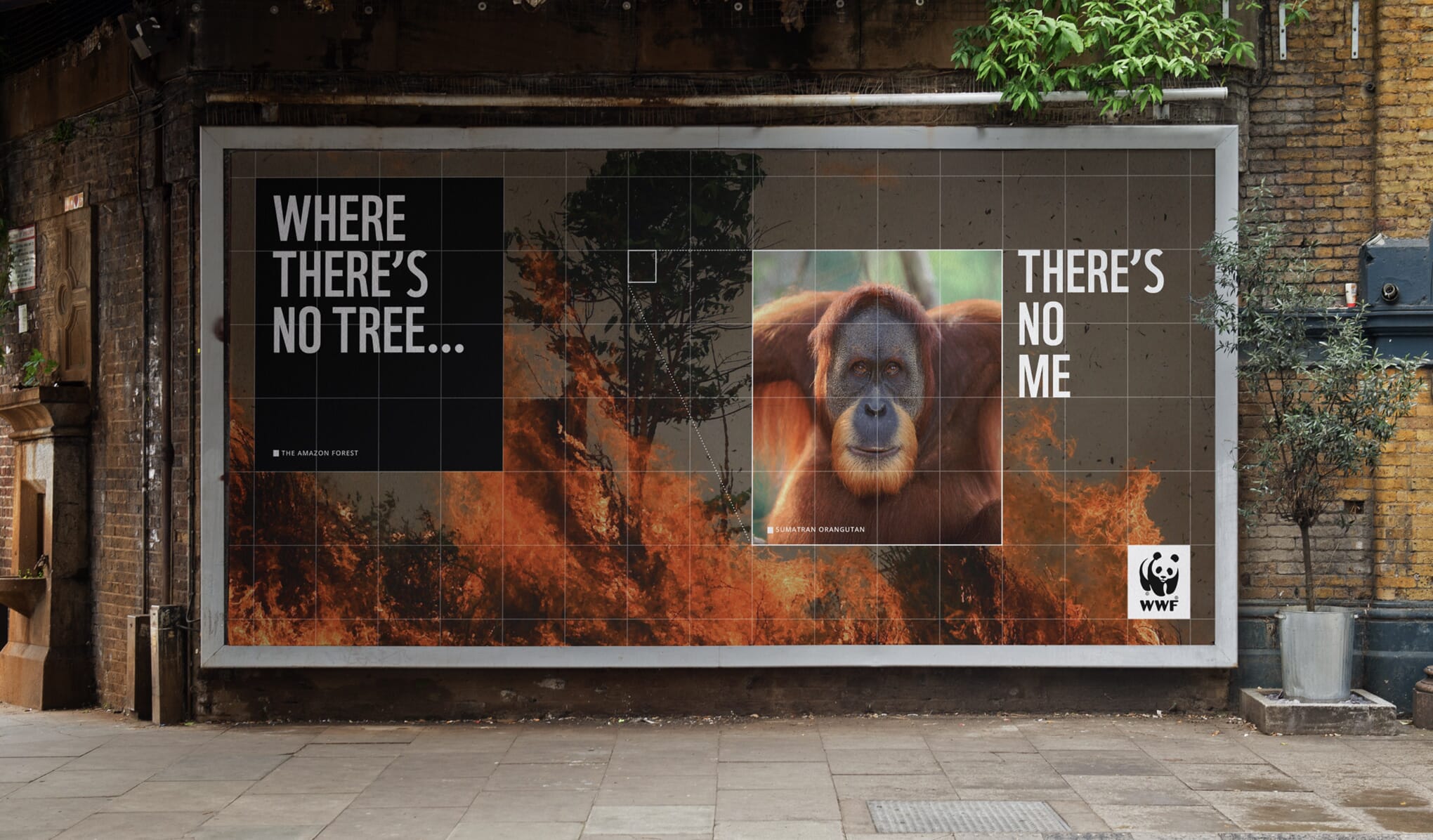
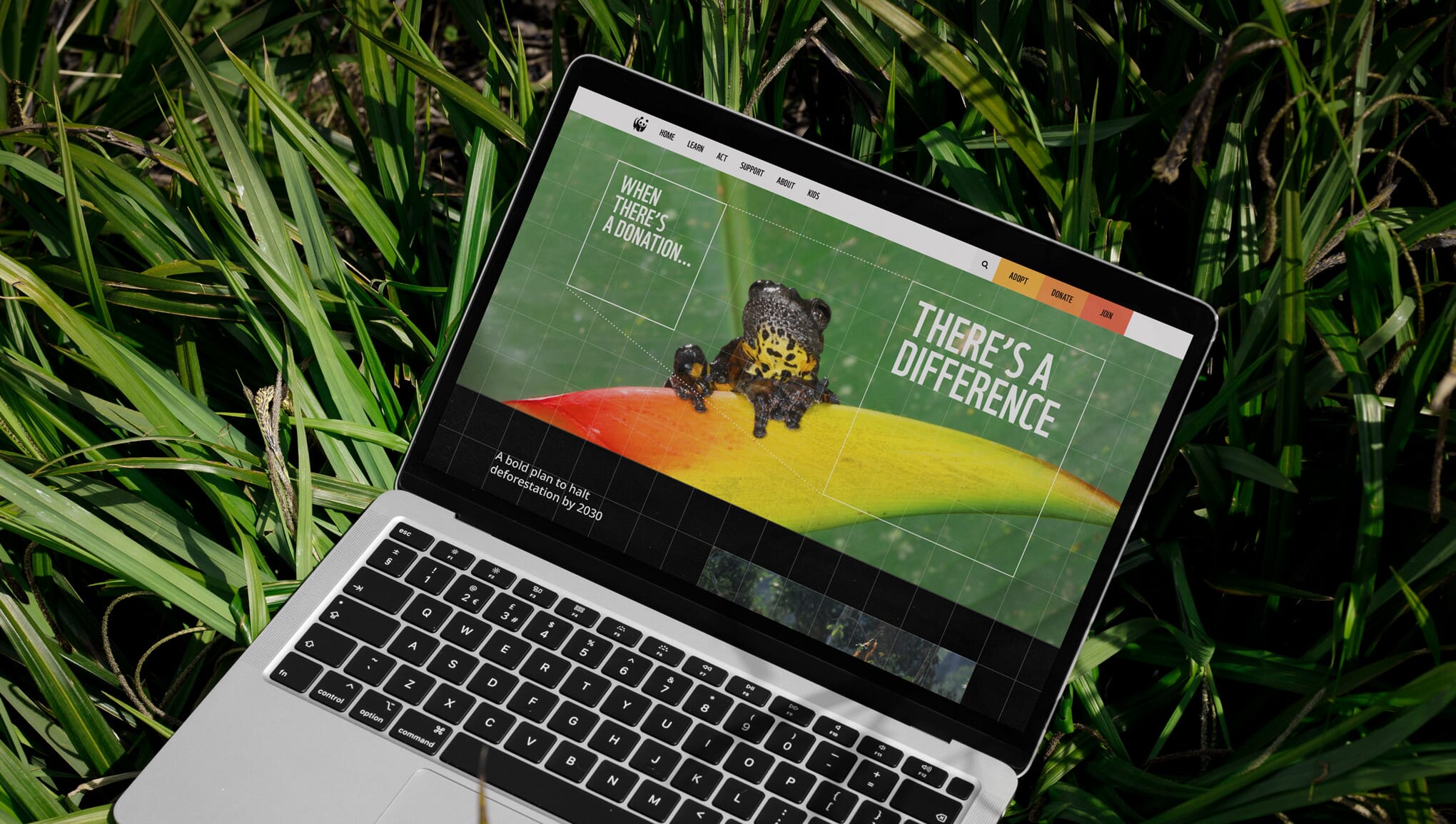
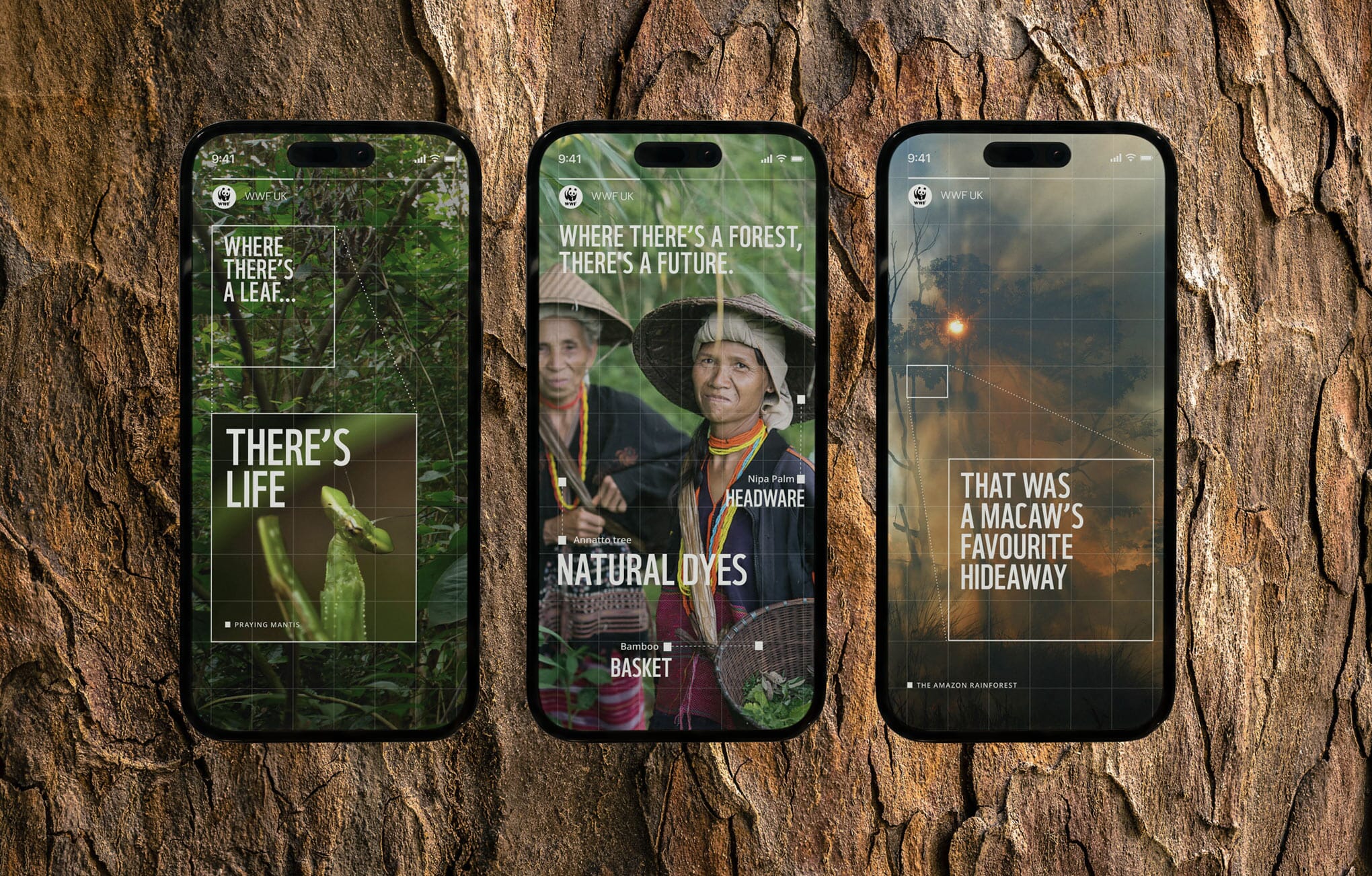
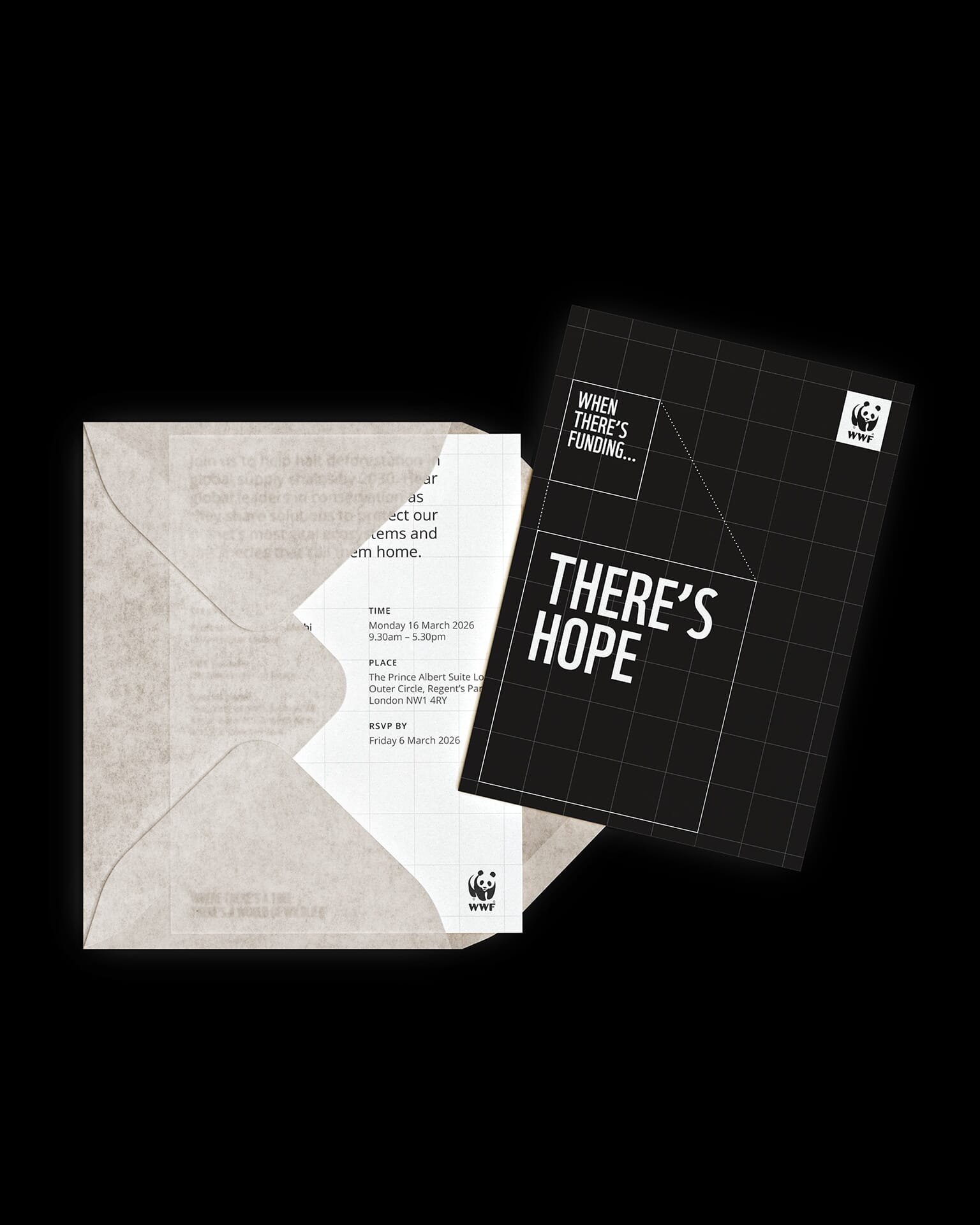
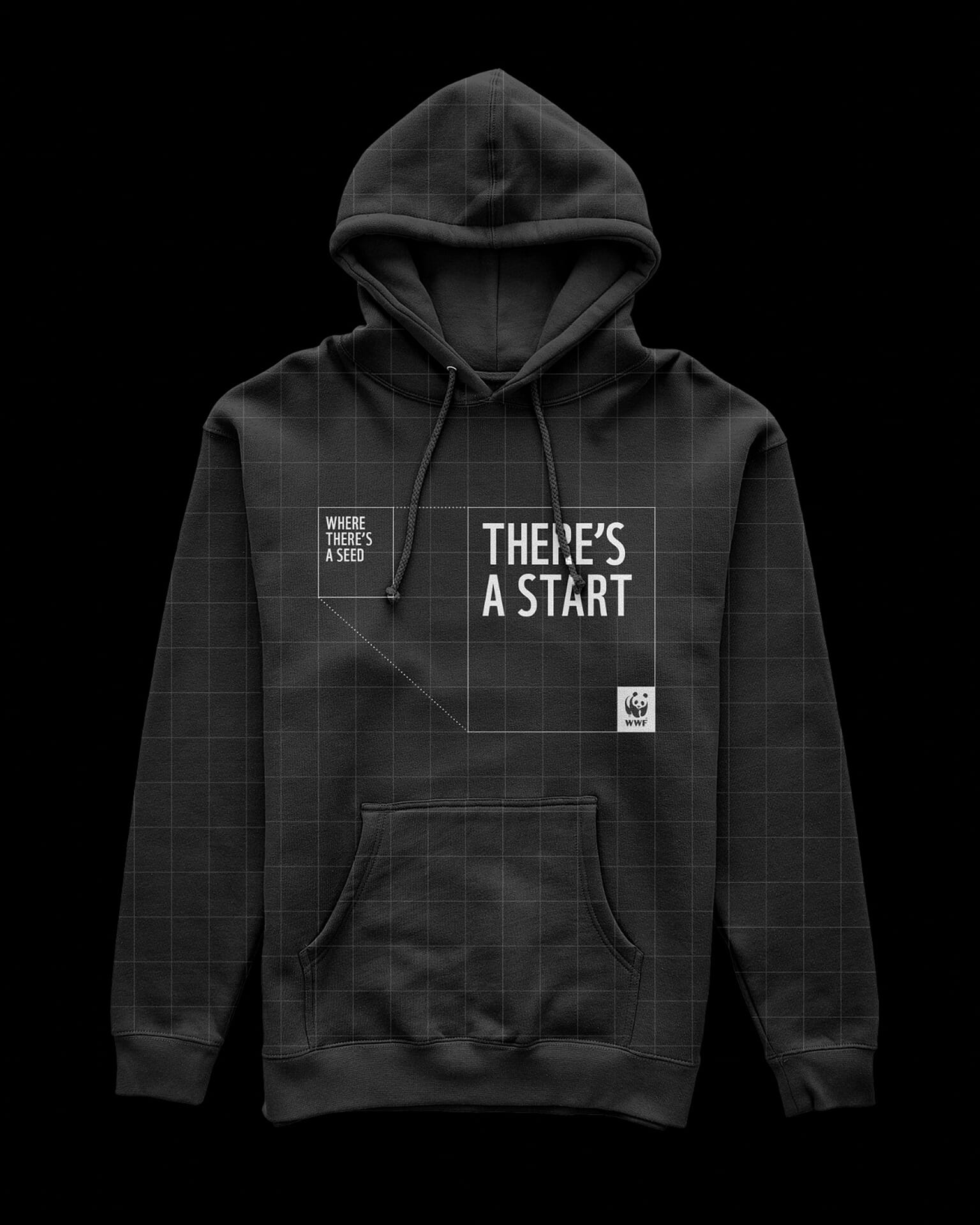
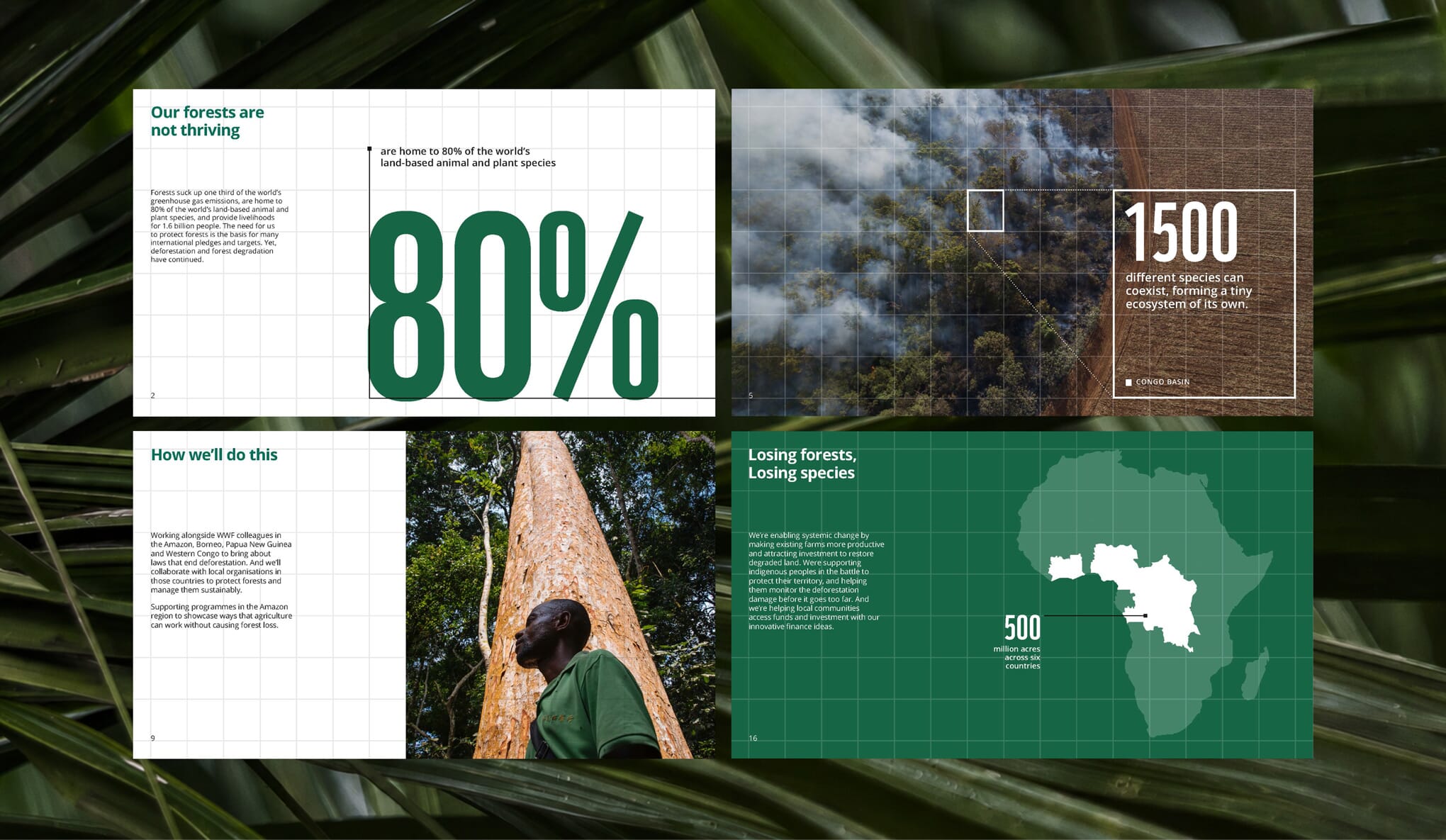
By tacking away from ‘doom and gloom’ and leading with all the things that a tree (and then a forest) is home to, we were able to shift the conversation completely. And it’s proving to be an incredibly successful approach – that we can pivot to a punchier message when needs be – and has helped raise millions within just a few months.
The team
- Campaign strategy, naming, narrative & identity: Johnson Banks
- Copywriting: Johnson Banks & Nick Asbury
Awards
- 2026 Brand Impact Awards | Social impact | Winner
- 2026 Brand Impact Awards | Copywriting | Bronze
- 2026 Brand Impact Awards | Not-for-profit | Bronze